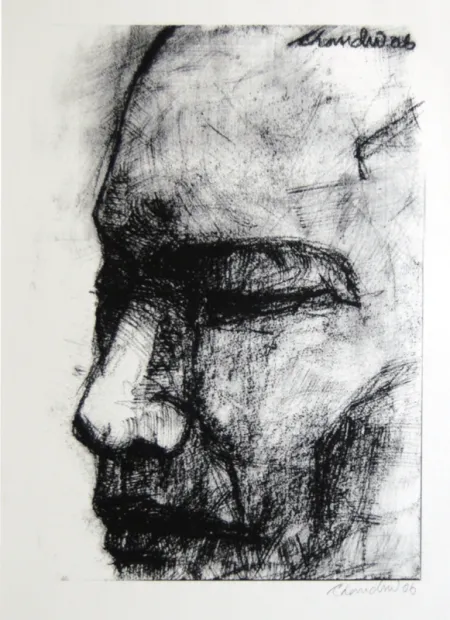
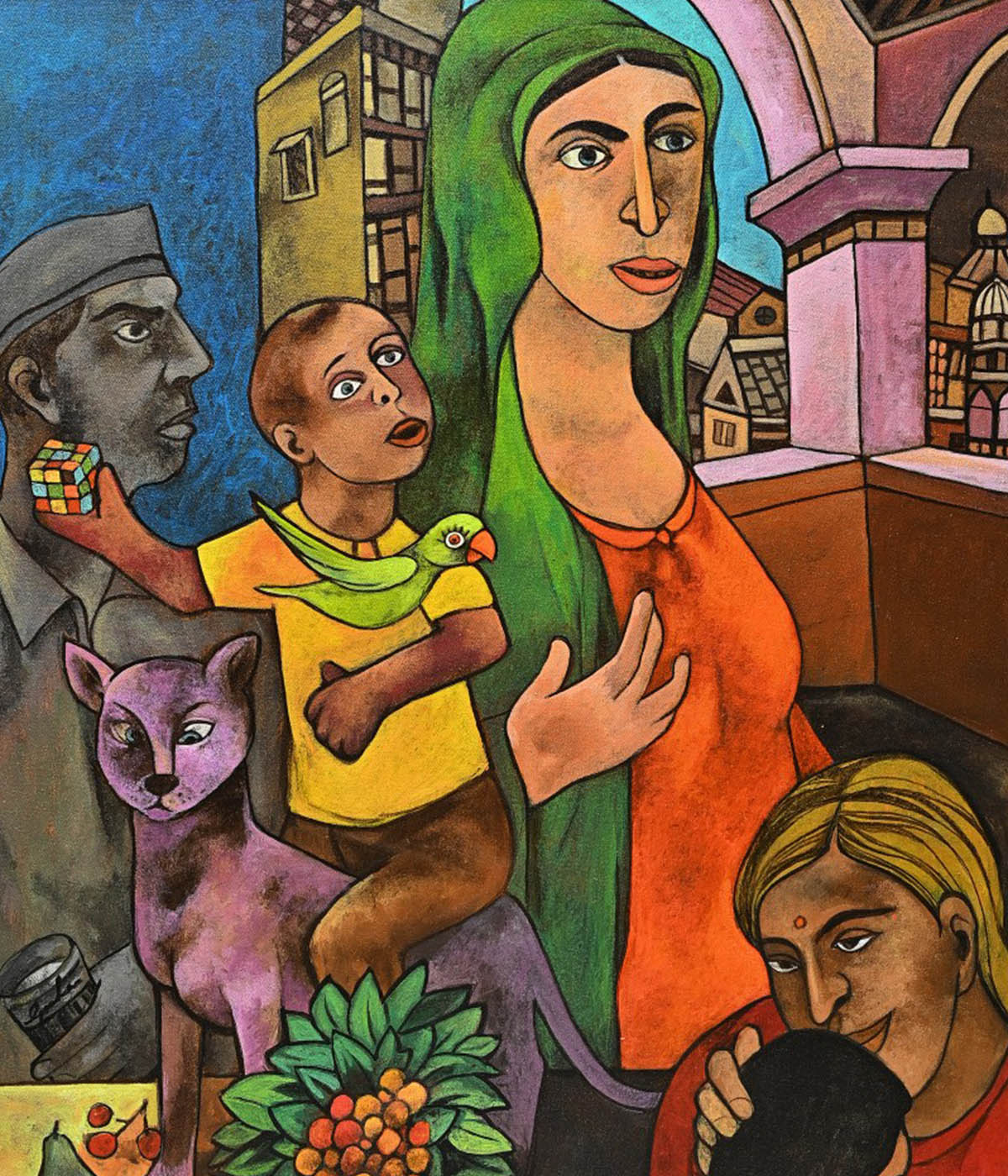
Pablo Picasso stands as one of the most transformative and influential figures in the history of modern art, whose relentless experimentation fundamentally altered the course of twentieth-century visual culture. Born in 1881 in Málaga, Spain, Picasso demonstrated extraordinary artistic ability from an early age and received formal academic training under his father before studying at institutions in Barcelona and Madrid.
Throughout a career spanning more than seven decades, Picasso continuously reinvented his artistic language, moving through multiple stylistic phases while challenging conventional notions of representation, space, and form. His early works, particularly from the Blue Period (1901–1904) and Rose Period (1904–1906), reveal a profound emotional sensitivity and engagement with themes of poverty, alienation, and human vulnerability.
Picasso’s most revolutionary contribution came with the development of Cubism, alongside Georges Braque, during the early twentieth century. Through the fragmentation of form and simultaneous multiple perspectives, Cubism radically redefined pictorial space, moving away from Renaissance naturalism toward a new modernist visual structure. Works such as Les Demoiselles d’Avignon (1907) marked a decisive break with traditional representation and became foundational to modern art.
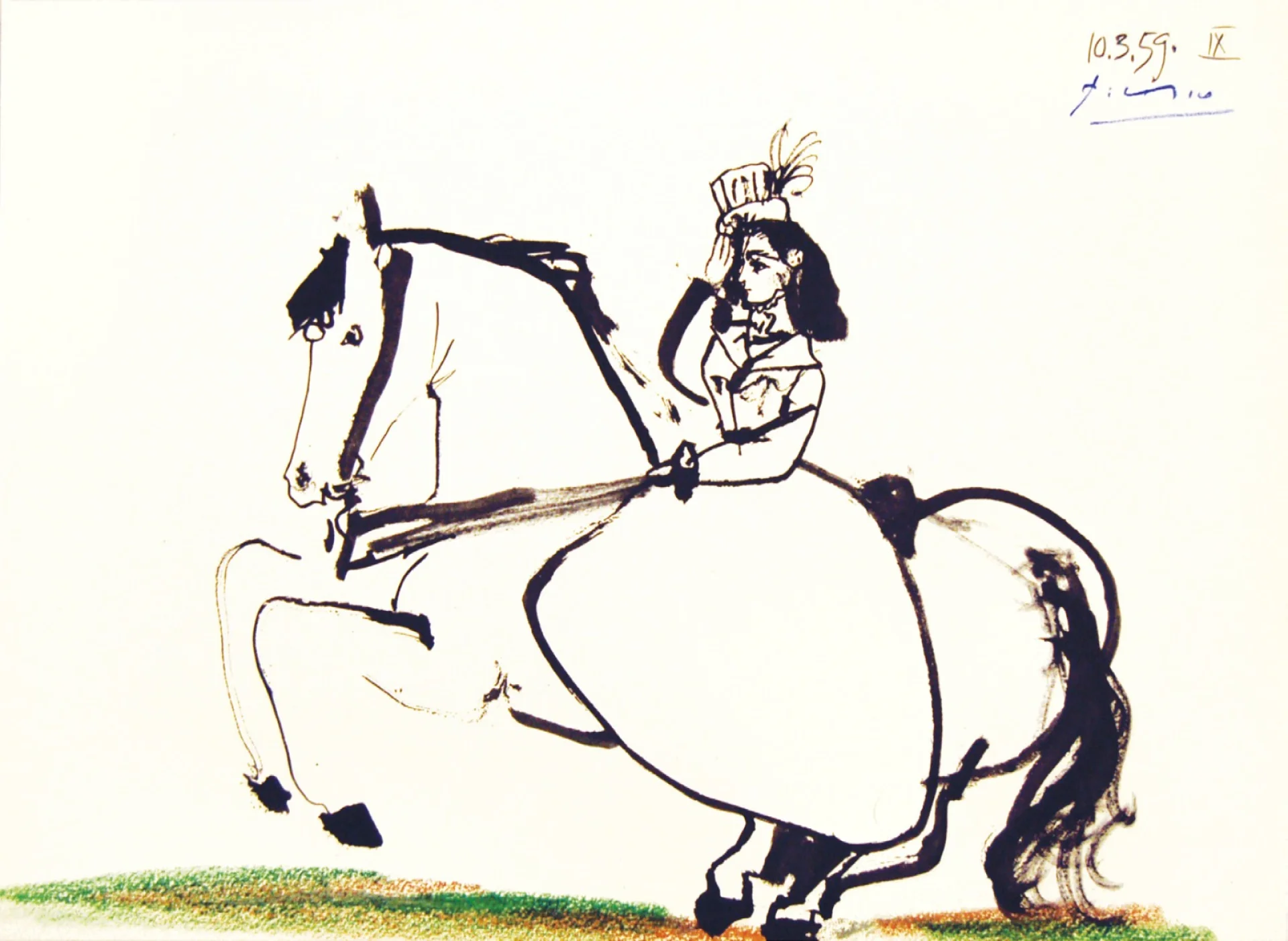
Beyond Cubism, Picasso’s practice traversed painting, sculpture, printmaking, ceramics, collage, stage design, and drawing. His oeuvre reflects an extraordinary capacity for innovation, absorbing influences from Iberian sculpture, African art, classical antiquity, and European modernism, while constantly reshaping them into new forms of expression.
Among his most celebrated works is Guernica (1937), a monumental anti-war painting created in response to the bombing of the Basque town during the Spanish Civil War. Widely regarded as one of the most important political artworks of the twentieth century, Guernica exemplifies Picasso’s ability to merge formal experimentation with emotional and historical urgency.
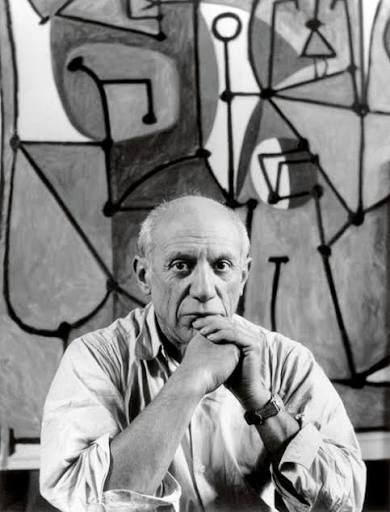
Picasso’s artistic language is characterised by structural dynamism, expressive distortion, and conceptual freedom. He rejected stylistic permanence, viewing artistic practice as a continuous process of reinvention. This refusal to remain confined within a single aesthetic framework became central to his enduring influence.
His works are housed in major museums and collections worldwide, including the Musée Picasso, Paris, the Museum of Modern Art, New York, and the Museo Reina Sofía, Madrid.
Pablo Picasso’s legacy extends far beyond individual masterpieces; he fundamentally transformed the possibilities of artistic expression, establishing a modernist vocabulary that continues to shape contemporary art discourse across disciplines and generations.



_9_.5_x_7_.5_in_2014_2000_-thumb.webp)