The Kilimanoor Atelier
How a Family of Painters Shaped Modern Indian Art
“It is refreshing to note that this artistic heritage has been maintained in a fair measure by Rama Varma, the talented son of Raja Ravi Varma, and Ravi Varma, his nephew.”
— K. P. Padmanabhan Tampy, Arts and Crafts in Kerala, Rhythm, August 1959
 Art history often celebrates individuals. Yet some of the world’s greatest artistic achievements emerged not from solitary genius but from collaborative workshops where families worked together, exchanged ideas, and nurtured successive generations. Renaissance Florence had the Bellinis and the Brueghels, Japan had the ukiyo-e studios, and India had the remarkable artistic household of Kilimanoor.
Today, Raja Ravi Varma (1848–1906) is rightly remembered as one of India’s greatest painters. His mythological canvases, aristocratic portraits, and pioneering lithographs transformed the visual imagination of an entire nation. Yet the story of Indian art becomes richer—and more accurate—when viewed through the wider lens of the Kilimanoor family atelier, where brothers, sisters, sons, nephews, and disciples collectively sustained one of the country’s most influential artistic traditions.
A forgotten testimony from 1959
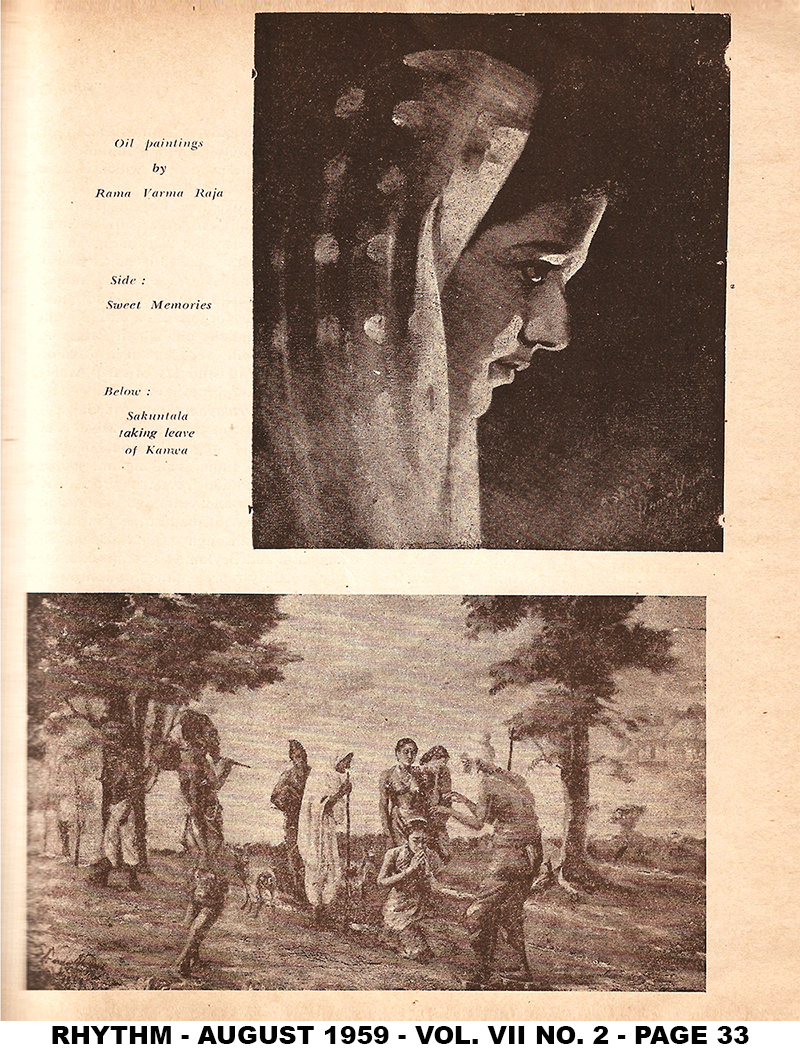
An important yet largely overlooked account survives in K. P. Padmanabhan Tampy’s essay “Arts and Crafts in Kerala”, published in the August 1959 issue of Rhythm (https://aakritiartgallery.com/pdf-view/2944). Writing at a time when many participants and descendants of the Kilimanoor tradition were still alive, Tampy offered a remarkably balanced assessment:
“Significant alike in quantity and quality has been the unique contribution made by Kerala-born artists, Raja Ravi Varma and his brother C. Raja Raja Varma, to the art revival in India. It is refreshing to note that this artistic heritage has been maintained in a fair measure by Rama Varma, the talented son of Raja Ravi Varma, and Ravi Varma, his nephew.”
Unlike many later narratives that isolated Ravi Varma as an individual phenomenon, Tampy recognised an artistic lineage that extended across generations.
Raja Ravi Varma: the visionary at the centre
Raja Ravi Varma revolutionised Indian painting by combining European academic realism with Indian mythology and history. Gods and goddesses acquired believable human form; epics became accessible through carefully observed anatomy, dramatic lighting, and psychological expression.
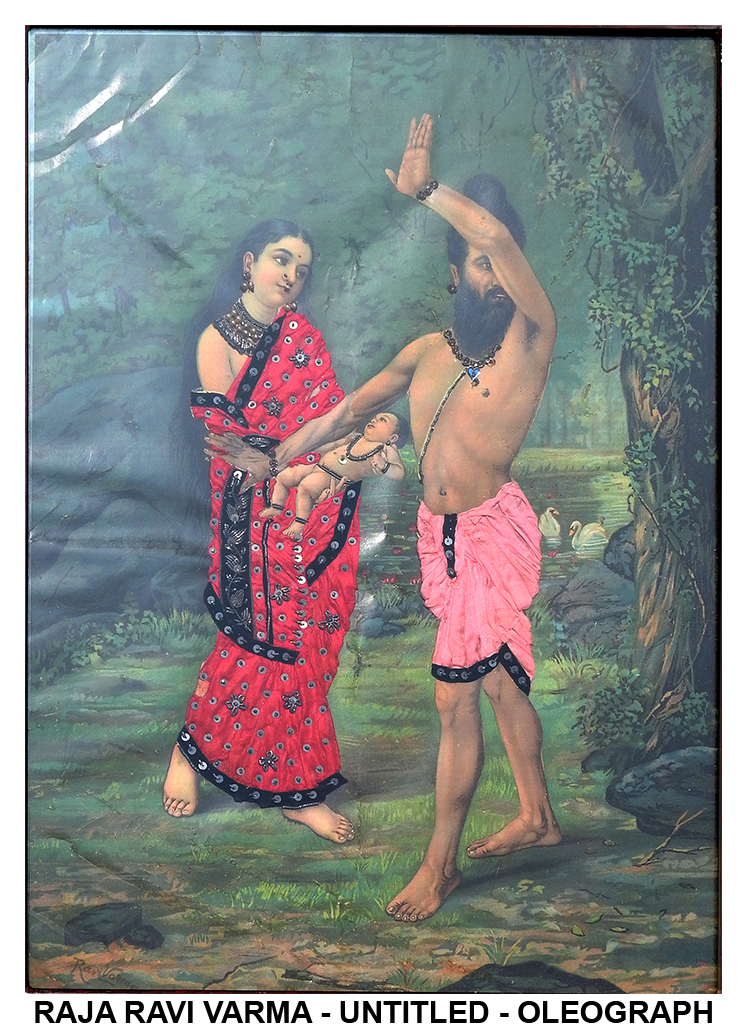 His greatest innovation, however, was not merely stylistic but democratic. Through the Ravi Varma Press, images once confined to palaces entered ordinary homes across India, permanently influencing popular visual culture.
Tampy described this achievement with striking clarity:
“Ravi Varma was a link between the old style of Indian Art and the Revival style inaugurated by Dr. Abanindranath Tagore.”
This interpretation places him not in opposition to later movements but as a bridge between traditions.
The overlooked genius of C. Raja Raja Varma
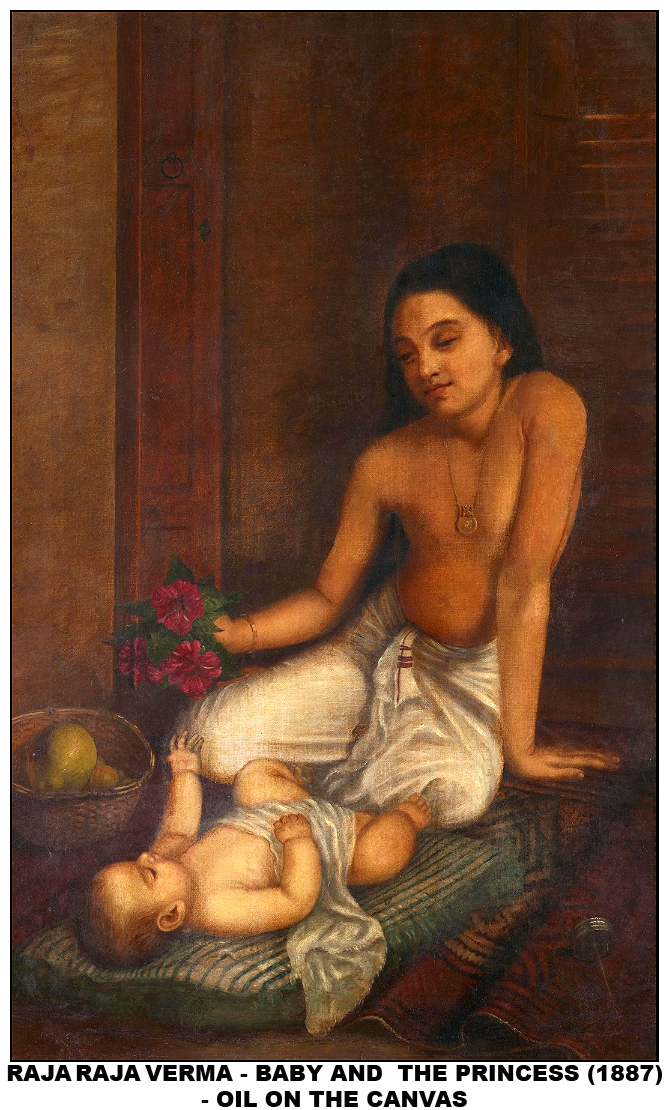
If Raja Ravi Varma became India’s most celebrated painter, his younger brother C. Raja Raja Varma (1860–1905) became its most overlooked.
A gifted landscape and genre painter, Raja Raja Varma also maintained diaries that today constitute one of the most valuable documentary records of late nineteenth-century Indian art. His writings chronicle commissions, travels, patrons, and the creative process behind many famous works.
Padmanabhan Tampy lamented his neglect in unusually direct language: 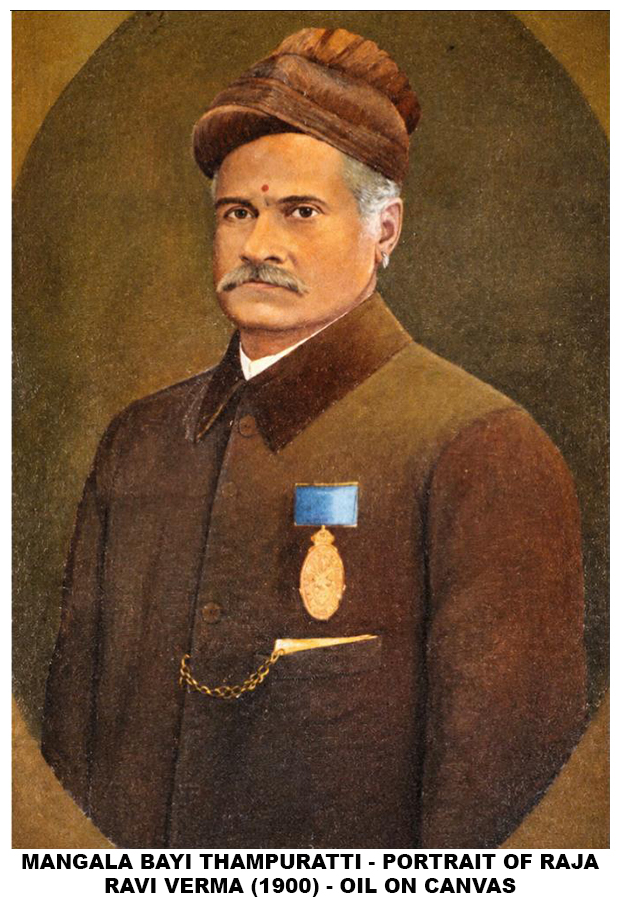
“His fame has to a large extent been eclipsed by his great brother Raja Ravi Varma. It is true that Raja Raja Varma has not received in full measure the recognition richly due to him as a great artist.”
His landscapes of Kerala villages and portraits possess an immediacy and freshness that deserve renewed scholarly attention.
Mangala Bhai Thampuratti: a forgotten woman artist
The Kilimanoor atelier was also remarkable for including women within its artistic circle.
Tampy records that Mangala Bayi Thampuratti (1866–1956), sister of Raja Ravi Varma, “was also a talented painter.” At a time when professional opportunities for women artists were extremely limited in India, this acknowledgement is historically significant.
Although relatively few works have been securely attributed to her today, her presence demonstrates that artistic practice within Kilimanoor extended beyond patriarchal boundaries and functioned as a shared family enterprise.
Rama Varma and the continuation of the tradition
The artistic legacy did not end with Raja Ravi Varma’s death.
 His son Rama Varma Raja emerged as a respected portrait and mythological painter in his own right and established the Raja Ravi Varma School of Painting at Mavelikara, training younger artists and extending the Kilimanoor tradition into the twentieth century.
According to Rhythm, he “conducted a flourishing Art School,” while disciples such as N. N. Nambiar achieved distinction as portrait painters.
The atelier had evolved into an institution.
A family workshop rather than a solitary genius
Modern scholarship increasingly recognises that many celebrated artists worked within collaborative environments.
Michelangelo relied on assistants. Rubens maintained a large studio. Mughal emperors employed imperial ateliers where multiple painters contributed to single manuscripts.
Kilimanoor functioned similarly. Ideas circulated within the family, technical skills were transmitted across generations, and artistic production benefited from constant dialogue rather than isolation.
Seen from this perspective, Raja Ravi Varma’s success becomes even more extraordinary—not because he stood alone, but because he cultivated and emerged from a thriving artistic ecosystem.
Revisiting the revivilist debate 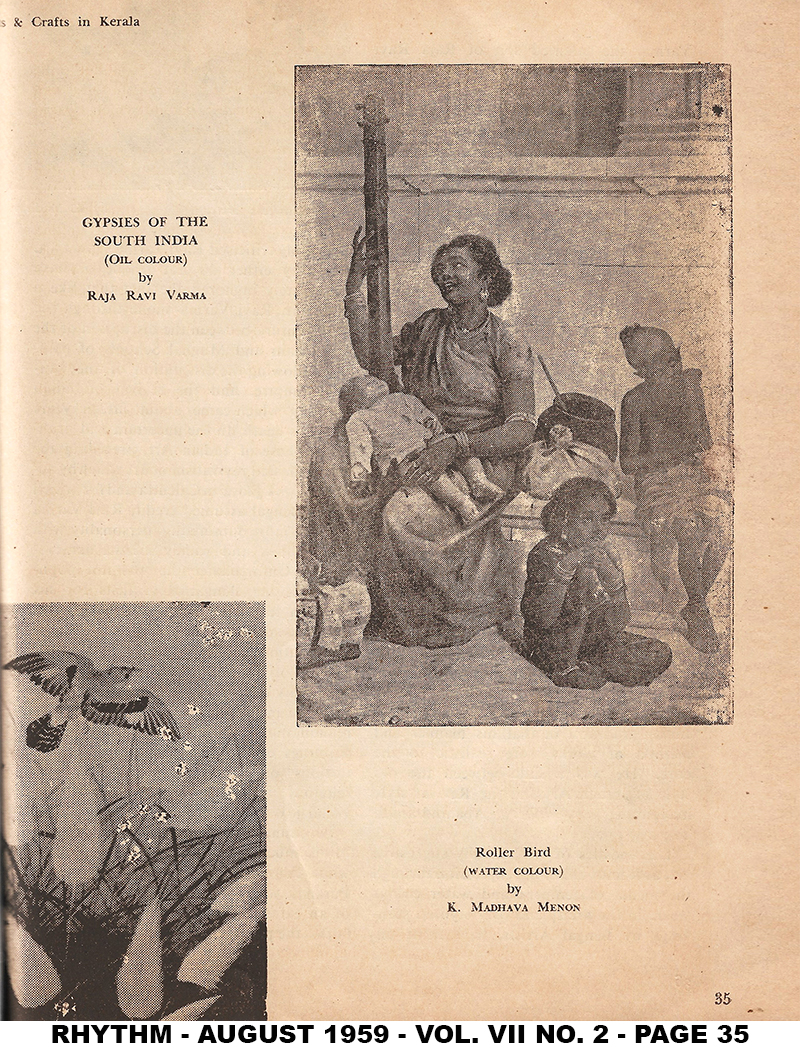
One of the most revealing passages in Tampy’s essay concerns the reception of Ravi Varma by later critics.
He observed that revivalists disapproved of Ravi Varma’s Western technique while ordinary Indians embraced his imagery with enduring enthusiasm. The statement reflects a mid-twentieth-century understanding that elite critical opinion and public affection often moved in different directions.
Indeed, while art historians debated academic realism versus revivalism, millions of Indians continued to encounter mythology through Ravi Varma’s visual language.
The people had already made their choice.
Why the Kilimanoor story matters today
As provenance research and archival scholarship gain importance, it is increasingly necessary to move beyond the mythology of the lone genius.
The Kilimanoor atelier reminds us that artistic innovation is frequently collective. Brothers inspire brothers. Sisters contribute quietly. Sons preserve traditions. Students become teachers. Families become institutions.
Understanding Raja Ravi Varma within this wider constellation not only enriches his own achievement but restores visibility to artists who history has allowed to fade into the margins.
The legacy of Kilimanoor is therefore not simply the story of India’s greatest painter.
It is the story of one of India’s greatest artistic families.
Footnotes & References
- K. P. Padmanabhan Tampy, “Arts and Crafts in Kerala,” Rhythm, August 1959, pp. 30–40.
- Erwin Neumayer & Christine Schelberger, Raja Ravi Varma: Portrait of an Artist, Mapin Publishing.
- Rupika Chawla, Raja Ravi Varma: Painter of Colonial India.
- C. Raja Raja Varma, Diary Notes (various editions), an invaluable primary source documenting the Kilimanoor atelier and late nineteenth-century Indian art.
- Sri Chitra Art Gallery, Thiruvananthapuram – collections relating to the Kilimanoor family of painters.
- The August 1959 Rhythm article is particularly noteworthy for its recognition of the broader “Kilimanoor family of painters” and for recording the contributions of C. Raja Raja Varma, Mangala Bhai Thampuratti, Rama Varma, and other members of the artistic lineage.
_______________________________________________________________________________________________________________________________________________________________________
Research & Compiled by Aakriti Art Gallery team
Most read articles
A Star Amongst Too Many: Chandra Bhattacharjee at Birla Academy of Art & Culture
Chittaprosad Bhattacharya: Art as Witness, Image as Resistance
The Resurgence of the Indian Art Market
The Indian Art Market Comes of Age

Ramkinkar Baij’s Bronze Sculptures: A Modernist Legacy in Form and Vitality.
Comments
Join the Discussion
Please login to post comments.
Login