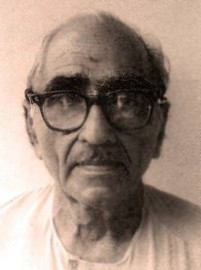
B. R. Panesar’s artistic journey represents a distinctive trajectory in twentieth-century Indian art. Trained academically in economics and statistics, Panesar came to painting without formal instruction. His entry into the artistic milieu of Kolkata—through the studios of Dilip Dasgupta and Rathin Maitra, and more significantly through his association with the Society of Contemporary Artists—offered him both technical guidance and intellectual companionship. It was here that he encountered the ideas and practices of figures such as Paritosh Sen, Jogen Chowdhury, Bikas Bhattacharya, and Ganesh Haloi, artists who themselves were shaping the contours of post-Independence modernism in Bengal.
Artistic Formation and Style
Panesar’s early experiments with collage—an idiom that earned him recognition in the Kolkata art circuit of the 1970s—gradually gave way to painting, where he developed a language rooted in abstraction. His canvases often distil natural environments into chromatic atmospheres, where muted tonal fields and gestural brushwork evoke psychological states rather than physical topographies. Unlike the lyrical figuration of the Bengal School or the narrative-social concerns of his contemporaries, Panesar’s abstraction belonged to a more interiorised tradition, closer in spirit to the meditative expanses of Ganesh Pyne’s darkened worlds or Ganesh Haloi’s landscape-evocations, though retaining its own restraint and sobriety.
Position within Indian Modernism
Within the broader narrative of Indian abstraction, Panesar occupies an interesting position. His work is neither aligned with the radical formalism of the Progressive Artists’ Group in Bombay nor with the overt political figuration of Bengal’s narrative painters. Instead, his landscapes resonate with a contemplative modernism that was deeply embedded in the Kolkata milieu of the Society of Contemporary Artists, which fostered individual voices while resisting formulaic schools. His art reflects the Society’s larger ethos—an insistence on personal authenticity, experimentation, and the bridging of Indian traditions with modernist sensibilities.
Exhibitions, Recognition, and Public Collections
Across his career, Panesar presented ten solo exhibitions and participated in numerous group shows, in addition to painting and graphic art camps that helped disseminate his practice to wider audiences. He received seven awards in recognition of his contribution to contemporary art. His works entered the collections of key Indian institutions, including the Lalit Kala Akademi, New Delhi; the Birla Academy of Art and Culture, Kolkata; and the Government Museum, Chandigarh.
Legacy and Rarity
Panesar was also known for his generosity as a mentor and benefactor, particularly in guiding the self-taught collage artist Shakila. In his final years, he chose to donate most of his works to individuals close to him, leaving only a handful in the public domain. This act has made his surviving canvases increasingly rare, imbuing them with both cultural and emotional value.