Profile:
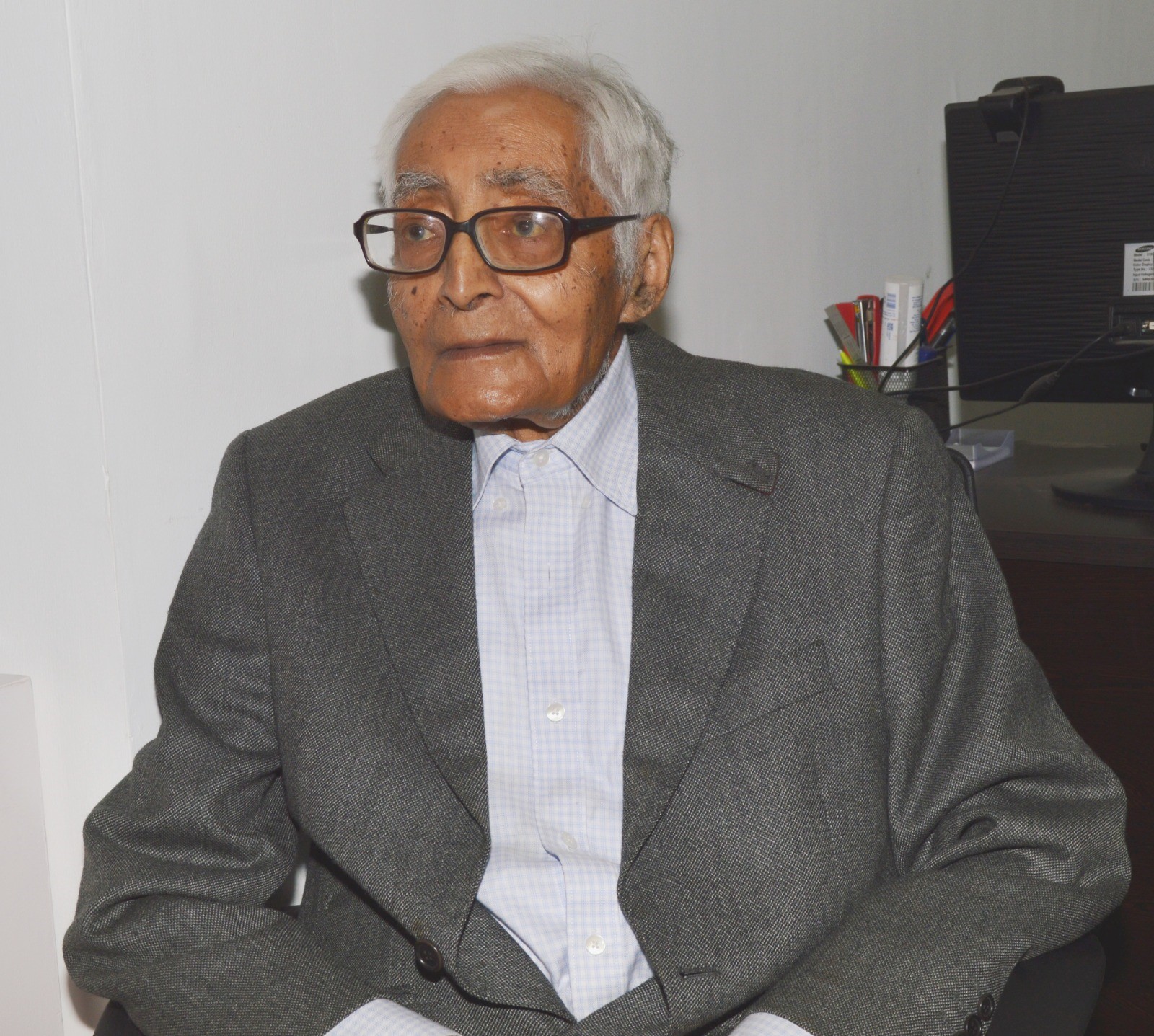
Ram Kumar was one of the leading figures of post-Independence Indian modernism and among the country’s most important abstract painters. Born in Shimla in 1924, he initially studied Economics, completing his M.A. at St. Stephen’s College, Delhi, while attending evening classes at the Sharada Ukil School of Art. His commitment to painting subsequently took him to Paris, where between 1949 and 1952 he studied under André Lhote and Fernand Léger.
Although closely associated with the generation of artists around the Progressive Artists’ Group, Ram Kumar developed an independent artistic language. His early paintings of the 1950s were figurative, often portraying isolated urban figures and reflecting the alienation and social unease of the rapidly changing post-Independence city. Over time, however, the human figure gradually disappeared from his compositions as his attention shifted towards landscape and abstraction.
From Figuration to the Abstract Landscape
A decisive moment in Ram Kumar’s development came through his encounter with Varanasi (Benares). The crowded architecture, river, ghats and ancient structures of the city initially appeared in recognisable form but were progressively transformed into interlocking planes of colour and texture.
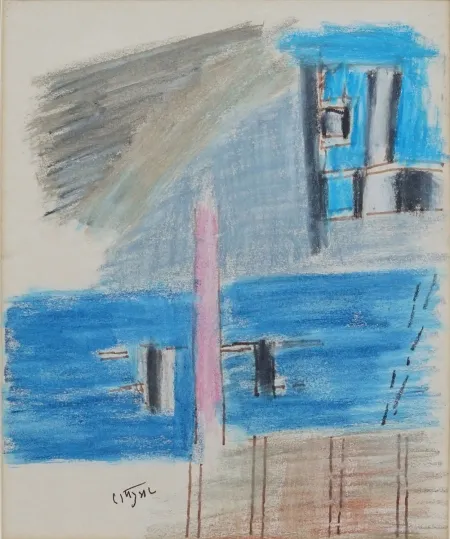
By the 1960s, landscape had become the central foundation of his art. Mountains, rivers, valleys and settlements were reduced to suggestive areas of colour rather than literal descriptions of place. His landscapes increasingly existed between the observed and the imagined.
Ram Kumar’s mature paintings are distinguished by their restrained compositions, layered surfaces and lyrical handling of colour. Earthy browns, greys and ochres characteristic of earlier periods gradually expanded into luminous blues, greens, yellows and other colours. Yet even at their most abstract, his paintings retain a sense of landscape and atmosphere.
This movement from socially engaged figuration towards contemplative abstraction represents one of the significant artistic journeys within twentieth-century Indian modernism. Aakriti’s own scholarship has examined this transition and Ram Kumar’s importance to the development of non-figurative painting in India.
Exhibitions and Recognition
Ram Kumar exhibited extensively in India and internationally over a career spanning more than six decades. His work was represented at the Venice Biennale in 1958 and the São Paulo Biennale in 1959. In 1967, he participated in a joint exhibition with M.F. Husain in Delhi and Prague, and his work was subsequently included in major international presentations of Indian art.
His contribution was recognised through numerous honours, including the Padma Shri in 1972, Kalidas Samman in 1986, France’s Officier de l’Ordre des Arts et des Lettres in 2003, Padma Bhushan in 2010, and the Lalit Kala Akademi Fellowship in 2011. He was also awarded a John D. Rockefeller III Fellowship in 1970.
Ram Kumar and Aakriti Art Gallery
Ram Kumar was represented in Kolkata by Aakriti Art Gallery, and the gallery developed an important association with the artist during the later years of his career.
Aakriti presented a series of focused solo exhibitions that examined different aspects of his practice.
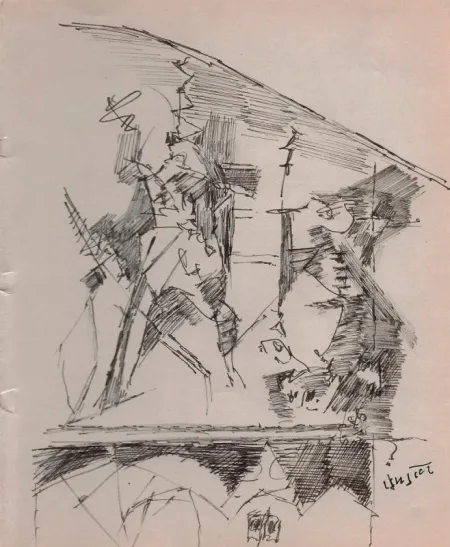
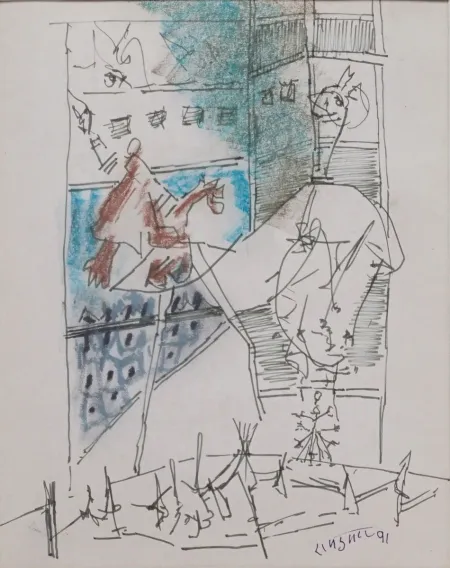
In 2014, the gallery presented Drawings from 60’s, followed by another presentation under the same title in 2015, bringing attention to an important body of early works on paper and offering insight into the period during which Ram Kumar was moving from figuration towards abstraction.
In 2016, Aakriti organised the major solo exhibition Ramkumar: Lines and Colours at its Kolkata gallery. The exhibition brought together recent oils alongside a substantial group of intimate works in pastel and ink on paper, including works drawn from the artist’s own collection. It was curated by poet and art critic Prayag Shukla, who also authored the accompanying publication examining the role of line and colour in Ram Kumar’s oeuvre.
These exhibitions formed part of Aakriti’s sustained engagement with Ram Kumar’s work in Kolkata, presenting both lesser-seen works on paper and paintings from his mature period. The gallery also represented his work nationally, including at the India Art Fair, where Aakriti exhibited him alongside other significant modern and contemporary Indian artists.
Legacy
Ram Kumar died in 2018, leaving behind a body of work spanning more than six decades. His transition from the melancholy figures of his early paintings to the increasingly distilled landscapes of his mature years remains one of the defining developments in modern Indian abstraction.
Unlike purely geometric abstraction, Ram Kumar’s paintings never entirely abandoned the experience of landscape. Mountains, rivers, cities and remembered places remained embedded within his compositions, transformed through colour, structure and memory.
His ability to reduce landscape to its emotional and pictorial essence—while retaining a profound sense of silence and contemplation—established Ram Kumar as one of the central figures of Indian modernism and one of India’s foremost abstract painters.
Aakriti Art Gallery represented Ram Kumar in Kolkata and continues to preserve and present his work as part of its engagement with the history of modern Indian art.