Provenance
Private Collection, Kolkata
All shipments are handled by professional art logistics partners experienced in transporting fragile and high-value artworks. Each package is clearly marked as “Fragile” and handled with special care throughout the delivery process.
(b.2069)
Phul Chand Pyne (also spelled Phool Chand Pyne or Fulchand Pyne) was a distinguished Indian sculptor from Kolkata, known for his sensitive explorations of form in terracotta and wood. Born into an aristocratic gold merchant family with a deep cultural and artistic heritage, Pyne emerged as part of the vibrant post-Independence generation of Bengal sculptors. His work reflects a thoughtful engagement with tradition and modernity, contributing to the dynamic evolution of sculpture in India during the mid-to-late 20th century.
Artistic Journey and Style
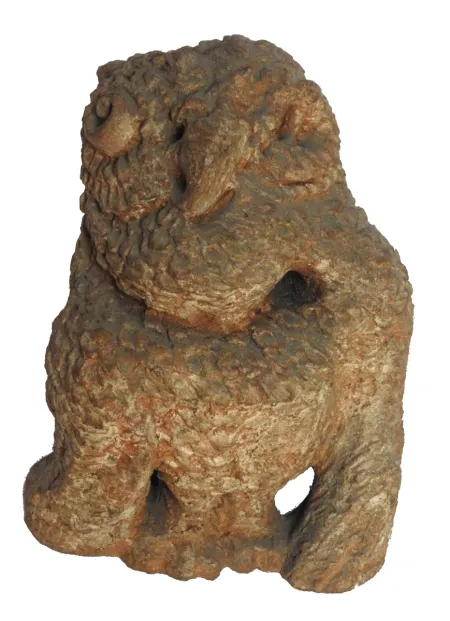
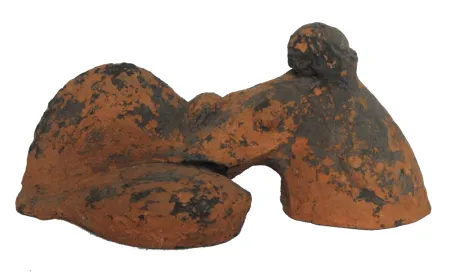
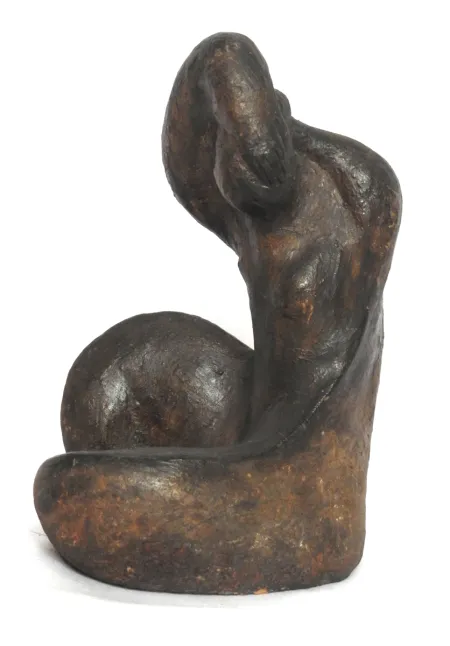
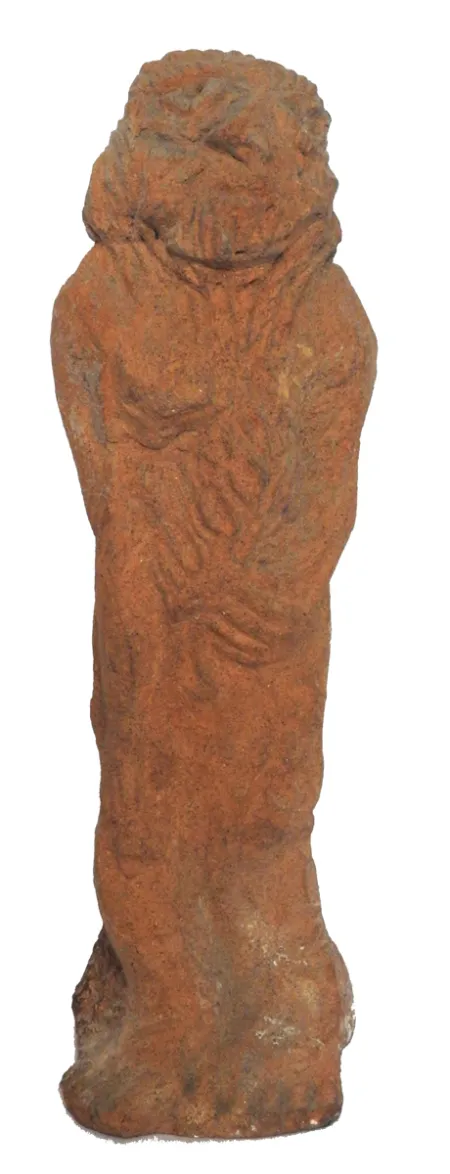
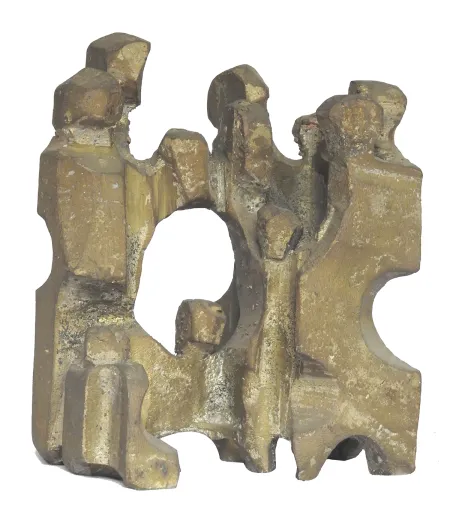
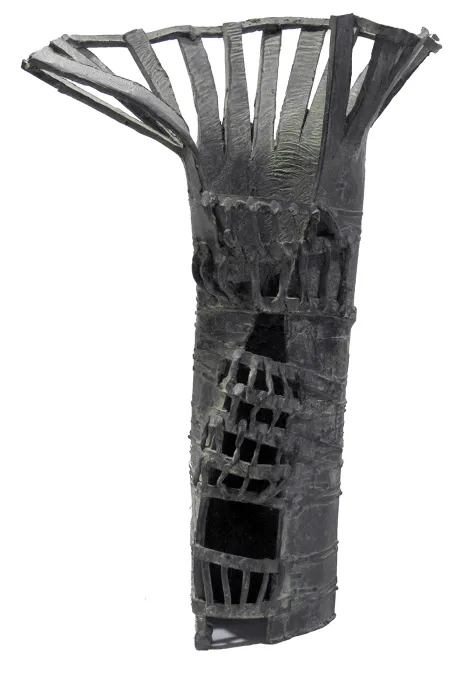
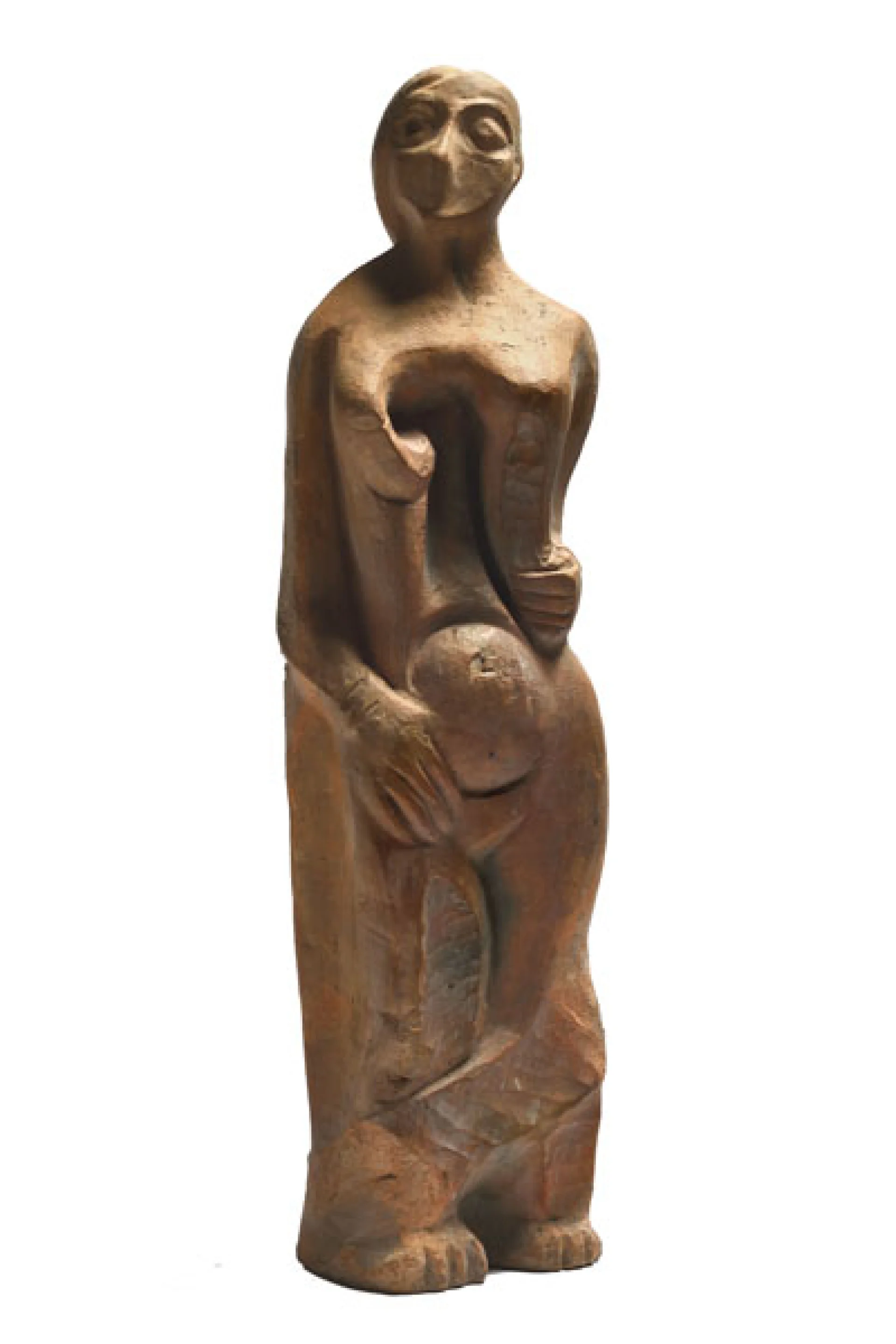
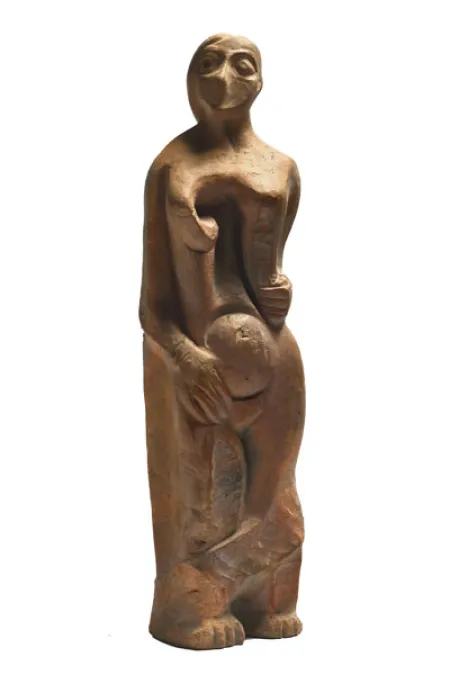
Pyne worked primarily in terracotta—creating intimate, often figurative or stylized small-scale pieces that convey emotional depth and sculptural presence—and wood, producing more monumental or abstract compositions. Notable examples include the wood sculpture Concord (featured in Jaya Appasamy’s seminal An Introduction to Modern Indian Sculpture) and larger figurative works such as Figures, which has been exhibited publicly in Kolkata galleries. His terracotta sculptures frequently feature expressive human forms and torsos, as seen in pieces from the 1970s onward, while his wood works demonstrate a strong command of material and structure.
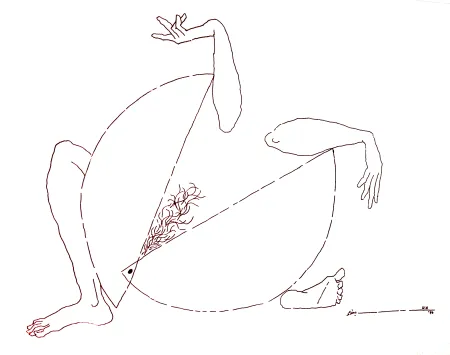
He was active in the Calcutta art scene, participating in significant group exhibitions that highlighted Bengal’s sculptural heritage, including Sculptures: The Bengal Connection at Gallery Rasa and Tangibles Only at Priyasri Art Gallery (2007). His works have been praised in reviews of National Exhibitions organized by the Lalit Kala Akademi, and they are represented in important collections associated with the Akademi. A 1969 untitled drawing further indicates his versatility across media.
Family Legacy in Indian Art
Pyne belonged to a remarkable artistic family that enriched modern Indian art. He was the brother of the reclusive surrealist painter Kartick Chandra Pyne (1931–2017) and shared familial ties with the celebrated modernist Ganesh Pyne (1937–2013). This shared cultural milieu in Kolkata, steeped in folklore, mythology, and artistic experimentation, profoundly influenced the family’s creative output.
Legacy and Availability
Though relatively understated in the broader market compared to some contemporaries, Phul Chand Pyne’s sculptures are cherished by collectors for their tactile quality, formal elegance, and connection to the Bengal School’s modernist currents. His works continue to appear in gallery exhibitions and private collections, offering a quiet yet compelling counterpoint to the more dramatic expressions of his era.
At Aakriti Art Gallery, we are proud to present a selection of his original terracotta sculptures, including intimate untitled pieces from the 1970s. These works exemplify his mastery of small-scale form and continue to resonate with connoisseurs of Indian modern art.
Available Works
For inquiries about Phul Chand Pyne’s sculptures, provenance, or private viewings, please contact us at Aakriti Art Gallery.
₹ 1,200,000
$ 13,333
₹ 10,000
$ 111
₹ 15,000
$ 167