Sakti Burman is a major Indian modernist painter, sculptor, and printmaker whose art brings together memory, mythology, fantasy, and personal experience. Born in Kolkata in 1935, he studied at the Government College of Art & Craft, Calcutta, before moving to Paris for further training at the École Nationale Supérieure des Beaux-Arts. His long residence in France placed him in direct contact with European modernism, yet his artistic imagination remained closely connected to Indian literature, mythology, and cultural memory.
Burman’s early career developed between India and Europe. His first solo exhibition was held in Kolkata in 1954, followed by exhibitions in Paris and other European centres. In 1956, he received the Prix des Étrangers at the École des Beaux-Arts. His travels through Italy in the late 1950s introduced him to the frescoes of Giotto, Piero della Francesca, and Simone Martini. Their weathered surfaces, layered colours, and monumental calm had a lasting impact on his pictorial technique.
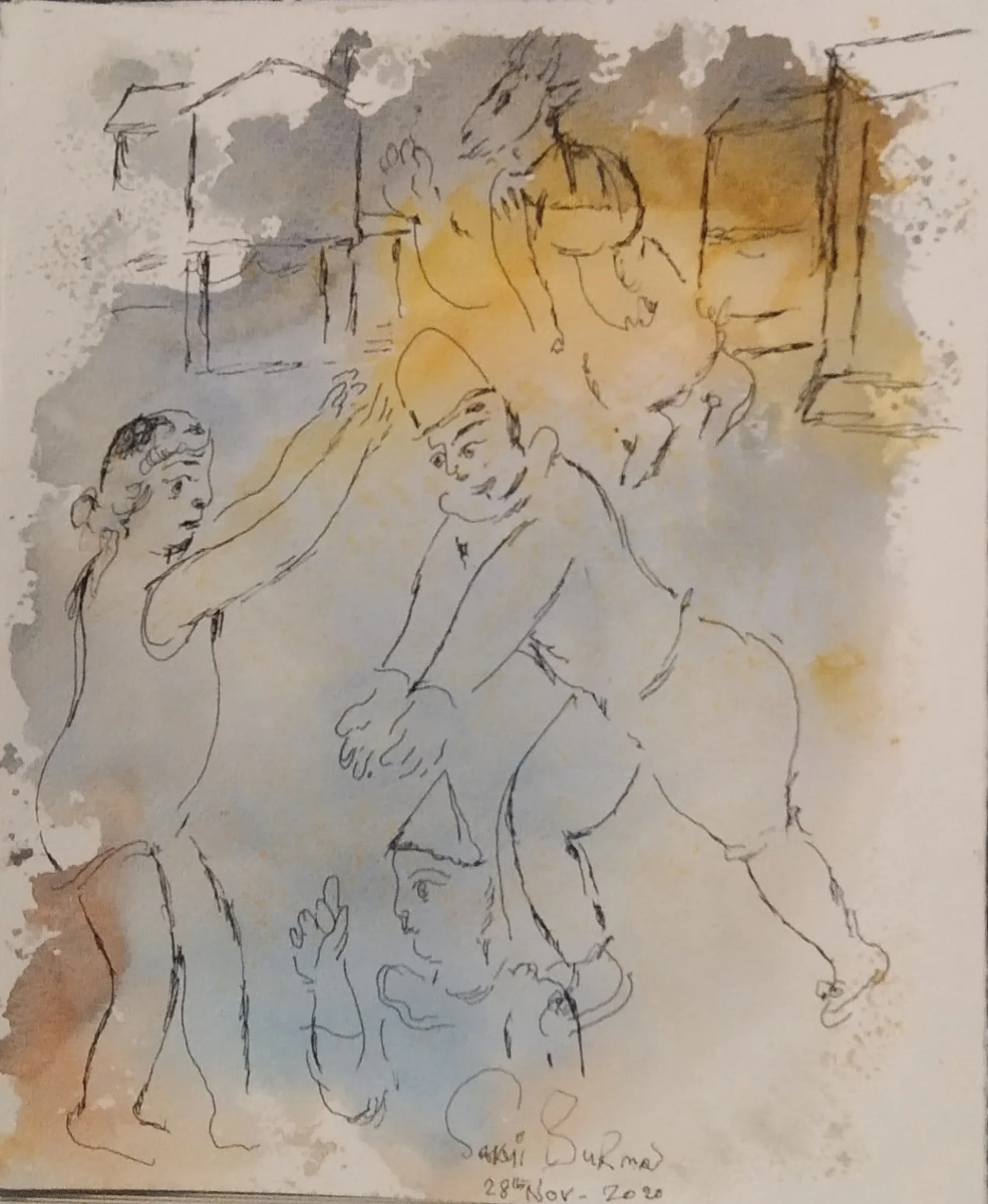
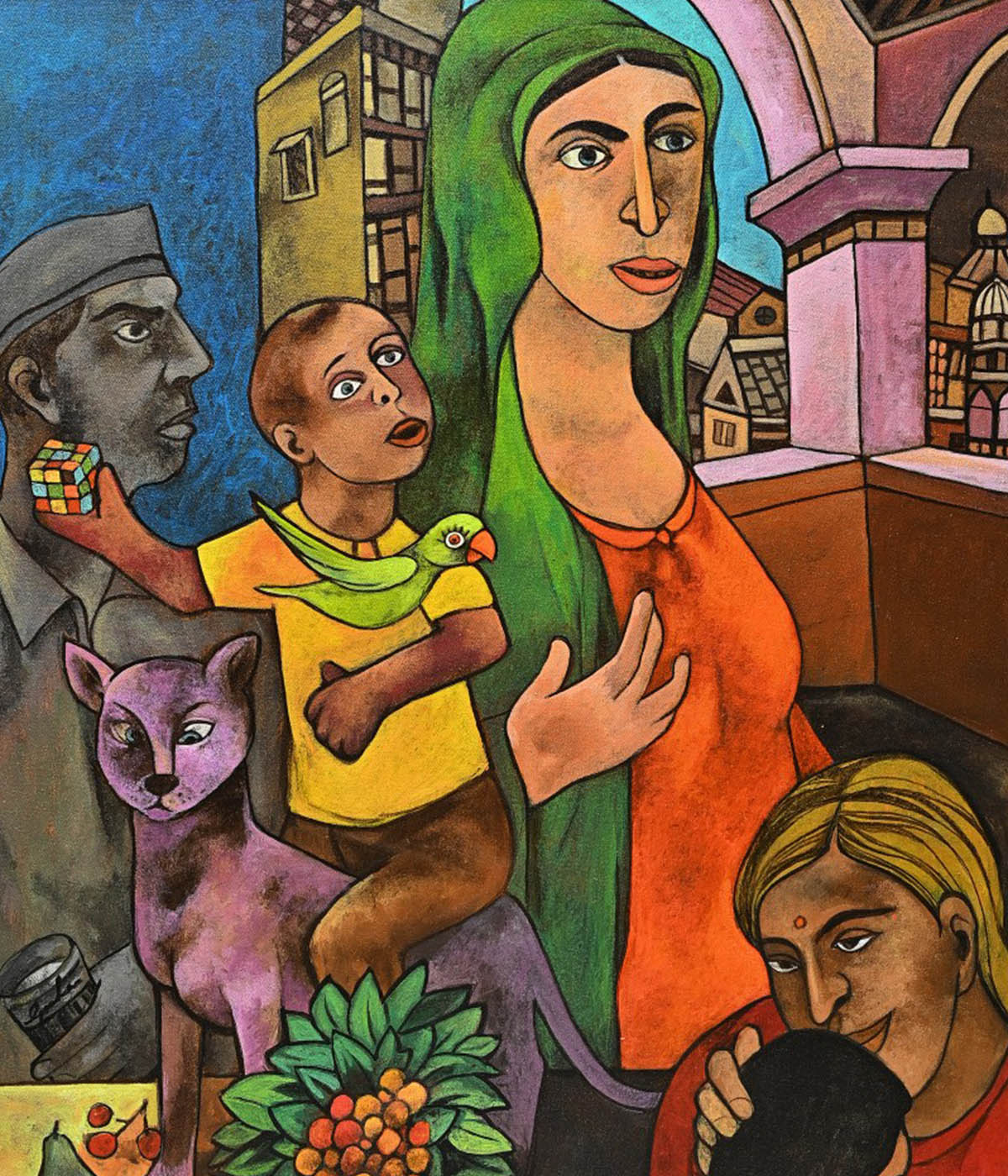
A defining feature of Burman’s paintings is their dreamlike visual world. Gods, musicians, lovers, children, animals, birds, and hybrid beings appear together in spaces where ordinary reality gives way to fantasy. His compositions frequently draw upon the Ramayana, the Mahabharata, classical mythology, family memory, and European literary traditions. These references are not presented as literal illustrations. Instead, they are transformed into a private mythology in which time, geography, and identity remain fluid.
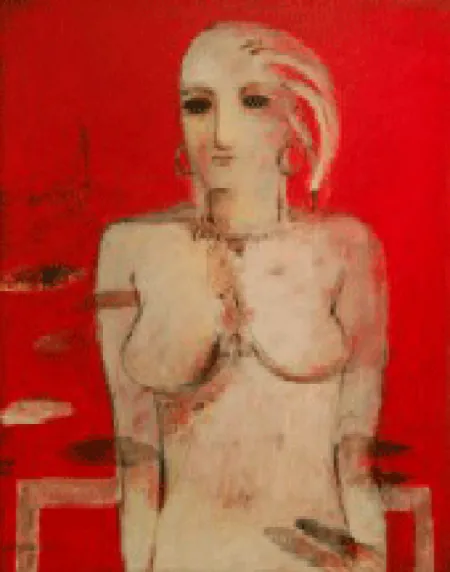
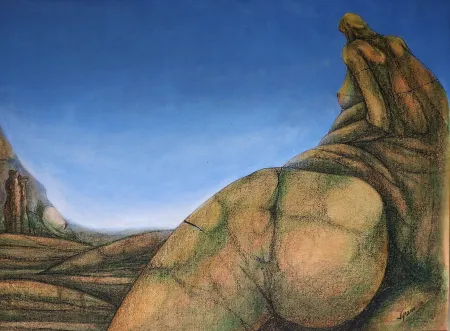
Burman’s figures often appear suspended within atmospheric backgrounds, as though emerging from an ancient wall, a fading fresco, or a half-remembered dream. His distinctive surface is achieved through layered pigments, stippling, rubbing, and controlled abrasion. This creates a mottled texture that gives the paintings a sense of age and archaeological depth, even when their imagery is playful and contemporary.
The human figure remains central to his practice. His characters are often theatrical, lyrical, and emotionally open, yet they also retain a sense of mystery. Musicians, acrobats, deities, and lovers inhabit a world shaped by movement, celebration, and imagination. Burman’s art is therefore neither entirely Indian nor European; it belongs to a cross-cultural modernism formed through travel, memory, and personal experience.
His artistic life is closely connected with a distinguished family of artists. His wife, Maïté Delteil, is a French painter; their daughter, Maya Burman, is also an artist; and his niece Jayasri Burman is an established contemporary Indian painter and sculptor. These relationships have created a wider artistic environment in which Indian and European traditions continually intersect.
Burman has exhibited extensively across India, France, the United Kingdom, Italy, Germany, Switzerland, Japan, and the United States. Important solo exhibitions include presentations at the Galerie des Beaux-Arts, Paris, Piccadilly Gallery, London, Pundole Art Gallery, Mumbai, and UNESCO, Paris. His work has also appeared in the Paris Biennale, the São Paulo Biennale, the International Triennale–India, and numerous museum and institutional exhibitions.
His works are held in major collections, including the National Gallery of Modern Art, New Delhi, the British Museum, London, the Bibliothèque nationale de France, the Musée de la Ville de Paris, and the Government Museum and Art Gallery, Chandigarh, as well as important private collections internationally.
Association with Aakriti Art Gallery
Sakti Burman has an important exhibition and publication association with Aakriti Art Gallery. In 2015, the gallery presented the major solo exhibition Sakti Burman: 60s–80s—The Divine Desire Paintings of Sakti Burman. The exhibition brought together oil paintings, watercolours, and drawings from three formative decades of his career, allowing viewers to trace the development of his visual language from his early Paris years to the emergence of his mature mythic and dreamlike idiom.
By focusing on works from the 1960s to the 1980s, Aakriti’s exhibition drew attention to a historically important period in Burman’s practice. These works reveal the gradual formation of the mottled surfaces, floating figures, theatrical imagery, and layered mythologies that later became central to his art. The gallery also published material connected with the exhibition, contributing to the documentation and scholarly reassessment of his early and mid-career work.
Aakriti Art Gallery continues to recognise Sakti Burman among the major modern Indian artists whose solo exhibitions form an important part of its institutional history.
Honours and Legacy
Sakti Burman has received several honours in India and France. These include the Prix des Étrangers, medals and awards from French salons, and the Chevalier de la Légion d’Honneur in 2016, one of France’s highest distinctions.
His importance lies in his creation of a deeply personal visual universe that transcends national and stylistic boundaries. By bringing together Indian mythology, European fresco traditions, private memory, and modern fantasy, he developed one of the most recognisable pictorial languages in contemporary Indian art.