Tracing the Emergence of Professional Sculpture in Colonial India
Recovering the Forgotten Artists, Institutions and Public Commissions that Forged Modern Indian Sculpture (1880–1920)
Between 1880 and 1920 a generation of Indian sculptors trained in the colonial art schools began producing work in marble, bronze, plaster and clay that moved beyond traditional temple practice. Their output centred on the human figure—portrait busts, full-length statues, smaller expressive bronzes and realistic modelled figures. While some names are relatively better recorded, others remain only partially documented. Revisiting both the better-known and the lesser-known figures gives a fuller picture of the period.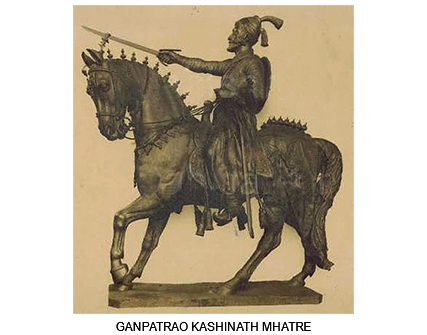
Ganpatrao Kashinath Mhatre (1879–1947) remains the most productive sculptor of these decades. His breakthrough work, To the Temple (Mandirpathagamini, 1895), is a life-size plaster figure of a young Maharashtrian woman in a nine-yard sari carrying offerings. It combined close observation of Indian dress and posture with academic modelling and won awards at the Bombay Art Society and the 1903 Delhi Durbar. Mhatre went on to execute a large body of public commissions: more than 260 busts, over 60 life-size statues and several equestrian works. Notable among them are statues of Mahadev Govind Ranade and Gopal Krishna Gokhale in Bombay, an equestrian Shivaji later installed in Baroda’s Sayaji Baug, and further monuments for the courts of Mysore, Kolhapur, Gwalior and other princely states.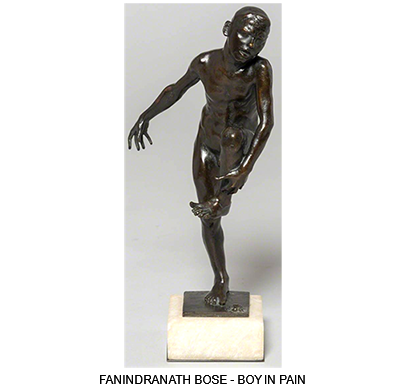
Fanindranath Bose (1888–1926) produced a smaller but distinctive body of work. After early training in Calcutta he studied in Edinburgh and spent time in Paris. His bronzes of the 1910s show careful attention to movement and surface. Two of the best-known are Boy in Pain (also called Boy and the Crab), a naked youth holding an injured foot, and The Hunter. Both were acquired by Sir William Goscombe John and entered the National Museum of Wales. Bose also exhibited The Snake Charmer, The Falconer and End of the Day. In 1915 the Maharaja of Baroda appointed him court sculptor; he executed a series of bronze historical figures for the gardens of Laxmi Vilas Palace and advised on bronze-casting techniques in the state. He was elected the first Indian Associate of the Royal Scottish Academy in 1925.
Hiranmoy Roy Chowdhury (1884–1962) trained at the Government School of Art in Calcutta and later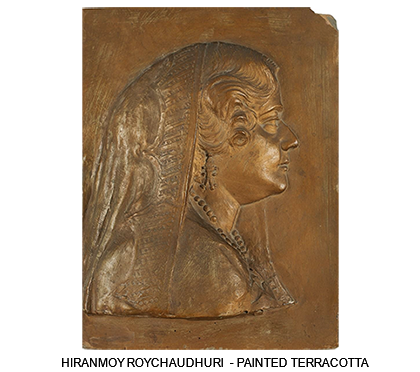 at the Royal College of Art in London. He specialised in academic portraiture and figure sculpture in bronze and terracotta. Surviving early works include carefully modelled portraits and plaster maquettes prepared for bronze casting. He later taught a younger generation of sculptors and helped establish European modelling methods within Indian institutions.
Rohinikanta Nag (1868–1895) belongs to the earliest phase of professional practice in Bengal. Trained at the Calcutta School of Art and later in Italy, he is recorded as one of the first Bengali sculptors without a hereditary artisan background to pursue the medium as a modern profession. Specific titled works from his short career remain sparsely documented, yet contemporary accounts recognise him as a pioneer of academic sculpture in the region.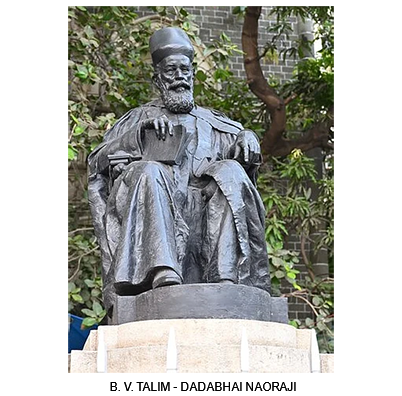
B. V. Talim established a successful portrait practice in Bombay. After training at the Sir J. J. School of Art he opened Talim’s Art Studio in Girgaon in 1917. Among his known commissions is the life-size bronze of Dadabhai Naoroji installed in 1925, together with other public and private portrait busts.
Jadunath Pal (1821–1920) of Krishnanagar represents an important transitional figure whose work sits between traditional clay modelling and the emerging professional scene. Working primarily in unfired clay, he produced highly realistic ethnographic figures, occupational types and portraits that were widely exhibited at international exhibitions from the 1850s onward.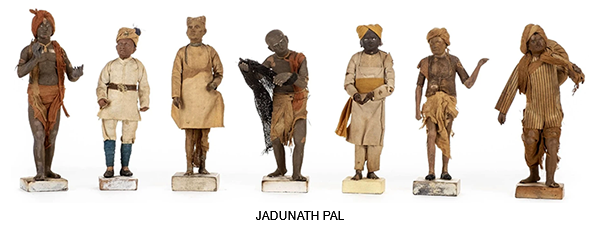 Museums in Europe ordered sets of his figures for ethnographic displays. He also executed portrait commissions and briefly taught modelling at the Calcutta School of Art. His skill in capturing individual likeness and everyday posture influenced the taste for realistic figure modelling in the late nineteenth century.
In the Madras Presidency the Government School of Arts (founded 1850) maintained modelling classes, plaster-cast collections and facilities for bronze casting and architectural sculpture throughout the period. Students produced figure studies and ornamental work for government and private use. While the names of individual fine-art sculptors active between 1880 and 1920 are less frequently recorded in secondary literature than those of Bombay or Bengal, the school’s continuous training in modelling and casting provided a steady institutional base. Recent archival work has begun to recover the contributions of teachers, assistants and early graduates who supplied architectural and commemorative sculpture in the region.
In Lahore the Mayo School of Art (established 1875 under John Lockwood Kipling) included modelling in clay from casts and from nature as part of its curriculum. Indian instructors such as Bhai Ram Singh and Sher Muhammad played important roles in the school’s workshops. The emphasis was often on architectural ornament, decorative sculpture and the training of craftsmen, yet the modelling classes produced a body of three-dimensional work that fed into public memorials and building decoration across Punjab. Specific named fine-art sculptors from the Mayo School in this exact window remain under-documented; the institutional evidence, however, confirms that systematic training in modelling and related techniques was established early and continued through the early twentieth century.
Taken together, these sculptors—better-known and lesser-known—established professional standards for the treatment of the human figure in modern Indian sculpture. Their major works range from Mhatre’s public monuments and Bose’s expressive bronzes to the realistic clay figures of Jadunath Pal and the still incompletely recovered output of the Madras and Lahore schools. Many pieces survive in public spaces or institutional collections; others await fuller archival recovery. Revisiting them clarifies how modern Indian sculpture first took shape across different regions between 1880 and 1920.
Selected Bibliography
Primary and Archival References
• Exhibition catalogues and reviews of the Bombay Art Society (1890s–1910s) and the Delhi Durbar (1903), recording awards for Ganpatrao Mhatre’s To the Temple.
• Royal Scottish Academy exhibition records (1913–1925) for Fanindranath Bose’s bronzes, including Boy in Pain, The Hunter and The Snake Charmer.
• National Museum of Wales collection records for Bose’s Boy in Pain and The Hunter (acquired via Sir William Goscombe John).
Secondary Sources on Individual Sculptors
• Bean, Susan S. “Vernacular Clay Sculptors Shaping Modern India’s Artscape—Jadunath Pal and G.K. Mhatre.” Marg, 2017.
• Dahisarkar, Sandeep, and related documentation of Mhatre’s public and princely commissions (including the Baroda Shivaji and Mysore works).
• Pathare, Hemant. Research and documentation of Ganpatrao Mhatre’s oeuvre (ongoing recovery of more than 280 of an estimated 372 works).
• Royal Scottish Academy and related biographical notes on Fanindranath Bose (including Baroda commissions under Sayajirao Gaekwad III).
Institutional and Regional Histories
• Guha-Thakurta, Tapati. The Making of a New “Indian” Art: Artists, Aesthetics and Nationalism in Bengal, c. 1850–1920. Cambridge University Press, 1992.
• Kamran, Tahir. Studies on Lockwood Kipling and the Mayo School of Art, Lahore (including curriculum on modelling and Indian instructors such as Bhai Ram Singh and Sher Muhammad).
• Tarar, Nadeem Omar. Official Chronicle of Mayo School of Art: Formative Years Under J.L. Kipling, 1874–94 and related archival work on the school’s modelling and workshop practice.
• Histories of the Government School of Arts, Madras (Alexander Hunter foundation, modelling classes, and late-nineteenth-century curriculum under R.F. Chisholm and others).
Broader Surveys of Early Modern Indian Sculpture
• Daw, Prasanta. “A Concise Chronicle of Bengal’s Modern Sculpture.”
• Mitter, Partha. Art and Nationalism in Colonial India, 1850–1922 and The Triumph of Modernism: India’s Artists and the Avant-Garde, 1922–1947.
• Critical Collective and related essays on academic sculpture in Bengal and Bombay (including Hiranmoy Roy Chowdhury’s training and teaching).
• Aakriti Art Gallery / Mrinal Ghosh. Shaping Bengal: A Chronicle of Modern Sculpture (contextual survey of the early professional phase).
Additional References
• Contemporary notices in The Times of India, Modern Review (including the 1921 review of Bose), and princely-state commission records for Baroda, Mysore and Kolhapur.
• Collection and exhibition notes on Jadunath Pal’s clay figures (international exhibitions from the 1850s onward and teaching at the Calcutta School of Art).
-- Research & Compiled by Aakriti Art Gallery team
Most read articles
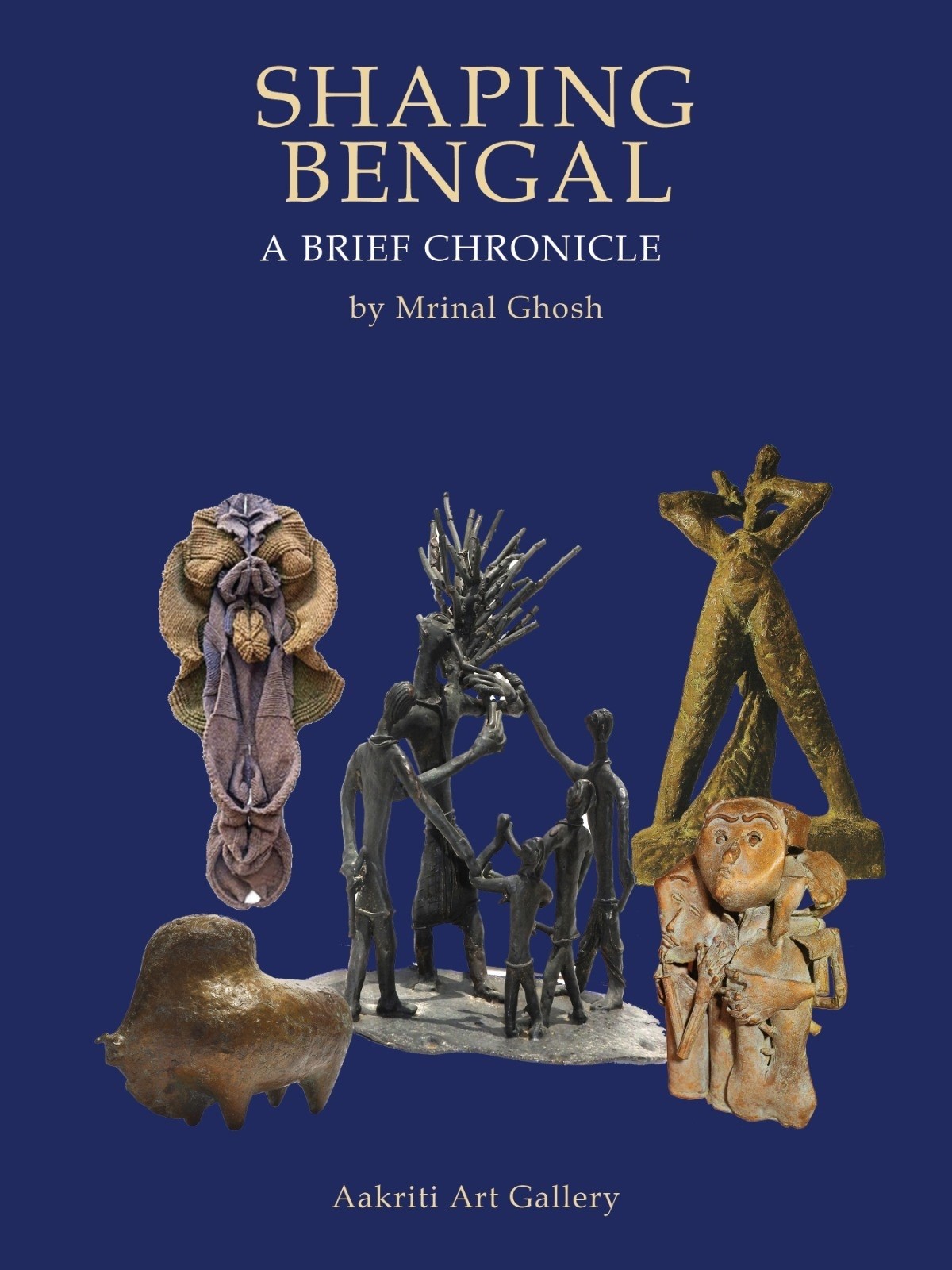
Shaping Bengal : A Chronicle of Modern Sculpture
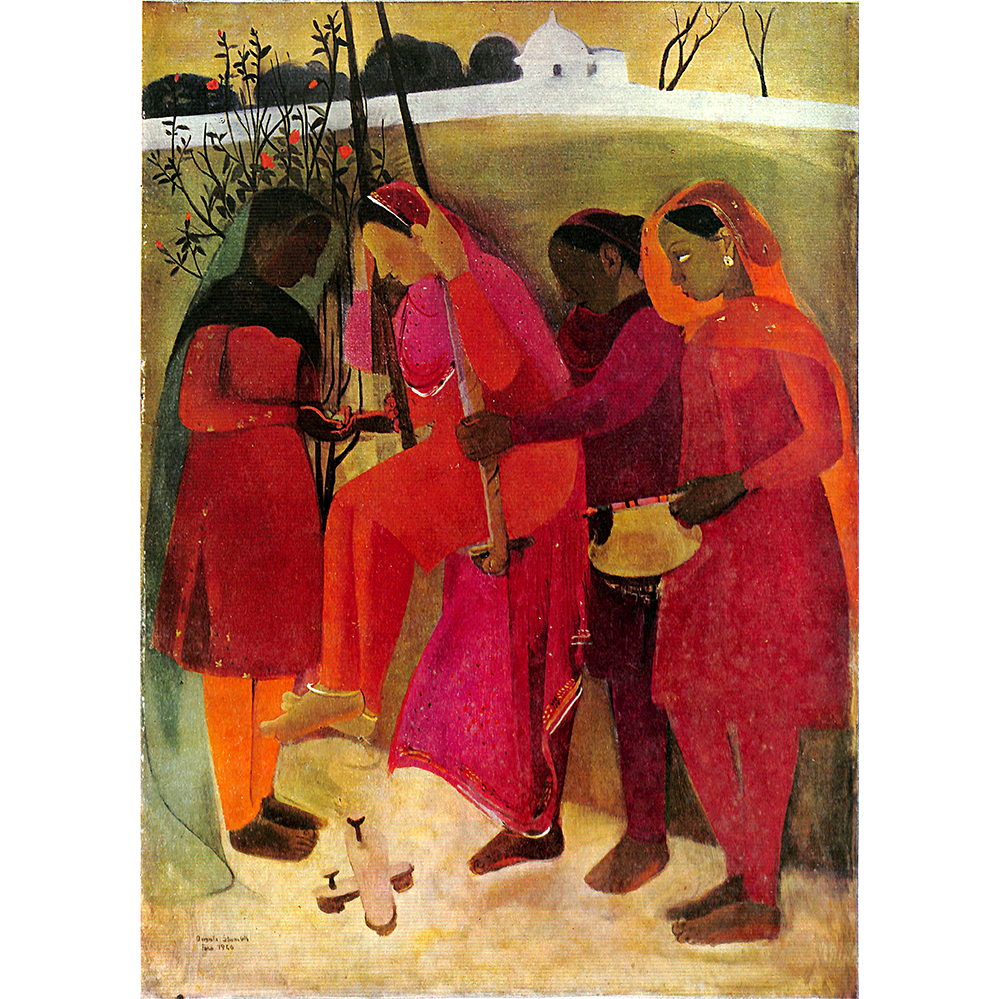
“Europe Belongs to Picasso… India Belongs Only to Me” || Why Amrita Sher-Gil Chose India as Her Artistic Destiny
A Star Amongst Too Many: Chandra Bhattacharjee at Birla Academy of Art & Culture
The Indian Art Market Comes of Age
The Resurgence of the Indian Art Market
Comments
Join the Discussion
Please login to post comments.
Login