Understanding Abstract Indian Art: From Gaitonde to Today
How Indian Artists Turned Colour, Space, Gesture and Silence into a Distinctive Modern Language
Abstract art creates an unusual problem for viewers.
Stand before a portrait and we instinctively search for the person.
Stand before a landscape and we recognise earth, sky and horizon.
Stand before a completely abstract painting and those familiar anchors disappear.
The immediate reaction is often:
“What is it supposed to be?”
That may be the wrong question.
To understand abstraction, we must learn to experience colour, line, texture, rhythm and space as subjects in themselves.
Indian artists have explored these possibilities for more than seven decades, producing forms of abstraction that cannot simply be described as imitations of Western modernism.
Abstraction Was Never One Movement
There is no single history of Indian abstraction.
Some artists moved towards abstraction through landscape.
Others through spirituality, geometry, calligraphy or architecture.
Still others arrived there through the physical act of painting.
This diversity matters.
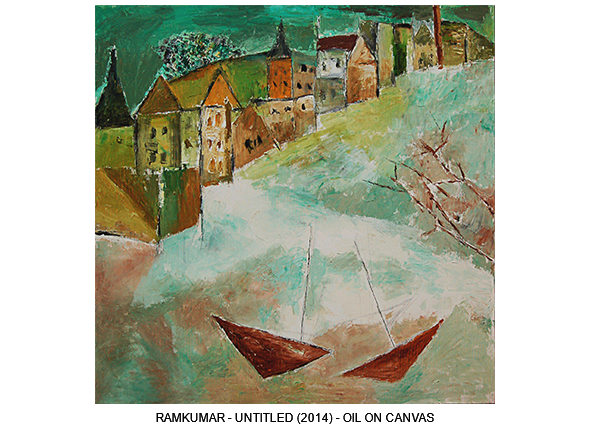
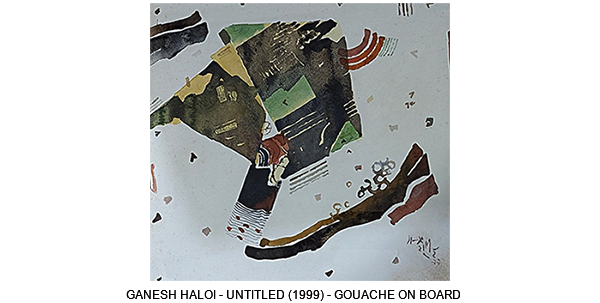
The geometric language of S.H. Raza is fundamentally different from the meditative surfaces of V.S. Gaitonde. Ram Kumar’s landscapes move between memory and abstraction in another direction altogether. Ganesh Haloi distilled landscape into signs, colour fields and remembered geography.
Abstraction in India therefore developed as many individual journeys rather than one organised movement.
V.S. Gaitonde and the Power of Silence
No discussion can avoid V.S. Gaitonde.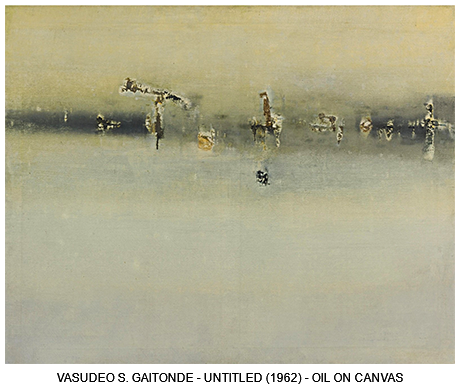
Yet describing him simply as an “abstract painter” misses something important.
Gaitonde himself resisted easy categorisation, and his mature paintings operate less like conventional compositions than meditative fields.
Layered surfaces.
Subtle tonal changes.
Floating forms.
Marks that resemble fragments of an unknown script.
Nothing appears accidental, yet nothing resolves into conventional narrative.
His importance lies partly in demonstrating that emptiness can be active.
Silence can contain intensity.
A painting does not require recognisable imagery to possess profound presence.
Ram Kumar: From City to Landscape to Abstraction
Ram Kumar provides a very different path.
His early figurative works dealt with alienated urban humanity. Gradually, the figure disappeared and landscape became central.
Benaras proved particularly important.
Architecture, river, earth and horizon became increasingly simplified until landscape functioned less as description than memory.
Aakriti has previously presented Ram Kumar among its important solo exhibitions, reflecting the gallery’s longstanding engagement with major strands of Indian modernism.
His trajectory teaches collectors an important lesson: abstraction is not always a rejection of reality.
Sometimes it is reality distilled.
Ganesh Haloi: Remembered Landscape
For Ganesh Haloi, abstraction carries another kind of memory.
Landscape becomes reduced to marks, floating forms, fragments of vegetation and suggestions of water or earth.
What remains is not a particular place but the emotional memory of place.
This distinction helps explain why Indian abstraction often retains connections with lived experience even when recognisable imagery disappears.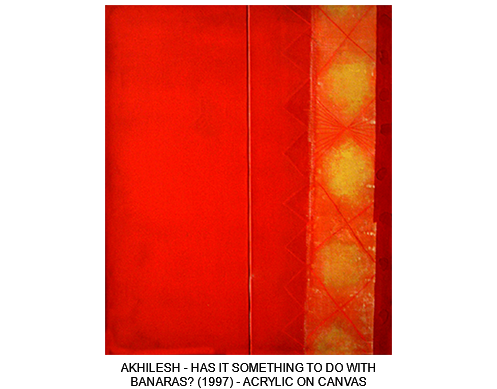
The Bhopal–Central Indian Trajectory
Another important strand developed around central India and Bhopal.
Artists such as Akhilesh pursued abstraction through colour, line and open-ended pictorial structures. His paintings resist linear narrative; line dissolves into colour and texture, creating compositions that seem simultaneously unresolved and complete. His practice has been associated with major national exhibitions including the Bharat Bhavan Biennale, and Aakriti represents his work.
This strand reminds us that Indian abstraction was never confined to Bombay, Delhi or Bengal.
Regional artistic environments created their own languages.
Bengal’s Quieter Abstract Histories
Bengal is usually discussed through the Bengal School, figuration and narrative modernism.
Yet abstraction also developed strongly in the region.
Sunil De is a particularly interesting example. His paintings treat colour almost musically, allowing non-figurative forms to emerge through relationships between warm and cool passages, movement and rhythm. 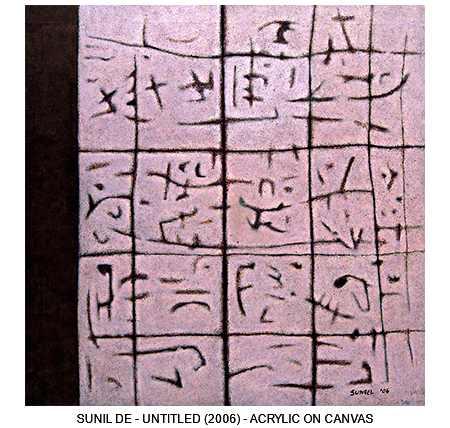
Amitava Dhar, meanwhile, approaches abstraction through fragmentation. Images appear broken, displaced and reconstructed, reflecting the disorder and instability of contemporary experience.
These artists remind us that the history of Indian abstraction remains incompletely mapped.
How Should We Look at an Abstract Painting?
Do not immediately search for objects.
Begin with the entire surface.
Where does your eye go first?
Then look at colour.
Is it harmonious or deliberately uncomfortable?
Look at space.
Does the painting feel deep or flat?
Look at gesture.
Can you sense the movement of the artist’s hand?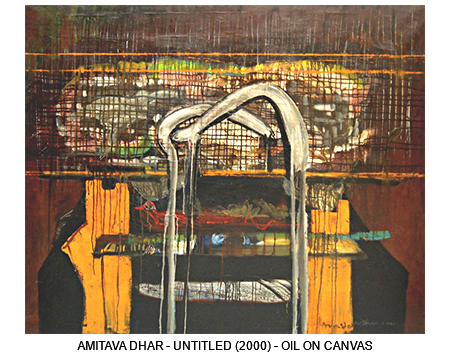
Look at texture.
Has paint been layered, scraped, washed, rubbed or allowed to accumulate?
Then step backwards.
Does the painting still hold together?
Finally, return closer.
Does it reveal something you did not see from a distance?
A strong abstract painting often operates at both scales.
“My Child Could Do That”
It is perhaps the most familiar criticism of abstract art.
But simplicity of appearance and simplicity of creation are entirely different things.
A mature abstract painter may spend decades learning what to remove.
The apparent ease of a line may represent thousands of earlier decisions.
The empty portion of a canvas may have required more judgement than the painted area.
The question should therefore not be:
“Could I make this mark?”
but:
“Could I create the entire visual relationship that gives this mark meaning?”
That is much harder.
Abstraction and the Contemporary Generation
For younger artists today, abstraction no longer needs to defend itself against figuration.
The two coexist freely.
Contemporary abstraction may incorporate digital imagery, architecture, ecology, textile traditions, maps, personal memory, found materials or scientific visualisation.
The boundaries have become porous.
This makes contemporary abstraction particularly interesting for collectors because the language continues evolving.
But it also requires discrimination.
Decorative colour is not automatically abstraction of consequence.
A serious abstract work requires structure, intention and sustained enquiry just as figurative painting does.
Collecting Abstract Art
Collectors should resist buying abstraction merely because it matches an interior.
Live with the image mentally before buying it physically.
Return to it.
Ask whether the composition remains interesting after the initial impact of colour has faded.
Study several works by the artist.
Look for consistency of enquiry rather than repetition of formula.
And, particularly with established artists, understand where the work sits within the artist’s development.
An attractive abstract painting and an important abstract painting are not necessarily the same thing.
From Gaitonde to Today
The significance of Gaitonde is not that later abstract painters followed him.
Most did not.
His significance is that his work demonstrated how far painting could travel once representation ceased to be compulsory.
What followed was not a school but freedom.
Raza found geometry.
Ram Kumar found landscape transformed into memory.
Haloi found fragments of remembered terrain.
Akhilesh found open-ended fields of colour and line.
Sunil De found visual music.
Amitava Dhar found fragmentation.
Others continue finding entirely different paths.
That diversity is the real history of Indian abstraction.
Abstract art does not ask us to recognise.
It asks us to experience.
The moment we stop demanding that every painting represent something familiar, another world opens: colour becomes emotion, line becomes movement, texture becomes memory and empty space becomes presence.
Indian abstraction is therefore not a single movement beginning with one artist and ending with another.
It is an unfinished conversation.
And more than seventy years after India’s modernists began redefining the possibilities of non-representational painting, that conversation remains very much alive.
-- Research & Compiled by Aakriti Art Gallery team
Most read articles
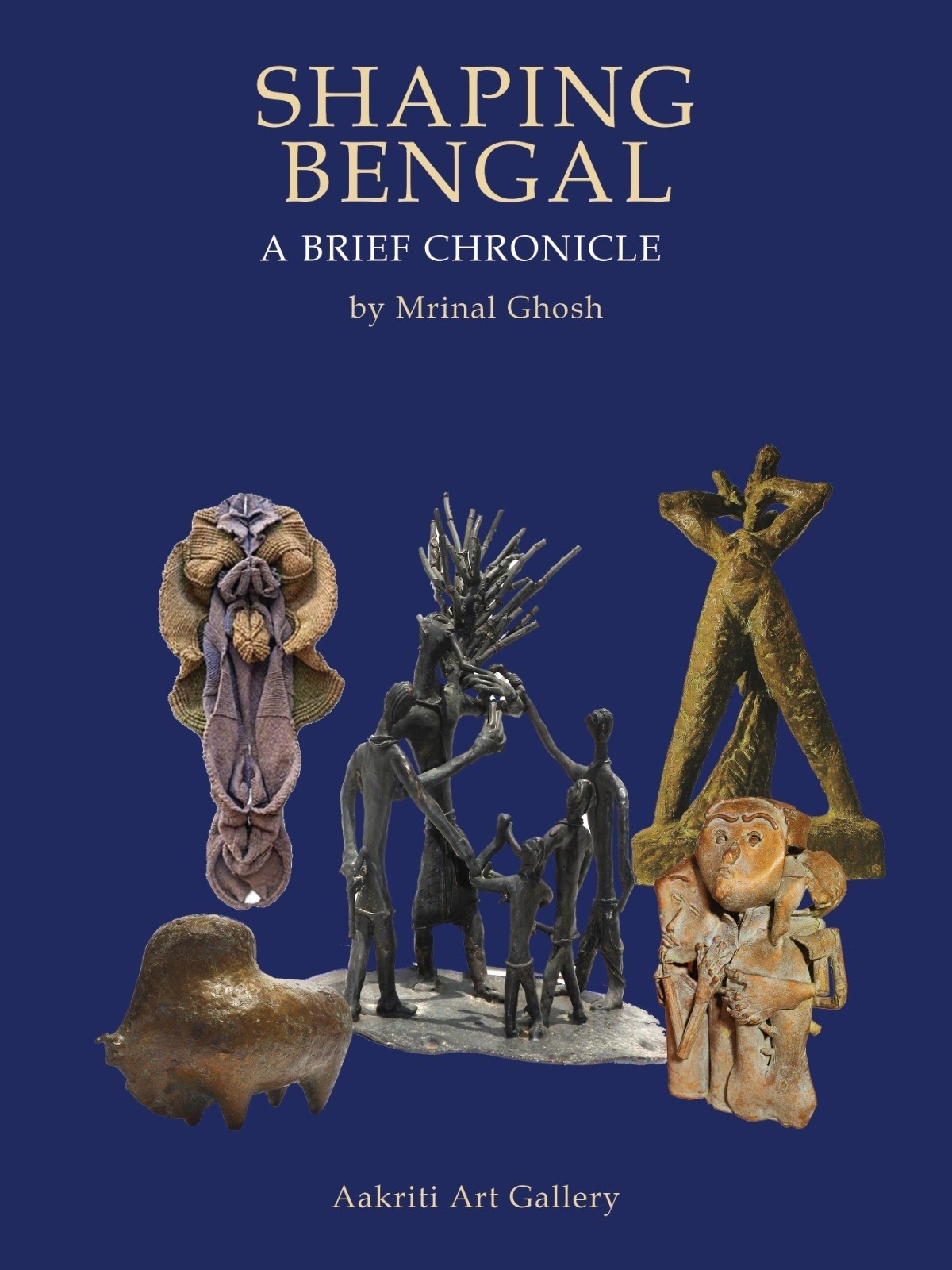
Shaping Bengal : A Chronicle of Modern Sculpture
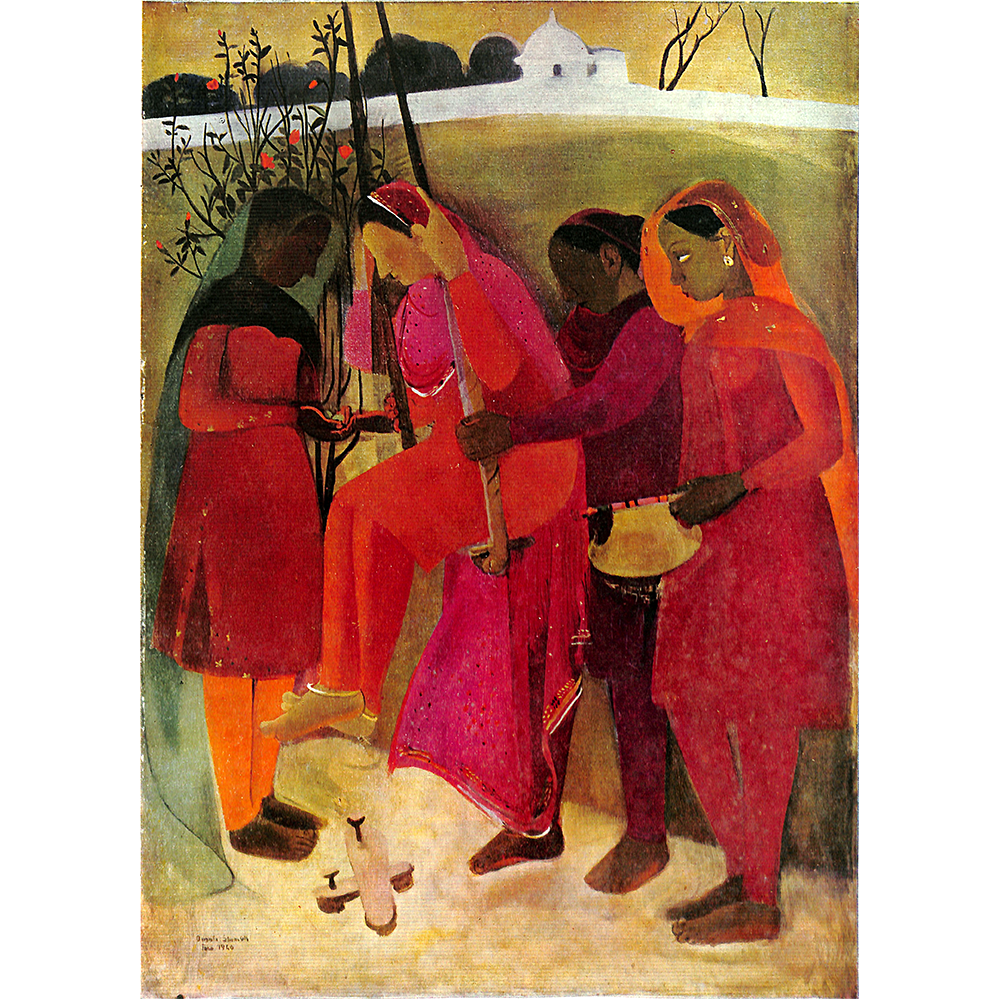
“Europe Belongs to Picasso… India Belongs Only to Me” || Why Amrita Sher-Gil Chose India as Her Artistic Destiny
A Star Amongst Too Many: Chandra Bhattacharjee at Birla Academy of Art & Culture
The Indian Art Market Comes of Age
The Resurgence of the Indian Art Market
Comments
Join the Discussion
Please login to post comments.
Login