Profile:
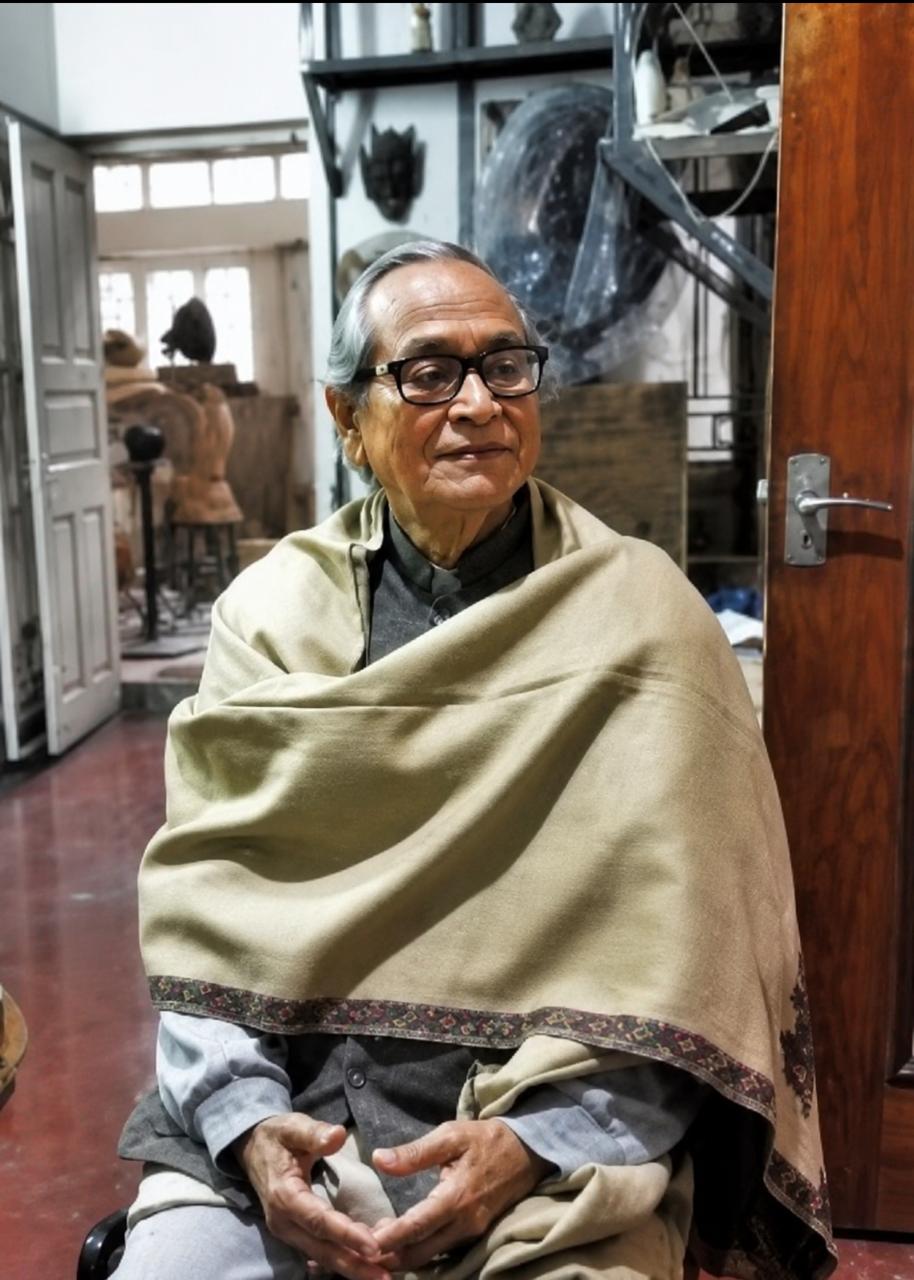
Niranjan Pradhan was an important Indian sculptor whose work occupies a significant place in the history of modern sculpture in eastern India. Born in 1940 at Kalindi, Purba Medinipur, West Bengal, he studied sculpture at the Government College of Art & Craft, Kolkata, where he developed a strong grounding in modelling, carving, and three-dimensional design. Throughout a career spanning more than five decades, he created a distinctive sculptural language rooted in the human figure while continually exploring abstraction, rhythm, and spatial balance.
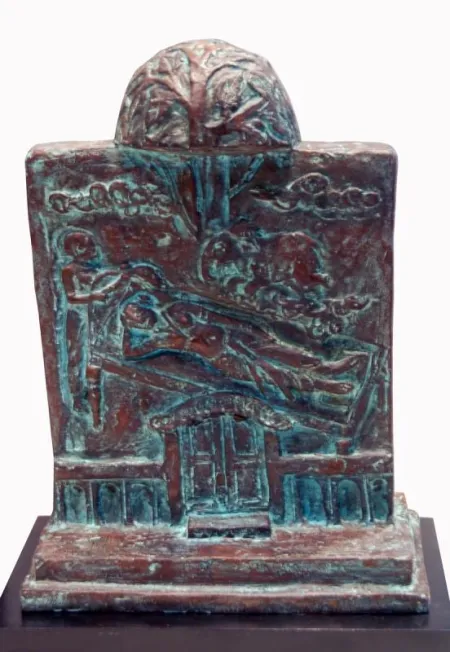
Pradhan worked primarily in bronze, wood, stone, fibreglass, cement, and mixed media. Although the human body remained central to his practice, he rarely pursued literal representation. His figures were simplified, elongated, compressed, or rhythmically reorganised, allowing gesture and movement to become more important than anatomical detail. Through this process, the body became a vehicle for expressing emotion, social experience, and universal human values.
Form and Movement
A defining characteristic of Pradhan’s sculpture is its sense of movement. His compositions often appear to grow organically from a central axis, with flowing contours and balanced masses creating an impression of continuous motion. Even static figures possess an internal rhythm, suggesting dance, labour, devotion, music, or quiet contemplation.
His sculptures reveal a careful understanding of volume and negative space. Solid masses are frequently interrupted by openings that allow light and air to become active elements within the composition. This interplay between fullness and emptiness gives his work both structural strength and visual lightness.
Pradhan’s surfaces are equally considered. Rather than pursuing excessive polish, he allowed the modelling process to remain visible, giving bronze and other materials a tactile vitality. The texture of the surface becomes an extension of the sculptural form, reinforcing its emotional and physical presence.
Humanism and Symbolism
The human condition remained the central concern of Pradhan’s art. Musicians, women, workers, mothers and children, lovers, and contemplative figures recur throughout his oeuvre. These subjects are treated with dignity and restraint rather than sentimentality.
Music provided one of his most enduring themes. Musicians playing traditional Indian instruments frequently appear in his sculptures, where the rhythm of the body echoes the rhythm of sound itself. Likewise, maternal figures embody protection, continuity, and nurturing rather than merely illustrating domestic life.
Nature also informed his sculptural imagination. Organic growth, seeds, leaves, birds, and flowing forms subtly entered his compositions, creating a dialogue between human existence and the natural environment.
Although many of his works possess symbolic meanings, they remain accessible through their clarity of form. Rather than relying upon complex allegory, Pradhan expressed universal emotions through simplified sculptural relationships.
Exhibitions and Recognition
Niranjan Pradhan exhibited extensively throughout India and participated in numerous national exhibitions organised by institutions including the Lalit Kala Akademi, Academy of Fine Arts, Kolkata, and the Birla Academy of Art & Culture. His works entered several important public and private collections across India.
His artistic achievements were recognised through awards from the West Bengal State Academy, the Academy of Fine Arts, and other cultural institutions. His sculptures were also commissioned for public spaces and institutional collections, reflecting the broad appreciation of his work.
Association with Aakriti Art Gallery
Niranjan Pradhan maintained an important association with Aakriti Art Gallery, which has consistently presented and documented his sculptures through exhibitions, publications, and its permanent collection. The gallery has played an important role in introducing his work to new generations of collectors while recognising his contribution to the development of modern sculpture in Bengal.
His sculptures have also featured in Aakriti’s research initiatives, including exhibitions devoted to modern Indian sculpture and the publication Shaping Bengal: Modern Sculpture in Bengal, where his contribution is discussed within the wider history of twentieth-century sculptural practice in eastern India.