The Broken Idol: Post-Independence Disillusionment and The Making of Bengal Modernism
Post-Independence Bengal Modernism
-- MRINAL GHOSH
Art Historian, Critic & Curator
To have an idea of the post-colonial situation in Bengal modernism one should have a thorough understanding about the art-development during 1940s. 1940s was a crucial decade for Bengal in social and political situation and consequently for art activities also.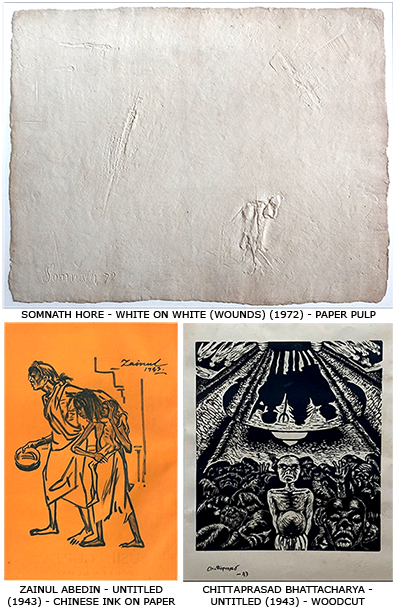 A few dominant features of the decade were Second World War in international arena, the wave of which seriously affected the political and social situation of Bengal; anti-colonial agitations of various sorts including Quit India Movement led by Mahatma Gandhi; severity of British measures and extortions to tackle war and social grievances within the country; the rise in Progressive movement through the activities of the Communist Party of India. The heinous activities of the British Government led to the serious Bengal Famine of 1943 that devastated entire Bengal. Next came the severe communal violence of 1946. In the name of independence in 1947 the country was broken into two. The partition intensely affected Bengal rendering millions of people homeless refugees. 1940s was a decade when modernism in art flowered mostly into rebellion against establishment and debasement of humanity. The progressive attitude and the concept of rebellion that was the primary feature of post-colonial modernism during 1950s and ’60-generated out of the social, political and art situation of the decade of 1940s.
There were two trends in Bengal modernism generated during 1940s. One grew directly as reaction against social turmoil being inspired by the progressive philosophy of the Communist Party of India. Most of the artists started their career highlighting on the devastations caused by famine. Among them the most significant were Zainul Abedin, Chittaprasad Bhattacharya, Somnath Hore, Debabrata Mukherjee and others. Chittaprasad and Somnath continued their works throughout post-colonial era based on the progressive philosophy of Marxism. Another trend of forties was the organized group movement. ‘Calcutta Group’ was formed in the year of famine 1943. Among the members of the group there were Pradosh Das Gupta, Kamala Dasgupta, Paritosh Sen, Nirod Mazumder, Gopal Ghosh, Rathin Maitra, Subho Thakur, Gobardhan Ash, Pran krishna Pal, Abani Sen, Sunil Madhav Sen, Hemanta Mishra and Rathin Mitra. Most of the artists worked through the post-colonial period. In connection with post-colonial disillusionment we will look into the works of some of the artists of the forties, particularly Somnath Hore, Paritosh Sen and some others.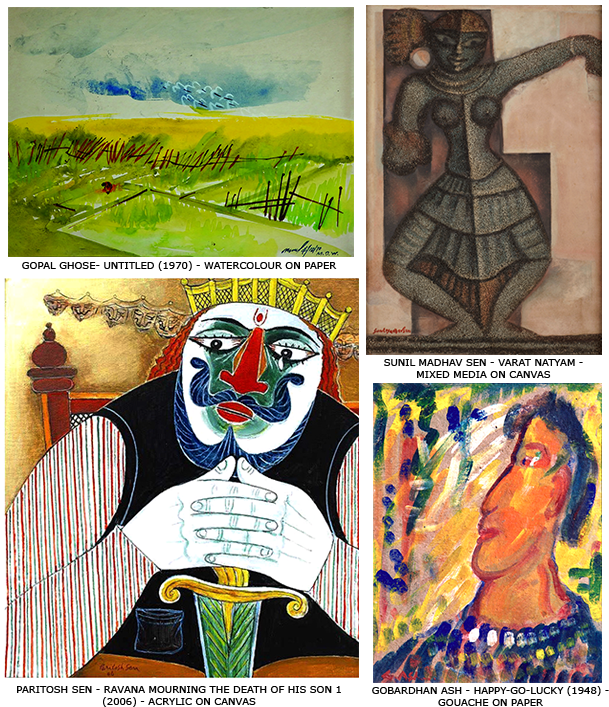
Social situation of the forties was the root cause of disillusionment against the extant art trends that was going on before the decade of 1940s. Till 1930s there were two dominant paradigms. One was academic naturalism initiated by the process of art education designed by the British Government. Many stalwart artists appeared in the field since 1850s, who extended form of naturalism to the post-colonial period. Among them most prominent were Atul Basu (1894-1977), Basanta Ganguli (1893-1968), Jamini Prakash Ganguli (1876-1953), Satish Chandra Singha (1893-1965) and others. We do not mention the names of two of the most important naturalist artists Hemendranath Majumder (1894-1948) and Pralhad Karmakar (?-1946), as they did not live till to a considerable extent of the post-colonial period. The second paradigm was the indigenous nationalist form developed by neo-Bengal or neo-Indian school initiated by Abanindranath Tagore and his disciples like Nandalal Bose, Asit kumar Haldar, Kshitindranath Majumder and many others. The movement of neo-Indian school was a rebellious movement to obviate the upsurge of an alien form in the development of our modernity. One of its tendencies was revivalist. But that was not all. The movement had considerable contribution in generating other trends of indigenous forms like primitive, popular and folk for the development of modernity and modernism, which helped the artists of the forties and those of the next generations to develop their new paradigm.
The artists of the crucial decade of forties while building up their form to express the terrible reality around them could feel that the first two paradigms were not at all adequate for them. They rejected both the trends of academic naturalism and indigenous classicism. In search of new form they looked at Western modernism and Indian popular and folk. Through assimilation of the two and other elements they considered relevant, they built up a new paradigm. The famine pictures of Zainul Abedin, Chittaprasad and Somnath Hore were the expressions of such new trend. Chittaprasad later personalized many of the elements of indigenous popular, but Somnath Hore never compromised. He was totally disillusioned of the first two paradigms.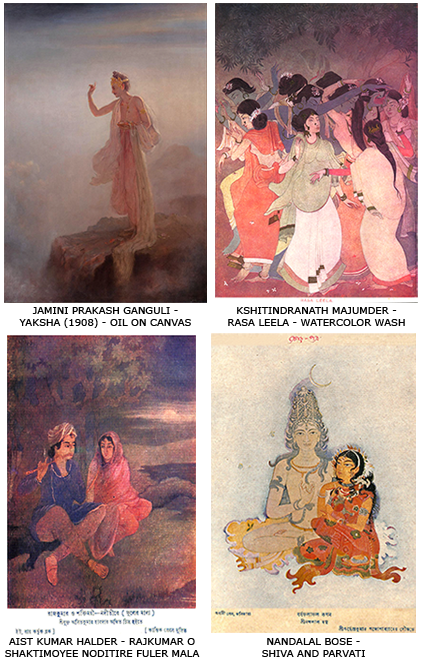 In case of Paritosh Sen though initially he was inspired by the neo-Indian forms but did not take much time to be disillusioned. Throughout his life he worked through assimilation of the forms of Western modernism and indigenous popular.
This is the background against which the post-colonial modernism developed during 1950s and ’60s is to be looked at. This was a very critical period. The country has been independent coming out of the shackles of colonial subjugation. There has been lots of hope about progress and development. Problems were there. Yet there was faith on developing future. Left wing political movement was on the rise. Through protests people could prove their vitality and rebellion against social disparity and injustice. Within the multidimensional shadows there was a silver lining of light concentrated in concept of humanity among the people. But as the decade of fifties was proceeding towards the sixties this silver lining of faith and hope was gradually waning. The development on which the people were trying to place their trust was in course of time evading them. Where was the flaw? According to Rajni Kothari, “In a way there was a basic flaw in Nehruvian model itself, namely its failure to institutionalize the ideological preferences, resulting in a system that led to growing marginalization of millions of people, increasing inequity. … and growing discontent over time …” (‘The Democratic experiment’ in ‘Wages of Freedom’. Ed. Partha Chatterjee. Oxford. 1998. P-28). These ‘marginalisation’ and ‘inequity’ were the basic problems of post-colonial social development.
There was disillusion among the artists of fifties and sixties, those who were born between 1930 and 1940. This disillusionment acted in both ways, in their concept about society and freedom, also on the developments of art paradigms developed from 1850-s to 1940s. They took their cue from the forms generated during forties, but did not accept all the models they initiated. Instead of totally rejecting the academic naturalism and neo-Indian trends, they accepted the positive elements ingrained in them. They reorganized the past paradigms according to their own needs and values. So we see Ganesh Pyne was revitalizing the essences of inwardness contained in the concept of Abanindranath, also the mystery contained in the paintings of Rabindranath Tagore. In the core of the paintings of Shyamal Datta Roy and Sanat Kar there were subtle essences of neo-Indian paradigm. Dharmanarayan Dasgupta’s fantasy too had its root in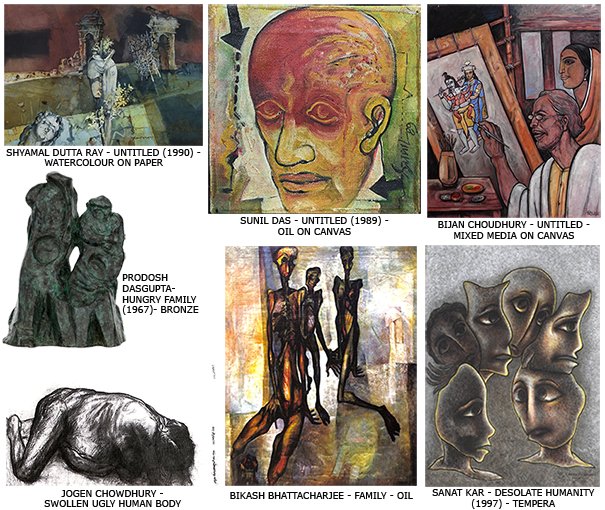 neo-Indian search for indigenousness. There are other examples also.
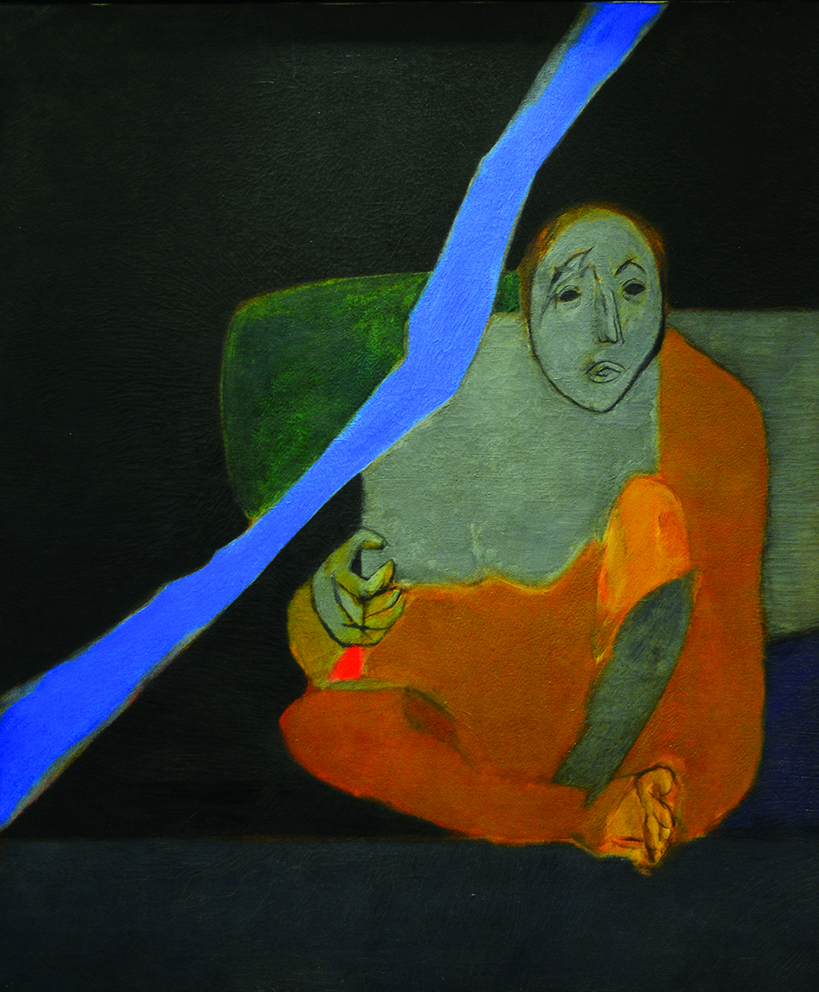
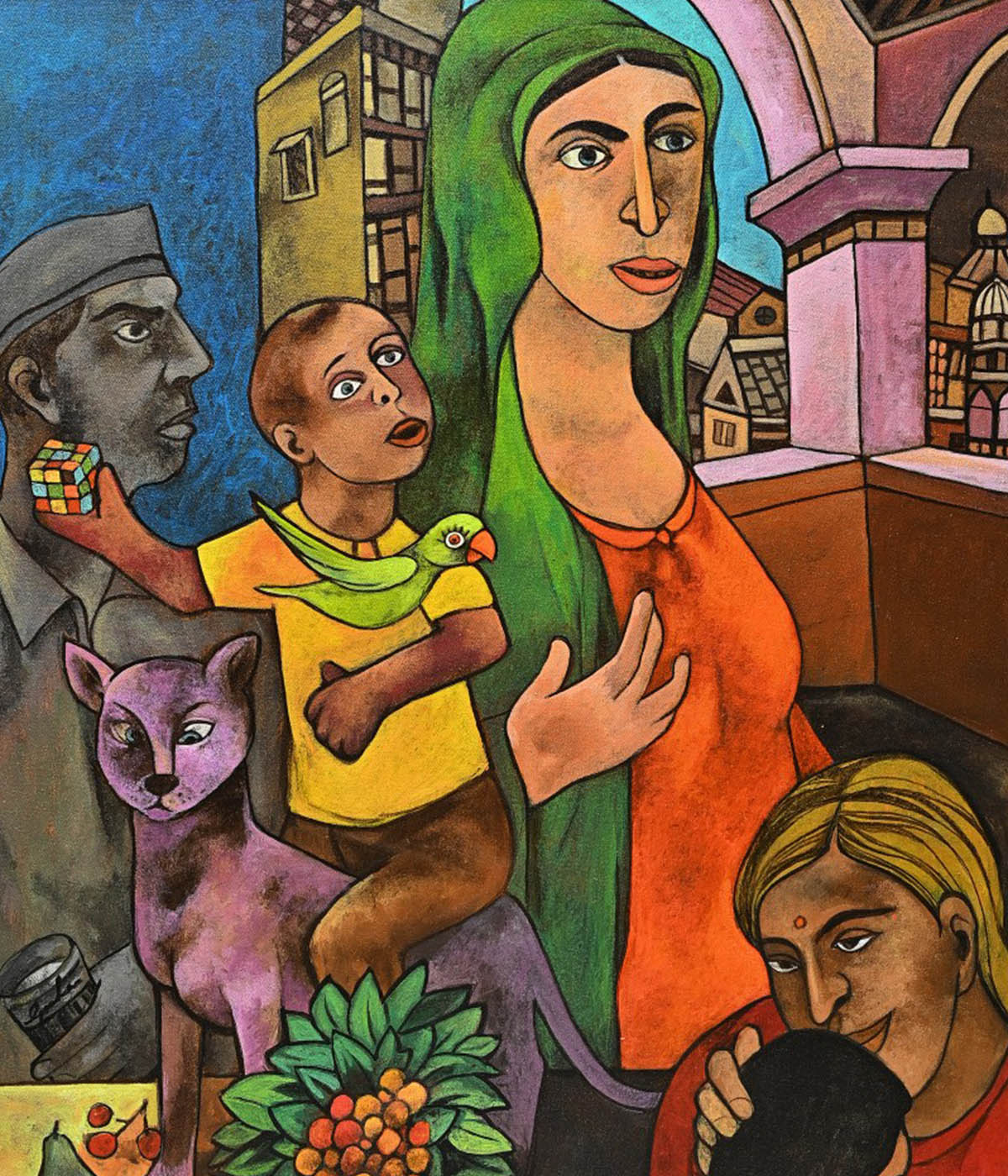
The root of Bikash Bhattacharya’s form was deeply ingrained in academic naturalism, but he totally shattered it towards fantasy transforming it through assimilation with Western Expressionism. Praksh Karmakar’s devastating fantasy was also rooted in his skill in naturalism. Sunil Das shifted away from all the previous established paradigms but that was through his skill in naturalist rendering. In his student days Jogen Chowdhury tried to grasp the forms of neo-Indian school. But as he proceeded through the decades of sixties and seventies he was totally disillusioned of the first two paradigms and developed a rebellious fantasy out of his own contemplation, where many diverse sources intermingled. Rabin Mondal shifted from his initial dependence on expressionism and Picasso to building up of personal idiom based on primitivism. So the basic trends of the artists of fifties and sixties were to build up a new idiom based on the previous models but thoroughly transforming it through assimilation of various trends of tradition and modernism from national and international sources.
The young artists during the end of 1950s and early 1960s were pulsating with passion of creativity and dream for the future, but could not have any platform for their expression. Some of them like Prakash Karmakar, to find wide audience from among ordinary people, made an instance by mounting an exhibition on the walls of Sudder Street beside Indian Museum in 1959. They felt the necessity of coming under an organized group. This could be materialized due to the initiation of the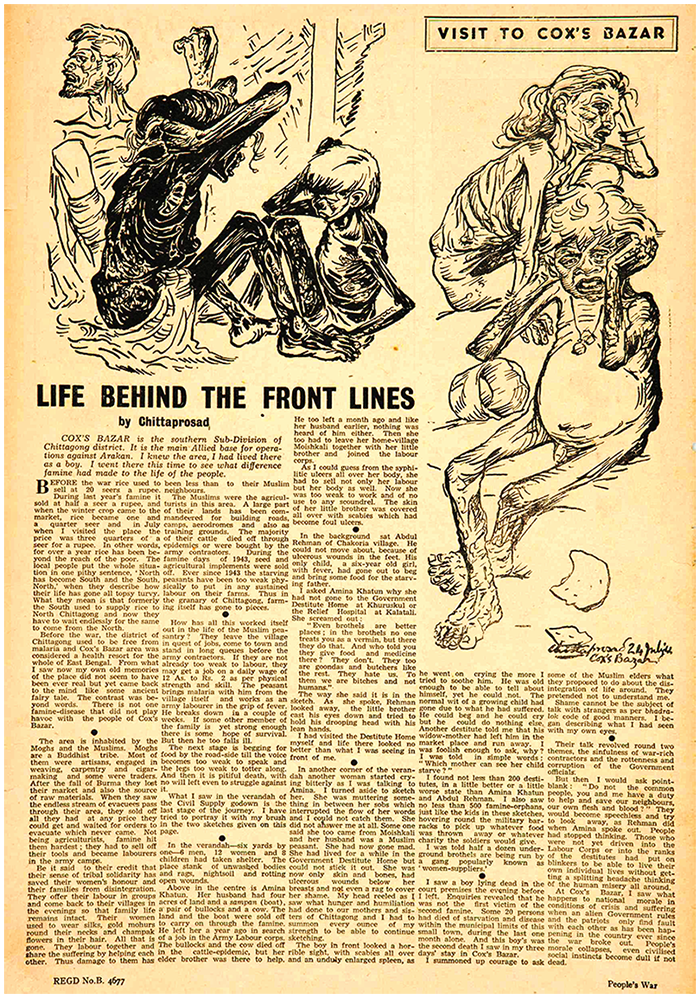 cartoonist and art critique of repute Ahibhushan Malik. The ‘Society of Contemporary Artists’ was formed in 1960. Its first group show was held from 20 November to 3 December 1960 at Artistry House, 15 Park Street of Calcutta. The name of the participating artists in the first show were: Somanth Hore, Reba Hore, Suaknta Bose, Dipak Banerjee, Sunil Das, Sailen Mitra, Sanat kar, Anil Baran Saha, Shyamal Dutta Roy, Arun Bose, Praksh Karmakar, Kamala Roy Chowdhury, Bijan Chowdhury, Suahs Roy, Arunava Dutta and Satyasevak Mukherjee. Apart from them there were three sculptors participating in the first show. They were Uma Siddhanta, Sarbai Roy Chowdhury and Raghunath Singha. Renowned art scholar Pranabranjan Roy was also included in the group. Some of the above artists left the group after the first show. They along with others formed another group ‘Calcutta Painters’ in 1964. The other important artists like Ganesh Pyne and Ganesh Haloi joined ‘Society’ in 1970s. The artists belonging to these two groups and some others working independently like Ramanada Banerjee generated a new trend of modernism that was entirely different from the art tends developed during the initial stages of modernity and modernism from 1850s to 1940s.
In this first trend of post-independent modernism of Bengal obviously there widespread of disillusionment about the forms and concepts developed earlier but many of the previous and extant ideologies were revalued in the new light of the developed world. The artists of fifties and sixties did not work collectively towards a common formal language as was the agenda of the artists of academic naturalism and neo-Indian school, each of them worked individually from a personal psychological trend and world outlook, built up multifarious ways of expression, yet there was a common denominator. Art for most of them was a rebellion against the shattered realities, deterioration of social values. Either they analyzed the nature of decomposition, nature of decay or highlighted on what should be the ideal. There was no common ground for form also. Through personal form they reflected in their own way the entire heritage of world art from primitivism to post-colonialism.
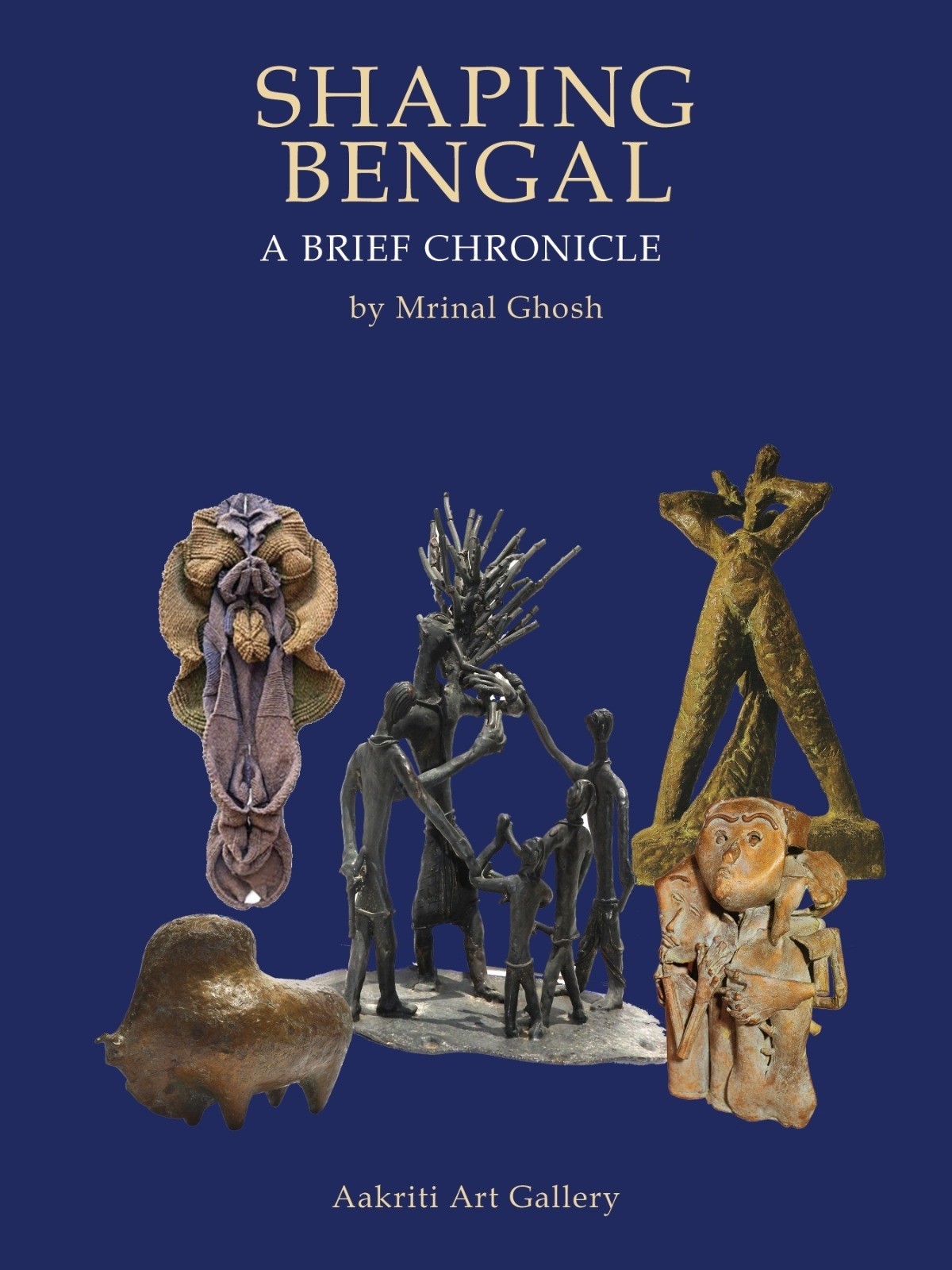
To have an idea of the uniqueness of their expressions we will look intimately, albeit in brief for constraints of space, towards the achievement of some of the artists of this generation. But before that 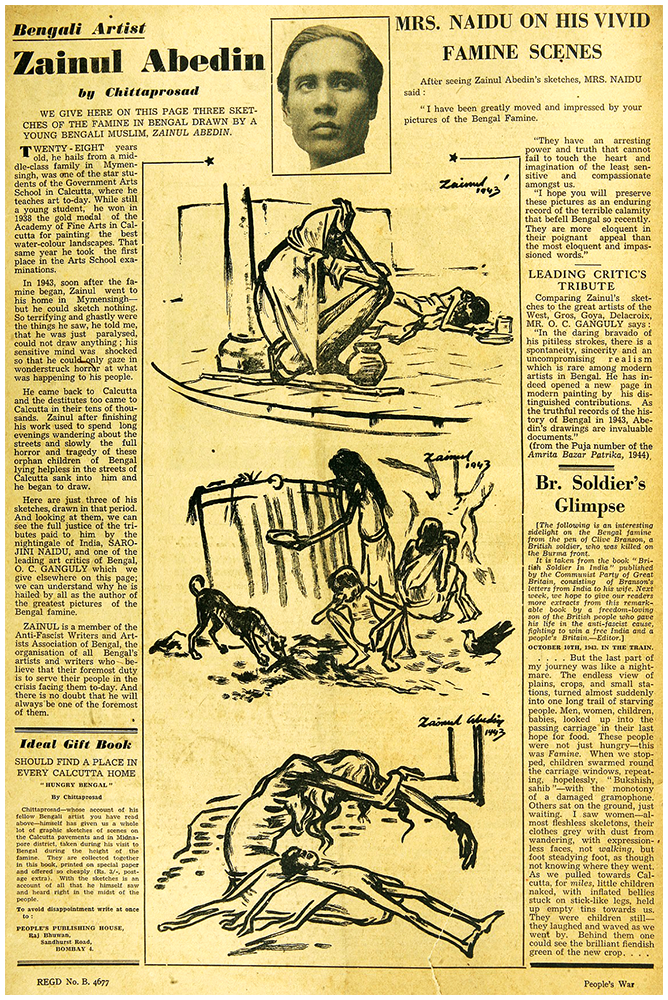 it is necessary to pay homage to the achievements of a brilliant sculptor, whom we did not mention earlier, who through disillusionment of the previous and extant paradigms developed an entirely new formal structure generating from indigenous primitivism to build up an indigenous identity. She was Meera Mukherjee (1923-1998). She arrived at her personal form during the decade of 1960s and showed how sculpture can express the joys and sorrows of the people rooted to the soil, how it can reveal the wisdom that India has achieved through thousands years of journey from primitivism to classicism, from the enlightenment of Buddhism to the grand narrative generated the philosophy of Mahatma Gandhi and Rabindranath. She has shown how the modernism of the art of India can stand on its own feet defying any of the Western sources. Some of the artists of sixties worked to achieve such a goal.
Let us look at the achievements of a few of them. First two are the artists of forties. Somnath Hore was out and out a Marxist till the end of his life. He created his form out of his philosophy of ‘WOUND’ in drawing, graphics and sculptures. He abandoned all the prevailing paradigms of form and built up his own primarily from primitivist expressionism. Paritosh Sen also an artist of forties worked through sixties to 2008. A progressive, socially conscious artist he expressed himself through humor and sarcasm developing his personal form out of expressionism and cubism.
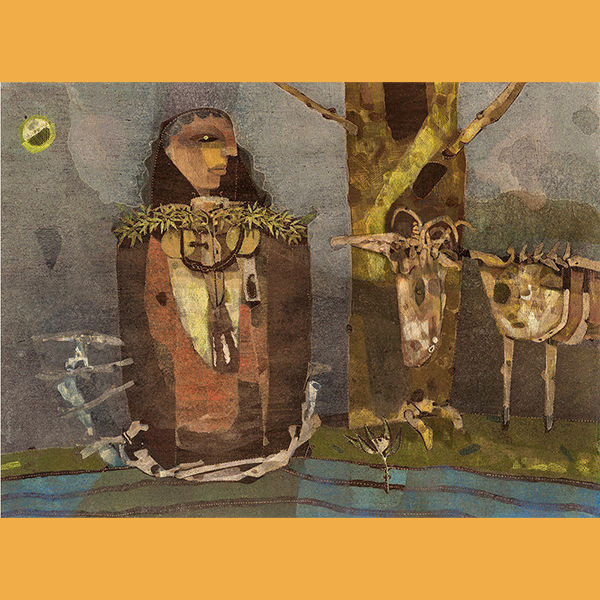
Ganesh Pyne built up his form from his deep rooted inward contemplation. He dissected the contemporary reality through the mystic light contained in the myths of civilizations, also unfolded the light of resurrection as revealed in his tempera paintings ‘The Fisherman’ of 1971 and ‘The harbor’ of 1972. Through his water color and gouaches Ganesh Haloi transformed the lyrical landscapes of Bengal towards the unique form of indigenous abstraction. Shyamal Dutta Roy could not forget the tragic reality of the famine of 1943 and developed a personal symbol of ‘Broken Bowl’ to reveal the poverty and hunger that the people rooted to the soil in his soft and lucid watercolor paintings. He earned the fame as a magician in watercolor. Bikash Bhattacharya was entirely different from the above two artists. Through disintegration of the immaculate naturalism towards irrational fantasy he unveiled the deep rooted owe and anxiety, the post-colonial society of Bengal was suffering from. Sunil Das immersed in the international arena to build up his personal form to reveal the crisis in values in contemporary society. We will mention of another artist of sixties, who with his deep faith in the philosophy of neo-Indian school evolved an idiom based on flowing folk forms of Bengal to reveal peace and tranquility of life. He is Ramananda Banerjee.
In the end we see initially what was disillusionment ultimately turned to be the revaluation of the earlier paradigms through which the artists of sixties worked to shape post-colonial reality of Bengal. In art -- heritage always plays significant role.
Editorial Note
Mrinal Ghosh offers an important reassessment of Bengal’s post-Independence modernism by locating its origins within the social upheavals of the 1940s and the artistic responses that followed. Rather than viewing the 1950s and 1960s as a complete break from earlier traditions, he argues that artists selectively reinterpreted both Academic Naturalism and the Bengal School while engaging with international modernism. This nuanced reading challenges simplistic narratives of rupture and demonstrates how modernism in Bengal evolved through continuity as much as rebellion.
The essay also reminds us that artistic change cannot be separated from political history. The Bengal Famine, Partition, refugee displacement, and the ideological debates surrounding the Nehruvian state profoundly shaped the visual language of artists including Somnath Hore, Ganesh Pyne, Ganesh Haloi, Bikash Bhattacharya, Shyamal Dutta Roy, Sunil Das and others. Equally valuable is the discussion of institutions such as the Society of Contemporary Artists, which provided new platforms for experimentation during a formative period.
This essay is published with only light editorial corrections for spelling, punctuation and consistency. The historical interpretations, arguments and opinions remain those of the author. Readers are encouraged to consult the references below for further study of Bengal’s rich post-Independence artistic landscape.
Editorial Endnotes
- Rajni Kothari, The Democratic Experiment, in The Wages of Freedom, ed. Partha Chatterjee (Oxford University Press, 1998).
- Tapati Guha-Thakurta, The Making of a New Indian Art.
- Partha Mitter, Art and Nationalism in Colonial India.
- R. Siva Kumar (ed.), Santiniketan: The Making of a Contextual Modernism.
- Geeta Kapur, When Was Modernism.
- Partha Chatterjee (ed.), The Wages of Freedom.
- Exhibition catalogues of the Society of Contemporary Artists and the Calcutta Group.
- Mrinal Ghosh, Shaping Bengal: Modern Sculpture in Bengal.
Selected Bibliography
- Chatterjee, Partha (ed.). The Wages of Freedom. Oxford University Press, 1998.
- Guha-Thakurta, Tapati. The Making of a New Indian Art. Cambridge University Press.
- Kapur, Geeta. When Was Modernism. Tulika Books.
- Kothari, Rajni. “The Democratic Experiment.” In The Wages of Freedom.
- Mitter, Partha. Art and Nationalism in Colonial India. Cambridge University Press.
- Siva Kumar, R. (ed.). Santiniketan: The Making of a Contextual Modernism. National Gallery of Modern Art.
- Sen, Paritosh. Jindabahar Lane.
- Ghosh, Mrinal. Shaping Bengal: Modern Sculpture in Bengal. Aakriti Art Gallery, 2025.
Comments
Join the Discussion
Please login to post comments.
Login