The Painting I Didn’t Buy
Lessons Every New Art Collector Learns Sooner or Later
 Many years ago, a young visitor walked into an art gallery and spent nearly an hour staring at a painting.
He circled the room several times. He looked at every other artwork on display. Yet his eyes kept returning to the same painting.
Eventually he approached the gallery desk and asked the question that almost every first-time collector asks:
“How do I know if this is the right painting?”
The answer surprised him.
“If you’ve spent an hour looking at it while ignoring everything else in the room, it may already be yours.”
He smiled politely, thanked the gallery staff, and left without buying it.
A week later he returned.
The painting had been sold.
For years afterwards he remembered that artwork far more vividly than many of the paintings he eventually purchased.
The lesson had nothing to do with investment, market value, or future appreciation. 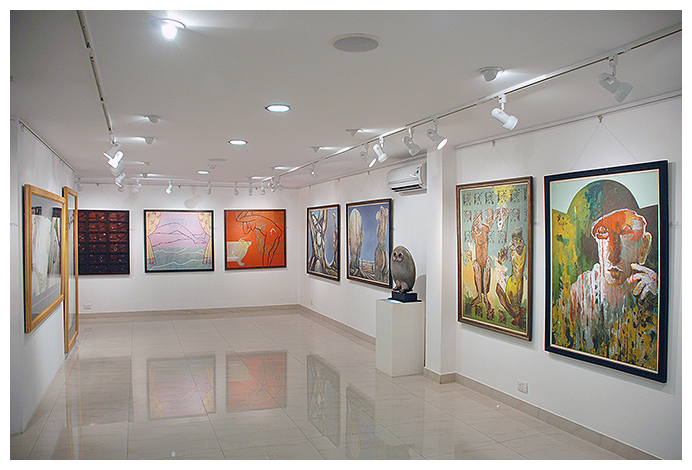
It was his first lesson in collecting.
Art collecting begins with attraction before it begins with knowledge.
Today, one of the most common misconceptions about collecting is the belief that collectors are somehow born with expertise.
Nothing could be further from the truth.
Every serious collector started exactly the same way—confused, curious, intimidated, and slightly afraid of making a mistake.
Many imagine that successful collecting requires an encyclopedic knowledge of art history.
In reality, it begins with something much simpler.
Learning to pay attention.
The first task of a collector is not buying.
It is looking.
Visit galleries. Walk through museums. Browse catalogues. Attend exhibitions. Look at artworks that you like and artworks that doesn’t interest you.
After a while something interesting begins to happen.
Patterns emerge.
You realise that certain images stay in your mind long after you have left the gallery. 
You begin slowing down in front of particular paintings.
You start noticing recurring themes in your own preferences.
Perhaps you are drawn towards the human figure.
Perhaps you love abstraction.
Perhaps sculpture fascinates you.
Perhaps you discover that black-and-white printmaking speaks to you more than colourful paintings.
This is how taste develops.
Not through theory.
Through observation.
One of the great mistakes made by new collectors is asking:
“What should I buy?”
A more useful question is:
“Why am I drawn to this particular artwork?”
The answer often reveals far more about the collector than the artwork itself.
Over the years, I have met collectors who purchased paintings because they matched the curtains in their drawing room.
I have met others who bought artworks because someone promised the artist would become famous.
Some made money.
Many did not.
The collectors who seemed happiest, however, shared one common characteristic.
They bought artworks they genuinely wanted to live with. 
This distinction is important.
Art is unlike most other assets.
You do not place it inside a locker.
You encounter it every day.
You drink your morning tea in front of it.
You notice it while speaking with friends.
You glance at it absentmindedly while crossing a room.
The best artworks change with time.
Not because they physically change.
Because you do.
A painting that seemed simple five years ago may suddenly reveal new meanings.
A sculpture that originally attracted you because of its beauty may eventually become interesting because of its ideas.
This is one reason why the debate between buying for love and buying for investment is often misleading.
The strongest collections are rarely built around a single objective.
A good artwork can offer pleasure, intellectual engagement, aesthetic beauty, and financial appreciation simultaneously.
But if one must choose a starting point, it should always be genuine interest.
History provides countless examples of collectors who purchased artists because they believed in the work long before the market noticed them.
The reverse is also true.
Many artworks purchased solely because they were fashionable have quietly disappeared from memory.
The market can be unpredictable. 
Your response to an artwork is often more reliable.
Another misconception is that collecting requires enormous wealth.
Certainly, major masterpieces command significant prices.
Yet every generation has produced artists whose works remained affordable long before broader recognition arrived.
In many ways, this is one of the most exciting aspects of collecting contemporary art.
The opportunity to discover.
The opportunity to follow an artist’s journey.
The opportunity to acquire works because they matter to you rather than because someone else has already validated them.
Some of the most interesting collections begin with surprisingly modest purchases.
What distinguishes great collectors is not the size of their budgets.
It is the consistency of their curiosity.
The truth is that there is no perfect first artwork.
There never was. 
Some collectors begin with a print.
Others start with a small sculpture.
Many purchase a painting because they simply cannot stop thinking about it.
What matters is not the medium.
What matters is the connection.
The painting that got away.
The artwork you keep returning to.
The image that remains in your mind long after you have left the gallery.
These are often the clues worth following.
Collecting art is not a race.
It is a conversation.
And like all meaningful conversations, it begins by listening carefully.
- Research & Compiled by Aakriti Art Gallery team



Comments
Join the Discussion
Please login to post comments.
Login