When India Met Paris
The Artists Who Redefined Modernism
-- Research & Compiled by Aakriti Art Gallery team
For much of the twentieth century, no city attracted artists from around the world more than Paris. It was the birthplace of Impressionism, Cubism, Surrealism, and many other revolutionary movements that changed the course of art history. To study or work in Paris was not simply to travel abroad—it was to enter the heart of modern art.
For a remarkable generation of Indian artists, Paris became a place of discovery. They arrived not to abandon their roots but to expand their horizons. What they found there changed the language of Indian art forever.
A New Beginning After Independence
In the years following India’s Independence in 1947, many young artists felt that the old boundaries of art were no longer enough. Colonial academic realism still influenced art schools, while the Bengal School had already established its own nationalist vision. A new generation wanted something different—an art that could speak to the modern world while remaining deeply Indian.
Paris offered exactly that opportunity.
Its academies, museums, galleries, cafés, and artist studios exposed Indian painters, sculptors, and printmakers to ideas from across Europe. They encountered Cubism, abstraction, Expressionism, and experimental printmaking, but they also found the freedom to develop their own voices.
Rather than copying Europe, they returned to India—or continued their dialogue from abroad—with renewed confidence in their own cultural identity.
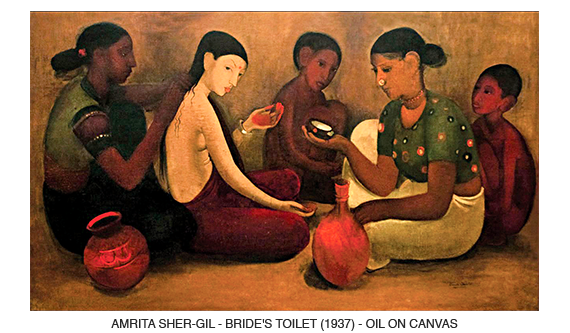
Amrita Sher-Gil: The First Great Bridge
The story begins even before Independence with Amrita Sher-Gil (1913–1941).
Born to a Sikh father and Hungarian mother, she studied in Paris between 1929 and 1934 at the Académie de la Grande Chaumière and the École des Beaux-Arts. Her early works reflected European influences, but after returning to India she turned her attention to village life, ordinary people, and the quiet dignity of rural existence.
Paintings such as Three Girls and Bride’s Toilet combined European composition with Indian subjects in ways never seen before. Sher-Gil proved that modernism did not have to imitate the West—it could emerge from Indian realities.
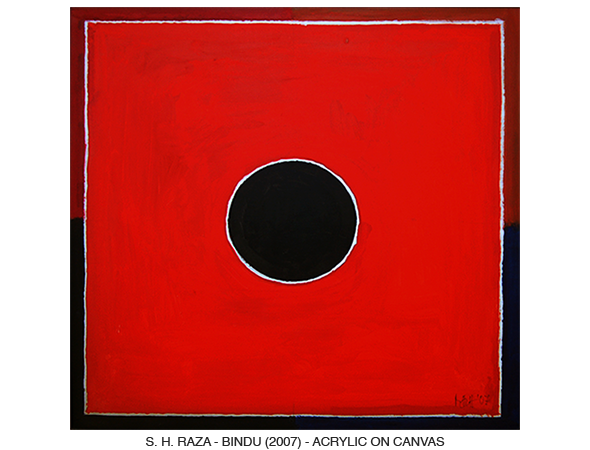
S.H. Raza and the Search for the Bindu
Perhaps no artist represents the French connection more completely than Sayed Haider Raza (1922–2016).
He arrived in Paris in 1950 on a French government scholarship and remained there for decades. In his early years he painted expressive landscapes inspired by Provence and the French countryside. Yet over time his thoughts increasingly returned to India.
The result was the famous Bindu—a simple circle that became the centre of his artistic philosophy. Inspired by Indian spirituality, Tantra, and the Upanishads, the Bindu transformed his paintings into meditations on energy, creation, and the universe.
Ironically, it was in Paris that Raza discovered one of the most Indian symbols of his career.
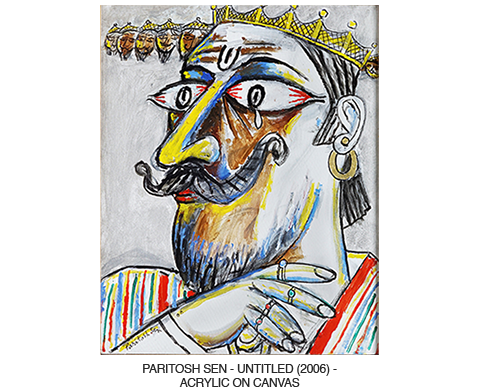
Paritosh Sen: Looking at India Through Paris
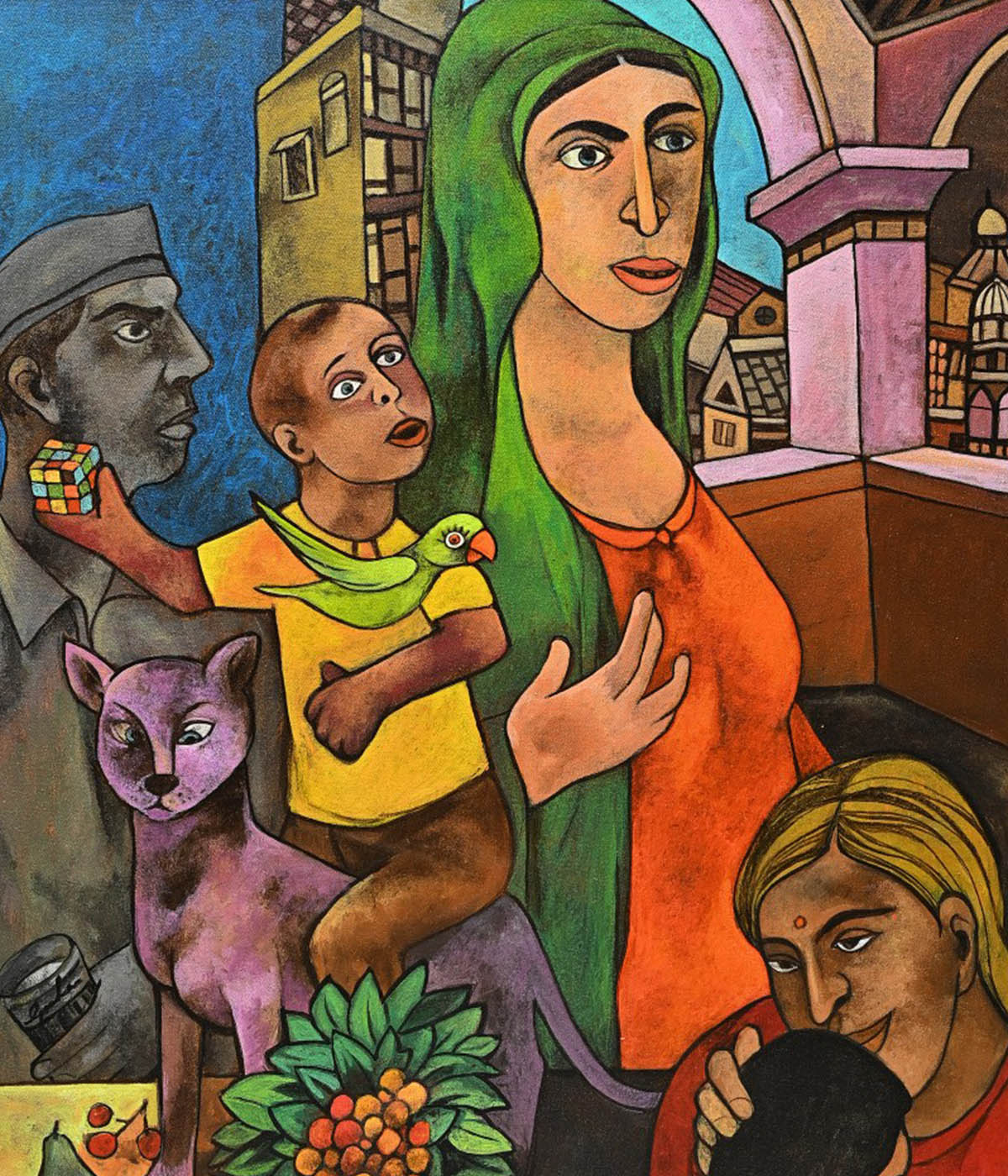
Paritosh Sen (1918–2008) arrived in Paris in 1949 after helping found the Calcutta Group. He studied under André Lhote, attended the Académie de la Grande Chaumière, and immersed himself in European modernism.
Yet his paintings never lost their Indian character.
His expressive portraits, crowded urban scenes, and satirical observations carried the energy of Kolkata while adopting lessons from Cubism and post-war European art. On returning to India, Sen became one of the country’s most influential teachers and thinkers.
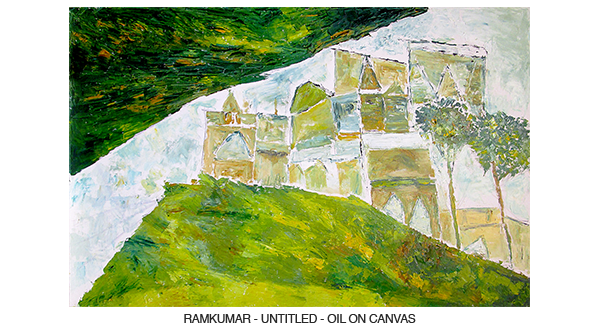
Ram Kumar’s Silent Landscapes
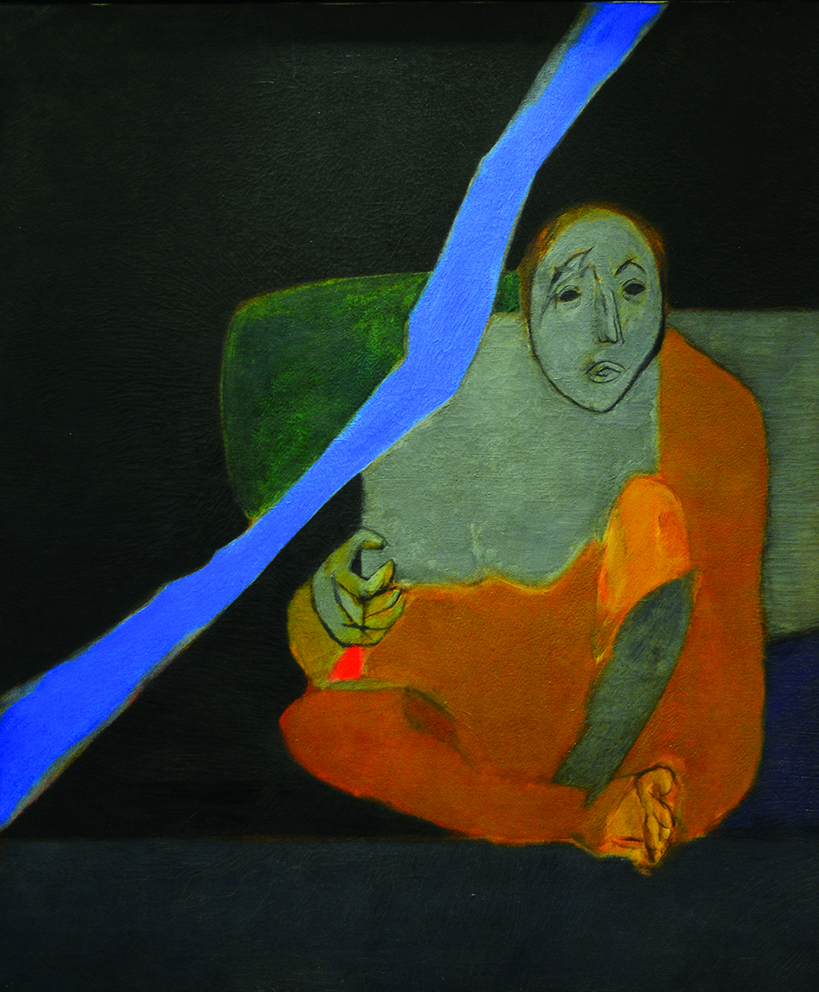
When Ram Kumar (1924–2018) lived in Paris during the early 1950s, he absorbed abstraction and modernist painting from European masters.
But after returning home, his attention shifted to Varanasi.
His later paintings transformed the ancient city into quiet geometric landscapes where architecture dissolved into blocks of colour and light. They were not literal views but emotional responses to memory and place.
Paris had given him new tools, but India remained his subject.
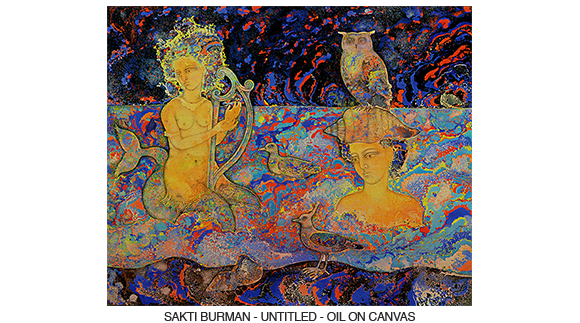 Sakti Burman: A Dream Between Two Worlds
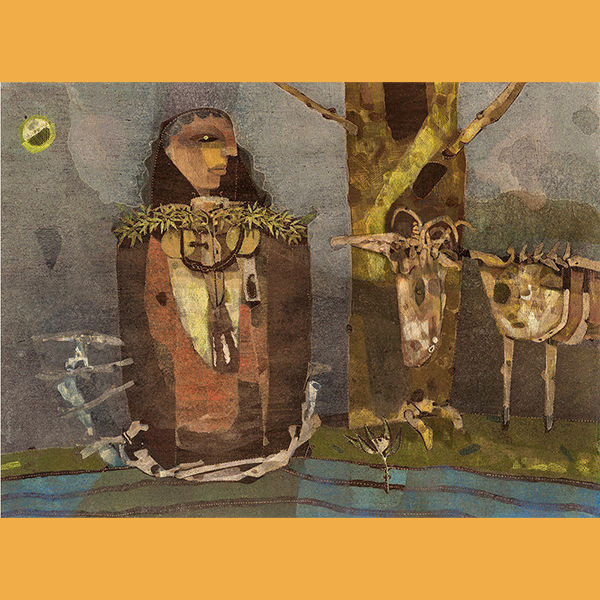
Unlike many artists who returned permanently, Sakti Burman (b. 1935) chose to remain in France after studying at the École Nationale Supérieure des Beaux-Arts.
Yet his paintings are filled with Indian mythology, Krishna, Ganesha, childhood memories, and stories from the epics.
Rendered with delicate textures and dreamlike atmospheres, his works blend French painterly traditions with Indian imagination so seamlessly that neither dominates the other.
His career demonstrates that artistic identity can exist comfortably across cultures.
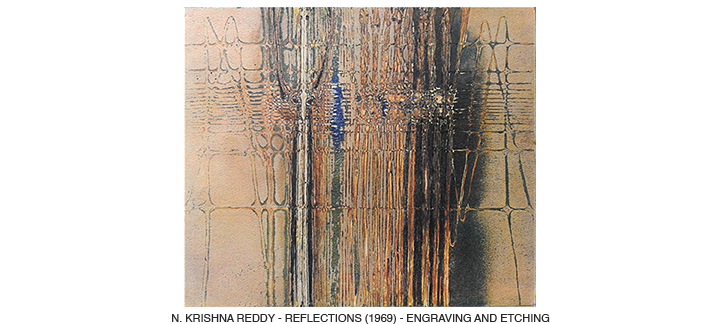
Krishna Reddy and the Revolution in Printmaking
Another remarkable figure was Krishna Reddy (1925–2018), who worked at Stanley William Hayter’s famous Atelier 17 in Paris.
There he developed innovative printmaking techniques that transformed the medium internationally. His colour viscosity printing process remains one of the great technical achievements in modern printmaking.
Although celebrated worldwide, Reddy’s work remained rooted in organic forms inspired by nature and Indian philosophy.
Paris Was Not About Becoming European
A common misunderstanding is that Indian artists travelled to Paris to become Western artists.
The opposite is often true.
Distance gave them perspective.
Raza rediscovered Indian philosophy.
Ram Kumar found Varanasi.
Sakti Burman embraced mythology.
Paritosh Sen returned with sharper observations of Indian society.
Krishna Reddy revolutionised printmaking while maintaining his own artistic identity.
Paris did not erase their Indian roots—it strengthened them.
A Dialogue, Not an Imitation
The importance of this French connection lies in dialogue rather than influence.
These artists borrowed techniques but not identities. They experimented with Cubism, abstraction, printmaking, and modernist composition while continuing to draw inspiration from Indian landscapes, spirituality, folklore, history, and everyday life.
Their achievement was not to become European.
It was to create an Indian modernism confident enough to engage with the world on equal terms.
Why This Story Matters Today
As Indian modern art gains increasing international recognition, the journeys of these artists remind us that creativity often grows through exchange rather than isolation.
The cafés of Montparnasse, the studios of Paris, and the galleries of the Left Bank became unexpected classrooms for some of India’s finest artists. Yet their greatest masterpieces remained deeply connected to the memories, philosophies, and landscapes of home.
Perhaps that is the real legacy of the French connection.
Paris did not make these artists less Indian.
It gave them the freedom to become more deeply themselves.
Endnotes
- DAG, India’s French Connection: Indian Artists in France, exhibition catalogue, 2018–19.
- Yashodhara Dalmia, The Making of Modern Indian Art.
- Raza Foundation publications and archival material.
- Paritosh Sen, Jindabahar Lane (memoir).
- Exhibition catalogues on Sakti Burman, Ram Kumar, Krishna Reddy, and Amrita Sher-Gil.
- Académie de la Grande Chaumière and École des Beaux-Arts historical records.
Selected Bibliography
- Dalmia, Yashodhara. The Making of Modern Indian Art.
- DAG. India’s French Connection: Indian Artists in France. Exhibition Catalogue, 2018–19.
- Raza Foundation publications.
- Sen, Paritosh. Jindabahar Lane.
- Various monographs on Amrita Sher-Gil, Ram Kumar, Sakti Burman, and Krishna Reddy.
Note
This article is intended as an educational overview of the artistic exchanges between India and France during the twentieth century. It highlights major figures and movements but does not claim to be an exhaustive survey of all Indian artists who studied or worked in Paris.
Comments
Join the Discussion
Please login to post comments.
Login