The History of Printmaking and Printmakers in India
From the First Printing Press to Modern Graphic Art
Printmaking occupies a unique position in the history of Indian art. It is at once a medium of communication, a vehicle for artistic experimentation, and one of the most democratic forms of visual expression. Unlike painting, which usually exists as a single object, printmaking allows artists to create multiple original impressions from a block, plate, stone, or screen. Through this process, artworks can reach wider audiences while retaining their artistic integrity.
The history of Indian printmaking spans nearly five centuries, from the arrival of the printing press in colonial Goa to the sophisticated graphic practices of contemporary artists. Along the way, it has intersected with religion, nationalism, education, political movements, and modernism.
The Arrival of Printing in India
The story begins in 1556 when Portuguese Jesuit missionaries introduced the first printing press to Goa. Initially, printing served religious, administrative, and educational purposes. Books, catechisms, and linguistic texts were the primary outputs of these early presses.
For centuries, printing remained largely a tool of communication rather than artistic expression. However, the technology gradually spread to colonial centres such as Calcutta, Bombay, and Madras, laying the foundation for India’s print culture.
By the nineteenth century, printed imagery had become increasingly important. Woodcut illustrations, lithographs, advertisements, religious images, and illustrated books helped shape public visual culture. The popular Battala presses of Calcutta produced inexpensive illustrated publications that circulated widely among urban audiences.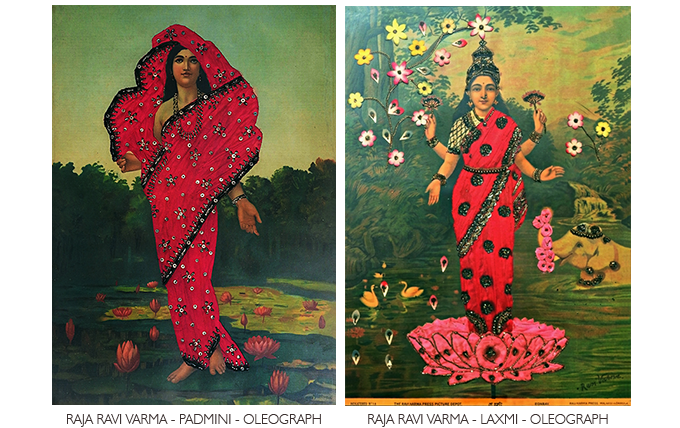
Raja Ravi Varma and the Democratization of Art
The most significant turning point in Indian print history came through Raja Ravi Varma (1848–1906).
In 1894, Ravi Varma established the Ravi Varma Fine Art Lithographic Press. Through chromolithographic oleographs, images of Lakshmi, Saraswati, Krishna, Rama, and scenes from the Indian epics reached homes across the country.
For the first time, art was no longer restricted to palaces, temples, or wealthy patrons. Ordinary households could acquire images that reflected their cultural and religious identities.
The Ravi Varma Press transformed Indian visual culture and demonstrated the power of printmaking as a medium of mass dissemination. Few artistic initiatives have had such a profound impact on the visual imagination of modern India.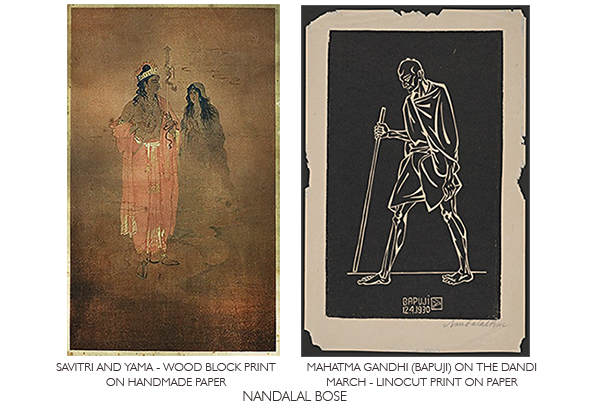
Santiniketan and the Birth of Modern Indian Printmaking
While Ravi Varma popularised printed imagery, the transformation of printmaking into a fine art medium occurred in the early twentieth century.
A crucial role was played by Kala Bhavana at Santiniketan. Under the guidance of Rabindranath Tagore and Nandalal Bose, the institution encouraged experimentation and dialogue between Indian, Asian, and international artistic traditions.
In 1921, Nandalal Bose formally introduced graphic arts into the curriculum. This marked the beginning of printmaking as a recognised artistic discipline within modern Indian art education.
Bose demonstrated that prints could possess the same artistic significance as paintings. His famous 1930 linocut depicting Mahatma Gandhi during the Dandi March remains one of the most iconic images of India’s freedom movement.
Through simplicity, clarity, and economy of means, Bose established a distinctly Indian modern graphic language.
 Printmaking and Social Consciousness
The political upheavals of the twentieth century gave printmaking a new role.
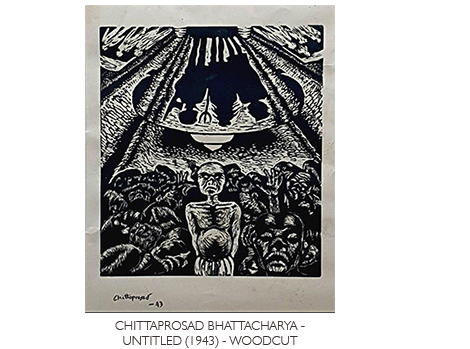
Chittaprosad Bhattacharya (1915–1978) employed graphic art as a powerful tool of social documentation. His woodcuts, linocuts, and drawings portrayed workers, peasants, famine victims, and political struggles with remarkable directness.
The Bengal Famine of 1943 deeply influenced his artistic vision. His prints rejected decorative aesthetics and instead confronted viewers with the realities of human suffering and injustice.
Printmaking became a medium of protest.
Somnath Hore and the Language of Human Suffering
Among India’s greatest printmakers, Somnath Hore (1921–2006) transformed graphic art into a deeply emotional and philosophical practice.
Having witnessed famine, displacement, and conflict, Hore developed a visual language centred on pain, memory, and survival. His celebrated Wounds series pushed the medium beyond conventional representation.
Through experiments with paper pulp, embossing, and texture, Hore created surfaces that seemed physically scarred. The print itself became a metaphor for the human body and its capacity to endure suffering.
His contribution remains one of the most profound achievements in modern Indian art.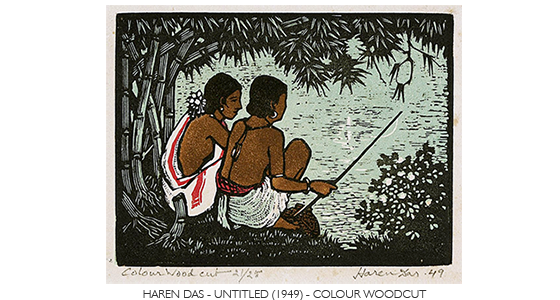
Haren Das and the Tradition of Craftsmanship
Haren Das (1921–1993) represented another important strand of Indian printmaking.
A master of wood engraving and woodcut, he devoted his career almost exclusively to graphic processes. His meticulously detailed images of rural Bengal combined extraordinary technical skill with poetic observation.
Drawing inspiration from both Western engraving traditions and Japanese printmaking, Das produced works that remain among the finest examples of graphic craftsmanship in India.
Krishna Reddy and International Modernism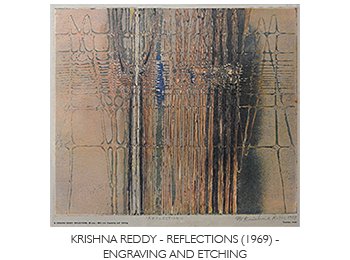 No discussion of Indian printmaking can overlook Krishna Reddy (1925–2018).
After studying in India, Reddy became associated with Atelier 17 in Paris, one of the world’s most influential printmaking studios. There he collaborated with Stanley William Hayter and helped develop the revolutionary technique of viscosity printing.
This complex process allowed multiple colours to be printed from a single plate using inks of varying viscosities.
Reddy’s innovations earned him international acclaim and established him as one of the most important printmakers of the twentieth century. His work demonstrated that Indian artists could contribute not only imagery but also technical breakthroughs to global art history.
 Zarina Hashmi: Memory, Migration, and Minimalism
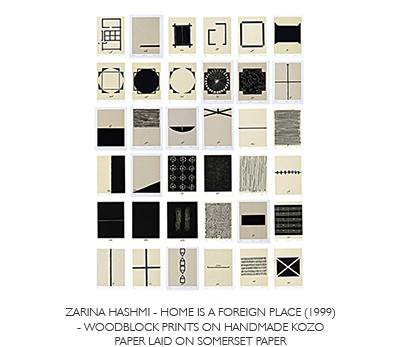
Among the most internationally recognised Indian printmakers is Zarina Hashmi (1937–2020), known simply as Zarina.
Born in Aligarh and later based in New York, Zarina developed a distinctive visual language centred on memory, displacement, architecture, language, and belonging. Working primarily through woodcuts, intaglio, lithography, and handmade paper, she created works of remarkable simplicity and emotional depth.
Series such as Home is a Foreign Place transformed personal memories of migration and Partition into universal reflections on identity and loss.
Her prints demonstrate how minimal means can convey profound emotional and philosophical ideas. Today, her work is represented in major international collections including the Museum of Modern Art, the Guggenheim Museum, Tate Modern, and the Whitney Museum of American Art.
Expanding the Language of Indian Printmaking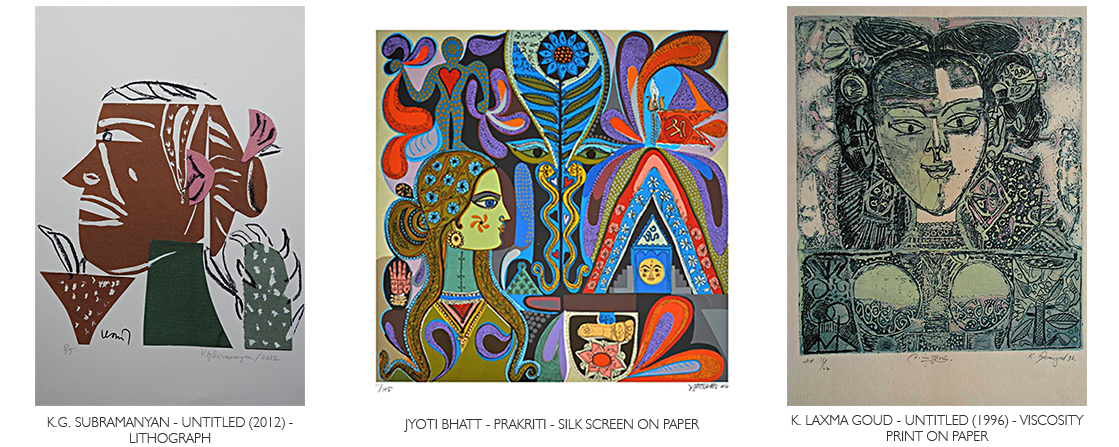 Post-Independence India witnessed an extraordinary expansion of printmaking.
K.G. Subramanyan explored printmaking alongside painting, murals, and design, incorporating folk traditions and narrative structures into modern art.
Jyoti Bhatt combined printmaking and photography while documenting India’s living craft traditions.
K. Laxma Goud developed a highly personal language through etching and aquatint, exploring rural life, folklore, sexuality, and human relationships.
Anupam Sud brought psychological complexity and technical refinement to intaglio printmaking, becoming one of India’s most influential contemporary graphic artists.
Dattatraya Apte
Drawing inspiration from nature, organic growth, geological formations, and the rhythms of the natural world, Apte creates works that possess both visual delicacy and material richness. His surfaces often reveal subtle textures, layered impressions, and tactile qualities that invite close observation.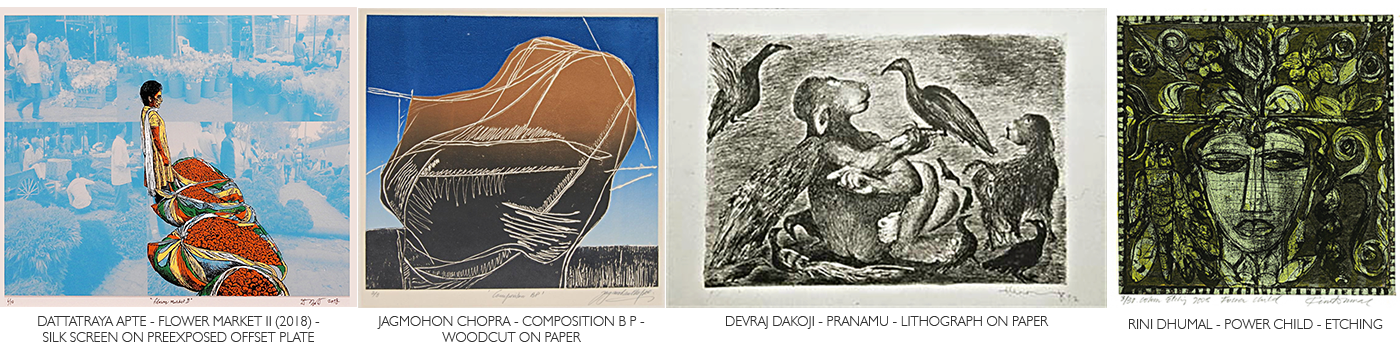 Other important figures include Jagmohan Chopra, Devraj Dakoji, Rini Dhumal, Dattatraya Apte and numerous artists associated with Santiniketan, Baroda, Delhi, and regional printmaking workshops across the country.
Bengal’s Continuing Graphic Legacy
Bengal remains one of India’s most important centres for printmaking.
The traditions established by Nandalal Bose, Chittaprosad, Somnath Hore, and Haren Das influenced successive generations of artists. Contemporary practitioners continue to expand the medium through new technologies and experimental approaches.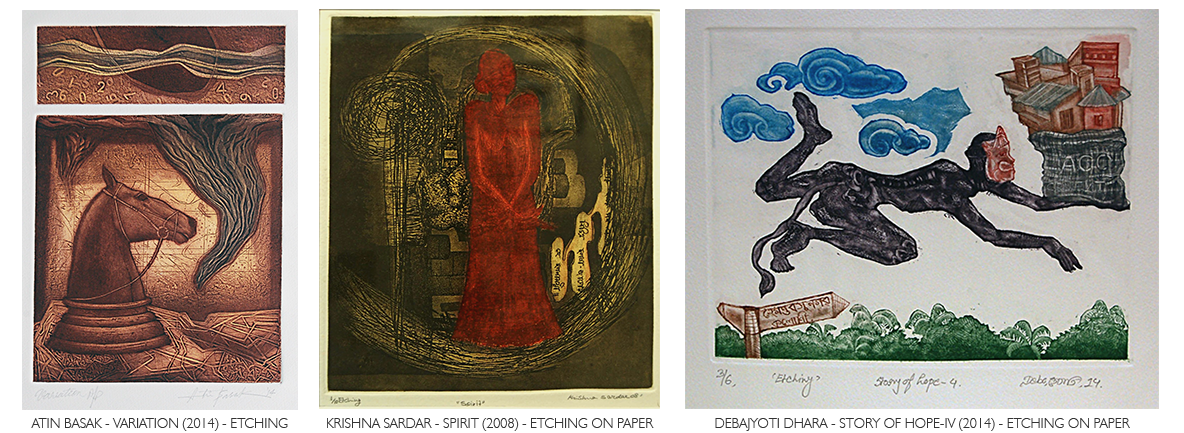
Artists such as Atin Basak, Abdul Salam, Krishna Sardar, Debojyoti Dhara, Saptarshi Das, and others have contributed to the continuing vitality of graphic art in eastern India.
Why Printmaking Matters Today
In an age dominated by digital images, printmaking continues to retain its relevance.
The medium offers artists a unique combination of craftsmanship, experimentation, and reproducibility. It allows collectors to acquire original works by significant artists while preserving the intimacy of the artist’s hand.
More importantly, printmaking has consistently expanded access to art. From Ravi Varma’s oleographs to contemporary limited editions, it has enabled images and ideas to circulate beyond elite circles and enter public life.
Its history is therefore not merely the history of a technique. It is the history of how art became more accessible, more democratic, and more widely shared.
Selected Bibliography
Mitter, Partha. Art and Nationalism in Colonial India, 1850–1922. Cambridge University Press.
Kumar, R. Siva (ed.). Santiniketan: The Making of a Contextual Modernism. National Gallery of Modern Art.
Sheikh, Gulammohammed (ed.). Contemporary Art in Baroda.
Reddy, Krishna. Writings and interviews on viscosity printing and Atelier 17.
Lalit Kala Akademi. Publications on Indian Graphic Art and Printmaking.
National Gallery of Modern Art. Exhibition catalogues on Indian printmakers.
Archives and publications of Kala Bhavana, Visva-Bharati University.
Exhibition catalogues and monographs on Somnath Hore, Zarina Hashmi, Chittaprosad Bhattacharya, Haren Das, K.G. Subramanyan, Jyoti Bhatt, and K. Laxma Goud.
-- Research & Compiled by Aakriti Art Gallery team
Most read articles
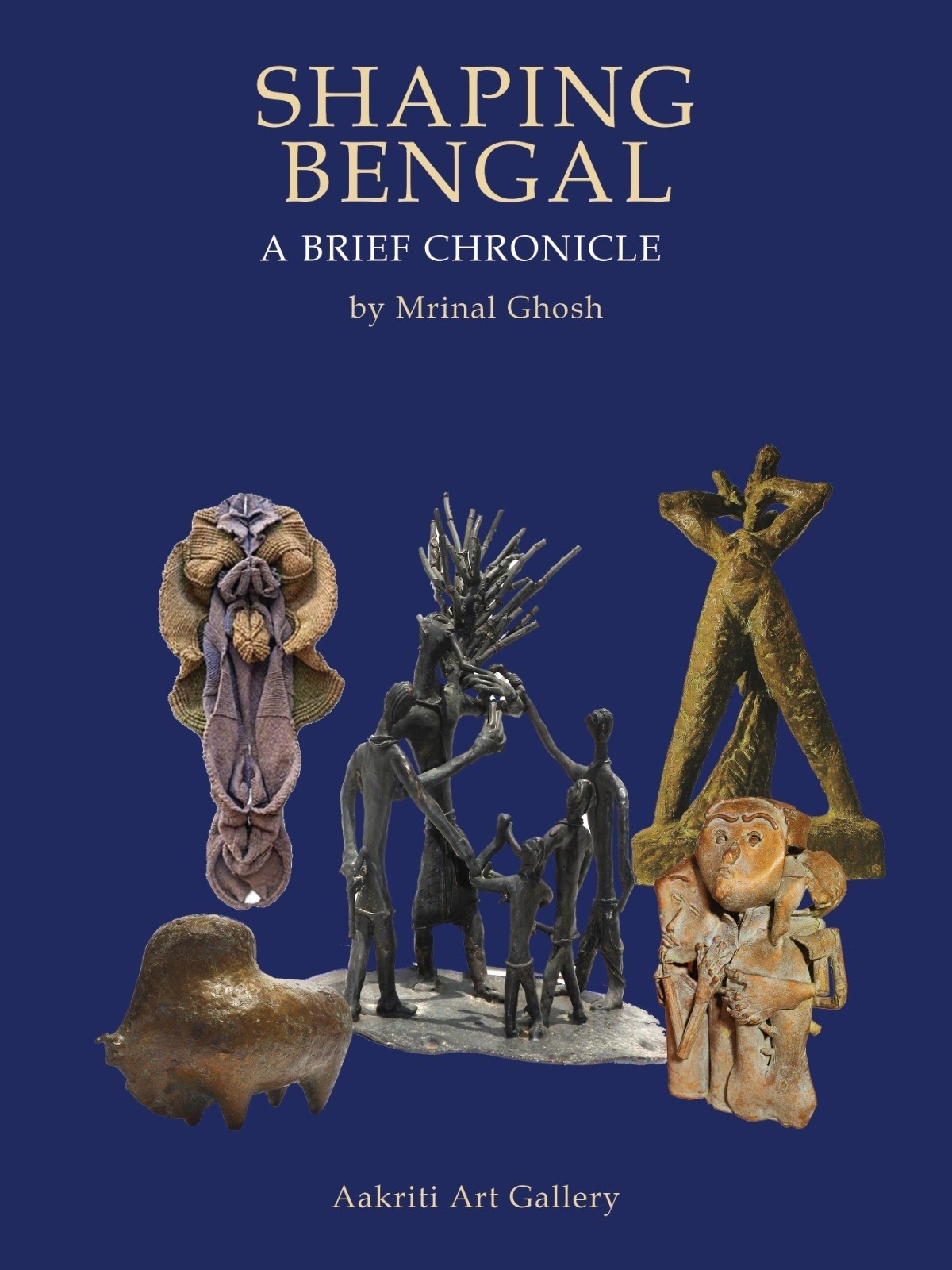
Shaping Bengal : A Chronicle of Modern Sculpture
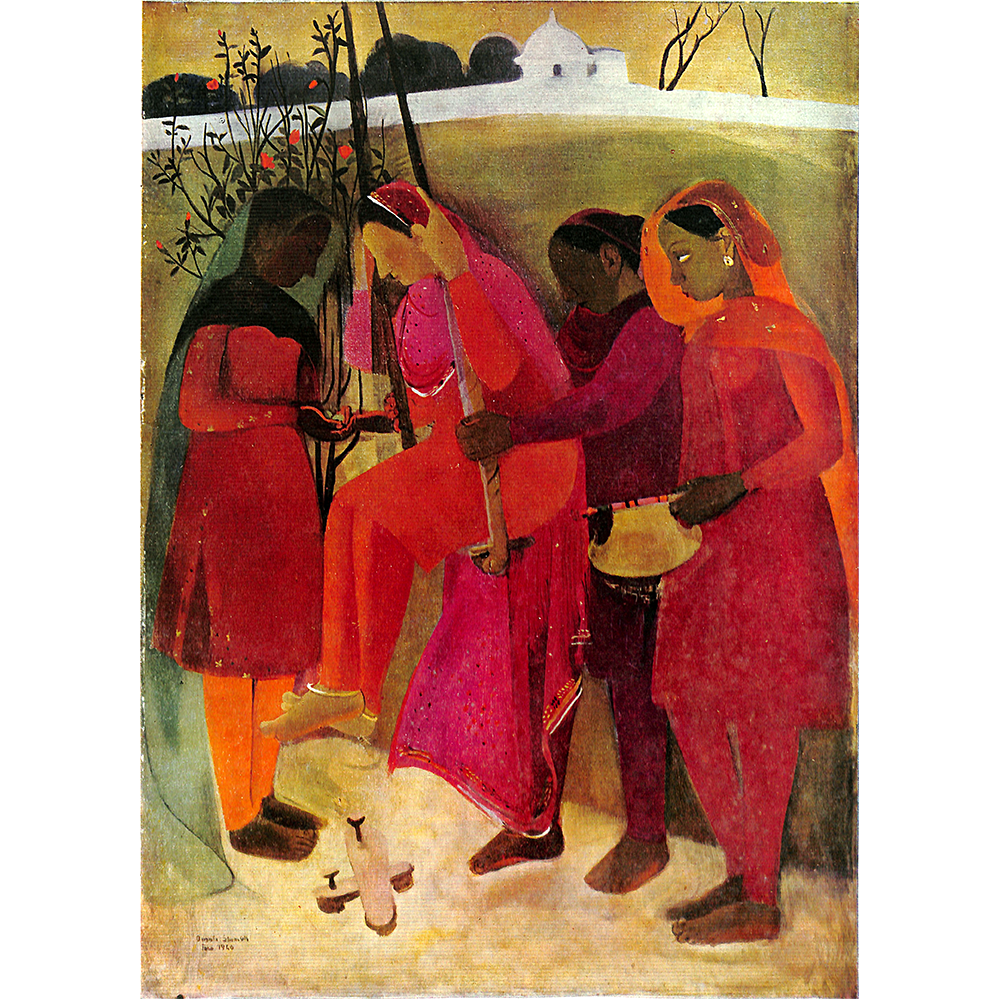
“Europe Belongs to Picasso… India Belongs Only to Me” || Why Amrita Sher-Gil Chose India as Her Artistic Destiny
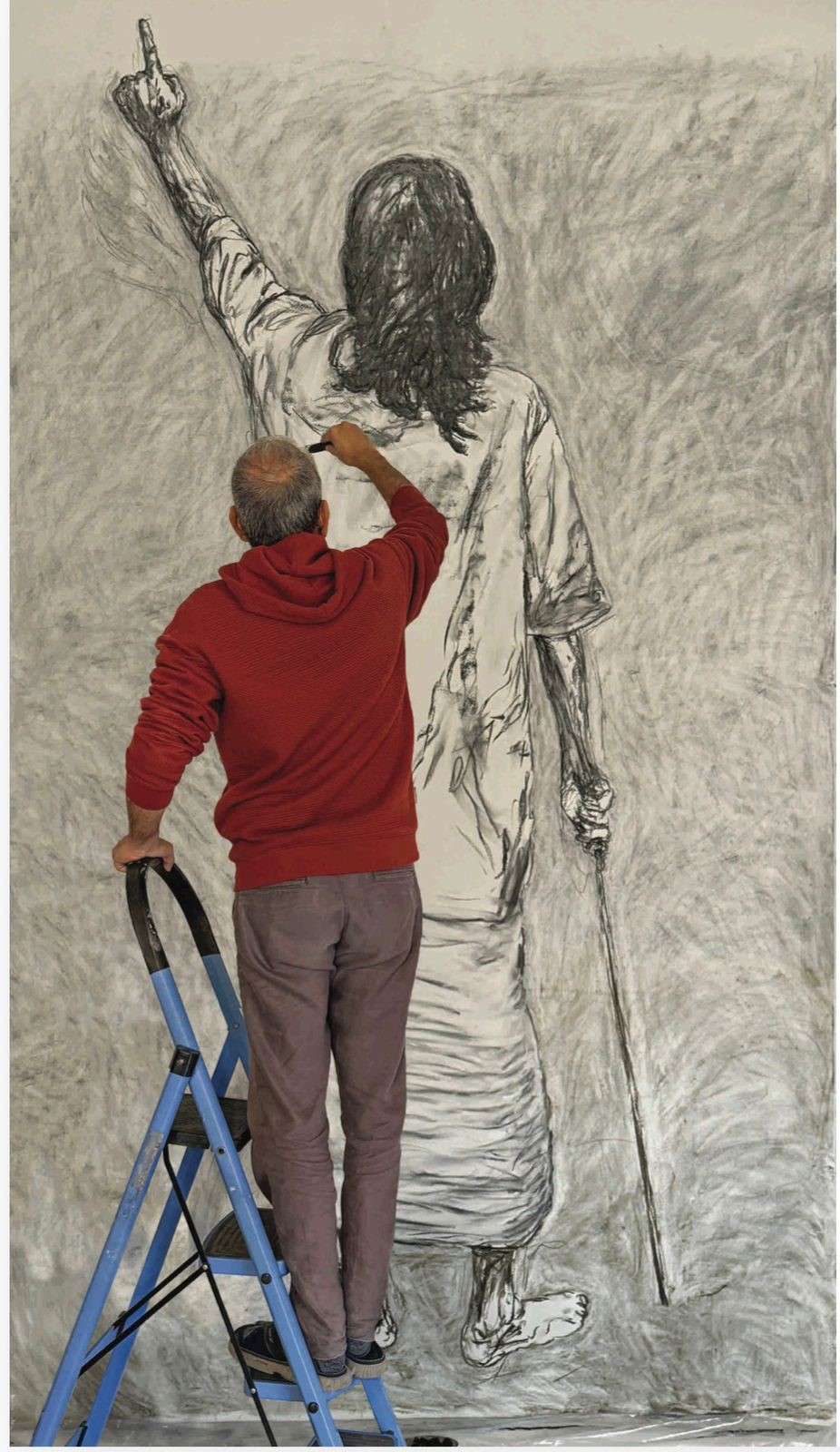
A Star Amongst Too Many: Chandra Bhattacharjee at Birla Academy of Art & Culture
The Indian Art Market Comes of Age
The Resurgence of the Indian Art Market
Comments
Join the Discussion
Please login to post comments.
Login