Aakriti Art Gallery’s Early Journey in Art Publishing
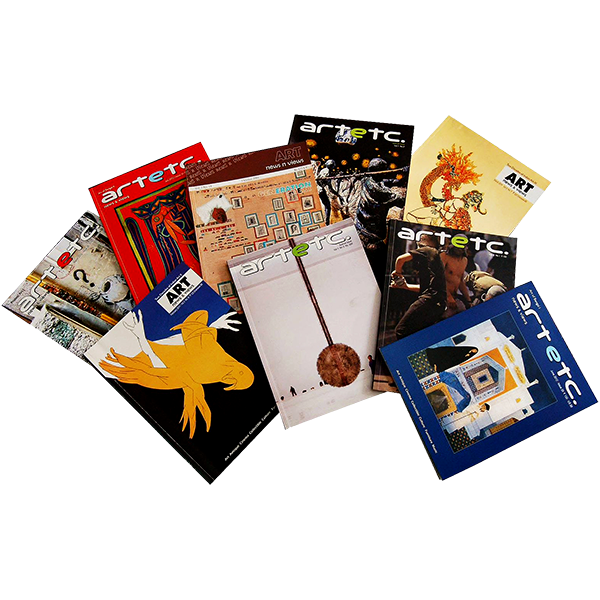
The publication of Art Insights by Aakriti Art Gallery did not emerge in isolation. It continues a much earlier publishing journey shaped through two important art periodicals: Art News & Views and Art Etc. These magazines, published under the initiative of Aakriti Art Gallery, created a space where exhibitions, criticism, market developments, artist interviews, theoretical debates, archival essays and contemporary practice could be discussed together.
Art News & Views functioned as a monthly platform, carrying reports, reviews, previews, city-wise art updates, auction observations, interviews and critical commentary. Art Etc., by contrast, had a more reflective and thematic character, allowing longer essays, conceptual discussions and visually rich features. Together, they represented two needs of the Indian art world: timely information and deeper aesthetic inquiry.
This balance became especially important during the late 2000s and early 2010s, a period when Indian art was passing through rapid transformation. The art market was expanding, art fairs were gaining visibility, contemporary practice was becoming more experimental, and serious criticism still had limited space in mainstream media. In this context, Aakriti’s publications became more than gallery magazines. They became documents of an art world in transition.
From Separate Publications to a Merged Platform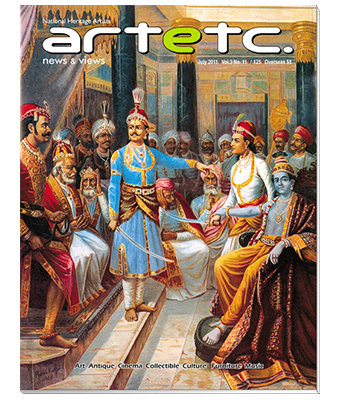
A significant turning point came in July 2011, when Art Etc. and Art News & Views were brought together as Art Etc. news & views. The merger was not merely a change of title. It reflected a conscious editorial decision to combine the reflective strength of Art Etc. with the informational regularity of Art News & Views.
The idea was to create a monthly publication that could carry art news, theoretical essays, market reports, exhibition reviews, artist studies and international updates within one framework. The merged journal therefore attempted to offer both immediacy and seriousness: news without shallowness, and criticism without isolation from the living art world.
The National Art Treasures Issue
The July 2011 issue marked this transition with an ambitious theme: Indian Art Treasures. It focused on artists who had become central to the cultural imagination of modern India, including Raja Ravi Varma, Rabindranath Tagore, Gaganendranath Tagore, Abanindranath Tagore, Nandalal Bose, Jamini Roy, Amrita Sher-Gil, Sailoz Mukherjee and Nicholas Roerich.
The editorial argued that national art treasures are not chosen only for antiquity or aesthetic value, but also for symbolic importance. These artists, though stylistically diverse, collectively represented the values, tensions and aspirations through which India imagined itself as a modern nation. Ravi Varma linked mythology with colonial academic realism; Abanindranath brought nationalist sentiment into conversation with pan-Asian aesthetics; Nandalal Bose looked to the past while addressing the needs of the present; Jamini Roy connected modern art with folk idioms; Amrita Sher-Gil sought modernist parallels within tradition; and Rabindranath Tagore, already a national figure in literature, turned to painting as a deeply personal and exploratory field.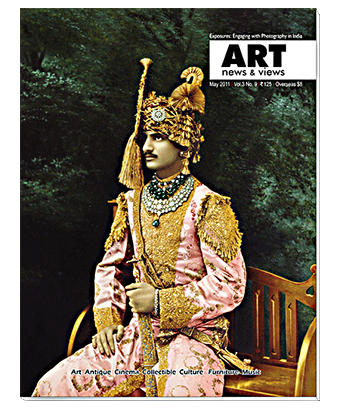
This issue included important articles such as Raja Ravi Varma: The Painter Who Made the Gods Human, Rabindranath as Painter, Gaganendranath: Painter and Personality, Abanindranath Tagore: A Reappraisal, Nandalal Bose, Jamini Roy’s Art in Retrospect, Sailoz: The Inerasable Stamp, and Amrita Sher-Gil. Contributors included major scholars and writers such as R. Siva Kumar, Ratan Parimoo, Dr. Sanjoy Kumar Mallik, Pranabranjan Ray, Keshav Malik, Uma Prakash, Nanak Ganguly, Soumik Nandy Majumdar and H. A. Anil Kumar.
Photography as Art and Archive
The May 2011 issue turned towards photography and its changing role in Indian visual culture. Its editorial presented photography not merely as testimony or documentation, but as an image-object that circulates through memory, technology, desire, reportage and artistic interpretation.
The issue included essays and features on Raghu Rai, Ryan Lobo, Homai Vyarawalla, Raja Deen Dayal, Bourne & Shepherd, the Alkazi Collection of Photography, PIX, Tasveer and vintage cameras. It recognised photography as a medium that moves between truth and construction, archive and artwork, personal memory and public history.
This was important because photography in India had often been treated either as documentary evidence or as a secondary medium. By devoting an issue to it, the magazine helped place photography within the broader field of contemporary art, collecting and visual studies.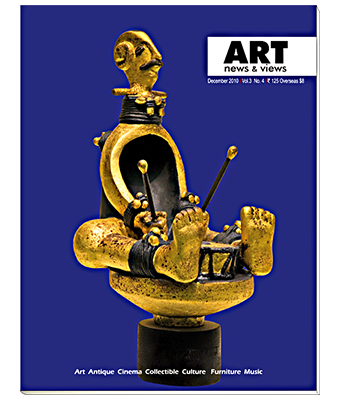
Sculpture and the Question of Form
The December 2010 issue focused on sculpture and current trends in Indian contemporary art. The editorial reflected on creativity as freedom, invention and growth, rejecting narrow loyalty to styles or “isms”. It presented painting, sculpture and architecture as interconnected expressions of a single aesthetic concern involving structure, movement, proportion, space and transformation.
The issue included writing on S. Nandagopal, Satish Gujral, Mrinalini Mukherjee, Ravinder Reddy, Shrestha Rit Premnath, Rajesh P. Subramanium, Subodh Kerkar and installation practices around Santiniketan. It also carried articles on design, public art, architecture, auction reports and city art scenes.
In retrospect, this issue is significant because modern and contemporary Indian sculpture has often received less sustained attention than painting. Aakriti’s decision to foreground sculpture anticipated one of the recurring concerns of its later publishing work, including Art Insights.
The Printmaking Trilogy
One of the most memorable editorial projects of Art Etc. news & views was the three-part series on Indian printmaking, guest edited by Waswo X. Waswo. The October 2011 editorial, titled Endless Multiplication, marked the conclusion of this trilogy.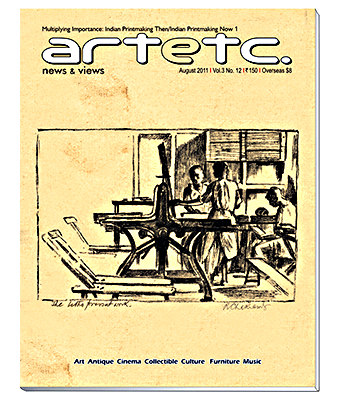
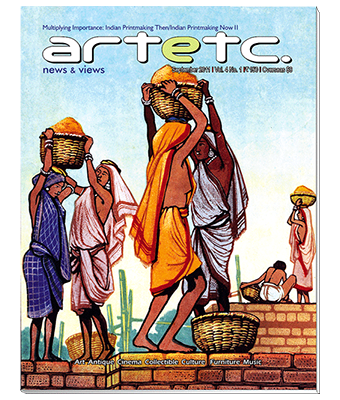
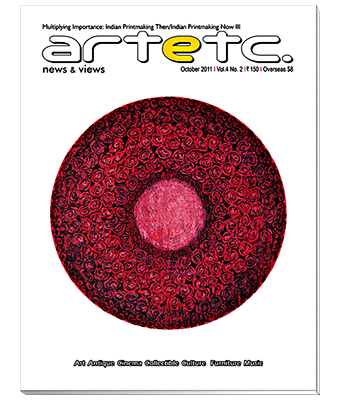
Waswo described the project as an attempt to stimulate discussion and debate around Indian printmaking. The issue brought together sixteen young printmakers from different regions of India, alongside essays on digital print technologies, CHHAAP, Vijay Bagodi, Haren Das, Anupam Sud, Prathap Modi, Preeti Agrawal, Srikanta Paul and block-printing traditions in Rajasthan.
What makes this trilogy important is its layered approach. It did not treat printmaking merely as a technical medium. It examined its histories, contemporary practices, regional networks, digital transformations and future possibilities. The guest editor also candidly acknowledged the limitations of space, time, knowledge and inevitable editorial bias—an unusually honest note that reflects the seriousness of the undertaking.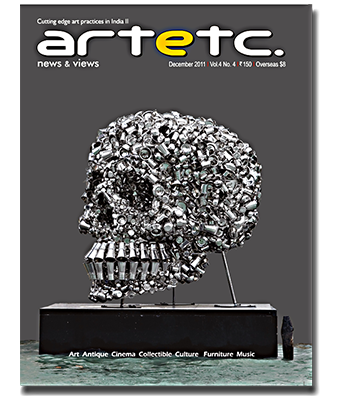
Cutting Edge Practices and Artist Voices
The December 2011 issue, guest edited by Johny ML, focused on cutting-edge practices in Indian art. The editorial emphasised the voices of artists themselves and explored how they negotiated new spaces, media and techniques. It also noted that artists were attempting a degree of theorisation of their own work.
This issue included articles and interviews on Nalini Malani, Sonia Khurana, Rameshwar Broota, Abhishek Hazra, Pari Baishya and several other contemporary practitioners. It also carried wider art-world features, reports from Art Toronto, the Metropolitan Museum of Art, international residencies, market commentary and regional updates.
The issue is significant because it recognised that contemporary art could no longer be understood only through painting, sculpture and exhibition reviews. It had to include performance, new media, conceptual work, installation, photography, artist conversations and cross-disciplinary practices.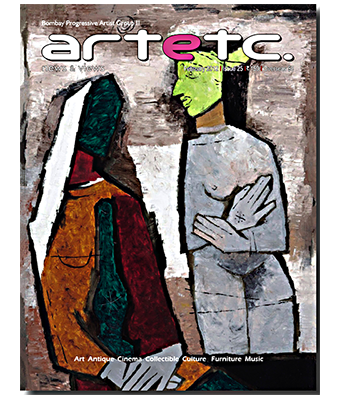
The Progressive Artists’ Group and Its Afterlives
The February 2012 issue focused on the Progressive Artists’ Group and the larger cultural milieu around Bombay modernism. The editorial described the PAG not simply as a group of famous artists, but as a turning point that ushered in “unabashed modernism” in Indian pictorial language.
The issue explored not only Souza, Husain and Raza, but also associated figures such as Krishen Khanna, Ram Kumar, Akbar Padamsee, Tyeb Mehta and Bal Chhabda. It also looked at parallel developments involving K.K. Hebbar, V.S. Gaitonde, Manishi Dey and Group 1890.
This approach is important because it avoided treating the Progressives as a closed canon. Instead, it examined their wider impact, friendships, critics, patrons, galleries, parallel movements and later responses. It helped situate the PAG within a wider network of modern Indian art rather than as a self-contained legend.
Protest Art: A Three-Issue Editorial Project
In 2012, Art Etc. news & views undertook another ambitious editorial series, this time on Protest Art. The May 2012 editorial reflected on three months of editing issues dedicated to the subject and described the process as enriching, challenging and rewarding.
The series engaged with Frida Kahlo, Jane Alexander, graffiti art in the MENA region, the American Object Orange movement, the Russian Peredvizhniki, the Guerrilla Girls, Willie Bester, Chinese protest artists, Japanese protest after Fukushima, Rameshwar Broota, Satish Gujral, Bengal artists of the 1940s, transgressive art, Ai Weiwei, communal violence in India and Manjit Bawa’s response to the Sikh riots.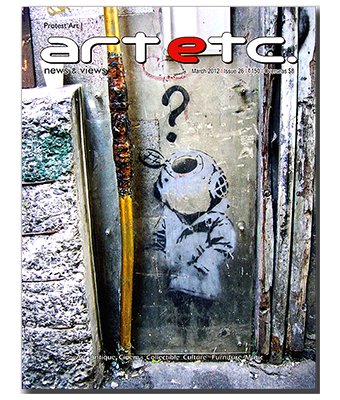
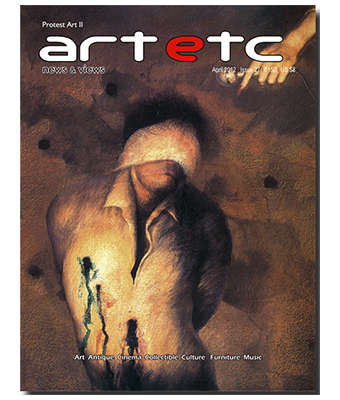
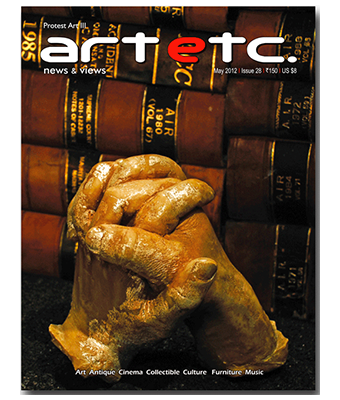
The importance of this project lies in its global and comparative ambition. Protest art was not treated as a single style or movement, but as a mode of resistance across geographies, histories and media. The magazine examined posters, performance, photography, graffiti, painting, installation, feminist intervention, political art and public dissent.
Contributors to the Protest Art issues included Mrinal Ghosh, Franck Barthelemy, Sunanda K. Sanyal, Seema Bawa, Uma Prakash, Saba Gulraiz, Snehal Tambulwadikar, Navya Ashokkumar, Nanak Ganguly, Nuzhat Kazmi, Tanya Abraham, Sritama Haldar, Sandhya Bordewekar, Vrushali Dhage, Koeli Mukherjee and Anurima Das, among others.
Bengal, Protomodernism and Historical Reassessment
The June and July 2012 issues, edited by Pranabranjan Ray, turned towards the history of modern art in Bengal. The June editorial raised the question of modernism through Fredric Jameson and Geeta Kapur, arguing that modernism must be understood through specific historical, spatial and cultural conditions.
Ray proposed that Bengal offered a field for observing the dynamics of colonial modernity, cultural disjunction and changing artistic choices. He described the first issue as focusing on “protomodern” art of Bengal—forms that emerged before fully individualist modernism, shaped by anonymous, collective or hesitant responses to colonial contact.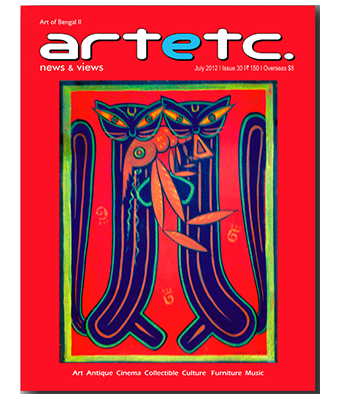
The July 2012 editorial continued this inquiry by examining Bengal art after the emergence of the individual artist with distinct thematic, visual and linguistic concerns. The issue included discussions on Rabindranath Tagore, Ramkinkar Baij, Nandalal Bose, Jamini Roy, Gopal Ghose, Gobardhan Ash, Dharmanarayan Dasgupta, Asit Mondal, Samindranath Majumdar and others.
This two-part Bengal project was especially important because it attempted to move beyond nostalgia. It recognised the tendency to fall back on glorious historical chapters in difficult times, but insisted that history must be revisited critically, with attention to both achievement and failure.
The July 2012 editorial also carried a poignant admission: Art Etc. news & views, described as an ambitious monthly journal of visual arts, had itself fallen victim to difficult times. With the issue on the history of modern art in Bengal, the monthly journal passed into history, though the publishers remained hopeful of its resurrection in a new form.
Editorial Range and Contributor Network
Across these issues, the magazines created an impressive contributor network. Guest editors and contributors included Waswo X. Waswo, Johny ML, Pranabranjan Ray, R. Siva Kumar, Ratan Parimoo, Dr. Sanjoy Kumar Mallik, Kishore Singh, Keshav Malik, Uma Prakash, H. A. Anil Kumar, Mrinal Ghosh, Seema Bawa, Sunanda K. Sanyal, Nanak Ganguly, Soumik Nandy Majumdar, Franck Barthelemy, Sandhya Bordewekar, Chhatrapati Dutta, Rahab Allana, Sanchayan Ghosh, Arun Vadhera and many others.
This range shows that Aakriti’s publications were never merely promotional tools. They operated as collaborative platforms where critics, scholars, artists, collectors, curators and writers could participate in an expanding conversation around Indian art.
Why These Magazines Matter Today
The importance of Art News & Views and Art Etc. lies in their archival value. They recorded the concerns of an important period in Indian art: the rise and cooling of the market, the expansion of art fairs, the growing seriousness of photography and printmaking, the emergence of new media, the reassessment of modern masters, and the continuing importance of regional art histories.
They also reveal Aakriti Art Gallery’s long-standing commitment to documentation. The gallery did not begin thinking about research and archives with Art Insights. That impulse was already present in these earlier publications.
Today, as Aakriti digitises and organises its publication archive, these magazines become valuable primary documents. They help reconstruct the debates, exhibitions, anxieties and ambitions of the Indian art world in the 2000s and early 2010s.
From
Art News & Views
to
Art Insights
Seen in retrospect, there is a clear continuity.
Art News & Views captured the pulse of the art world.
Art Etc. gave space to deeper thought and aesthetic reflection.
Art Etc. news & views tried to combine information, theory, trends and analysis within a single monthly format.
Art Insights now carries that legacy forward in a more research-led, archival and scholarly direction.
This evolution reflects Aakriti Art Gallery’s larger identity: not only as a gallery that exhibits and sells art, but also as a publisher, archivist, researcher and custodian of cultural memory.
Exhibitions may be temporary.
Publications endure.
Most read art news
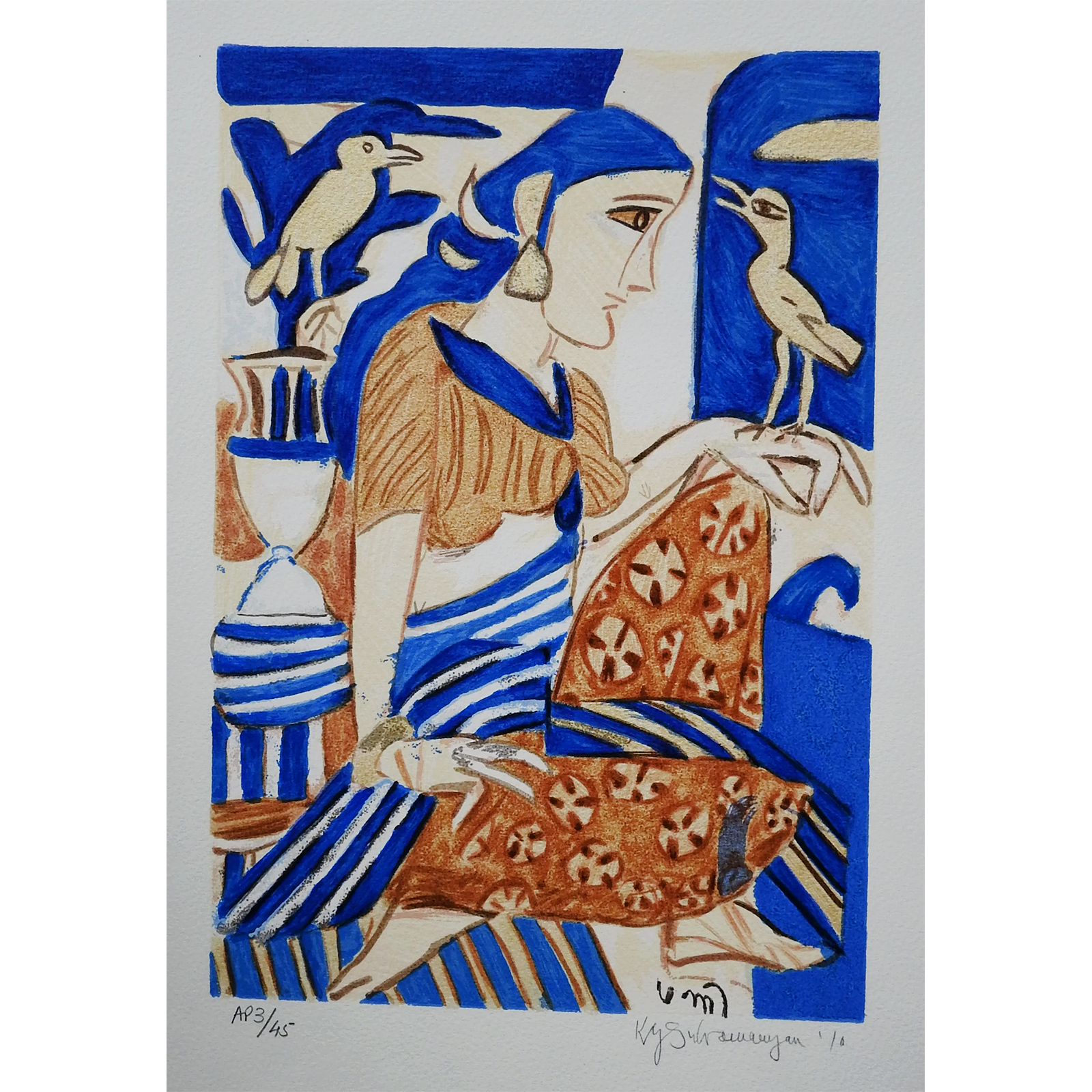
How to Tell Whether a Print Is an Original Artist-Signed Impression or a Reproduction
The Work That Begins a Collection
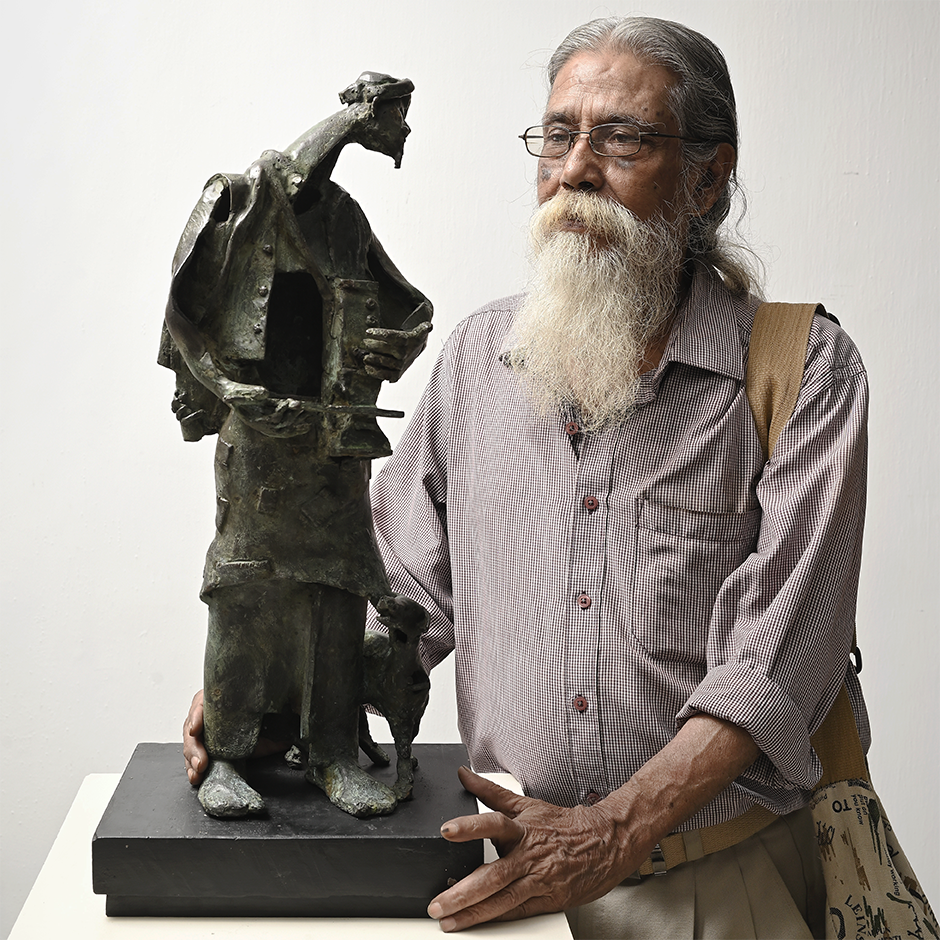
The Monumental World Within the Ordinary
Aakriti Art Gallery to Launch India’s First Integrated Art Platform Combining AI Advisory, Research, Archives, Publishing, and Art Acquisition
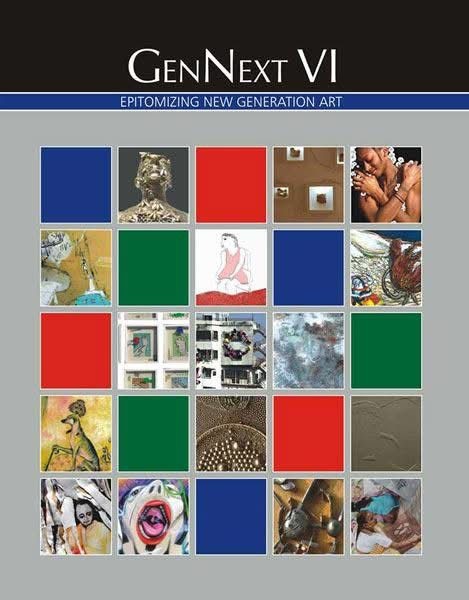
Aakriti Art Gallery Relaunches ‘GenNext’ as a Year-Round Platform for Emerging Artists