Bikash Bhattacharjee (1940 – 2006)
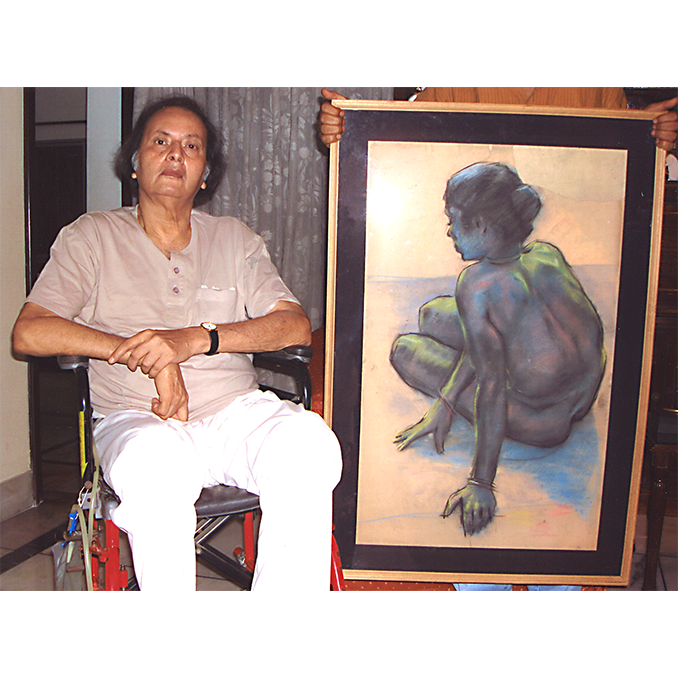
Bikash Bhattacharjee was one of the most accomplished figurative painters of post-Independence India. Through his technically precise yet psychologically unsettling images,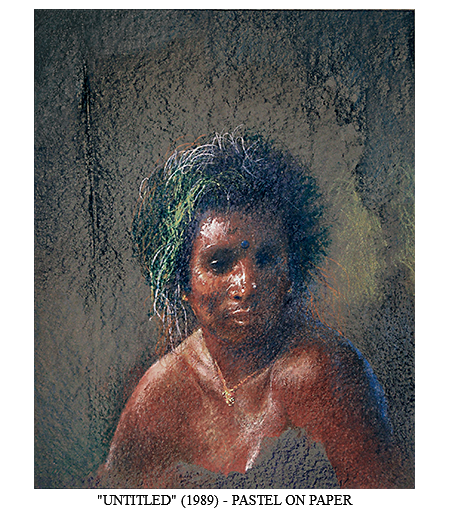 he revitalised realism at a time when abstraction and formal experimentation dominated much of Indian modern art. His paintings transformed familiar people, domestic interiors, dolls, streets, and public events into complex meditations on memory, social tension, vulnerability, and the uncertainties of urban life.
Born on 21 June 1940 in Kolkata, Bhattacharjee lost his father at an early age and grew up in difficult financial circumstances. His experience of insecurity and struggle contributed to his sensitivity towards the marginalised and socially overlooked individuals who later appeared in his paintings. He received his Diploma in Fine Arts from the Indian College of Art and Draftsmanship, Kolkata, in 1963.
Bhattacharjee began teaching at the Indian College of Art and Draftsmanship in 1968 and later taught at the Government College of Art & Craft, Kolkata, from 1973 to 1982. He became a member of the Society of Contemporary Artists in 1964, joining an important network of artists who helped define modern art in Bengal during the decades following Independence.
His art was grounded in rigorous observation and exceptional command over drawing, light, texture, and tonal modelling. He worked in oil, acrylic, watercolour, pastel, conté, and collage, although oil painting became central to his mature practice. Fabric, skin, hair, architectural surfaces, and dimly lit interiors were rendered with near-photographic precision. Yet his realism was never merely descriptive. Familiar forms were often distorted through unusual lighting, fragmented viewpoints, empty eyes, exaggerated shadows, or an atmosphere of unease.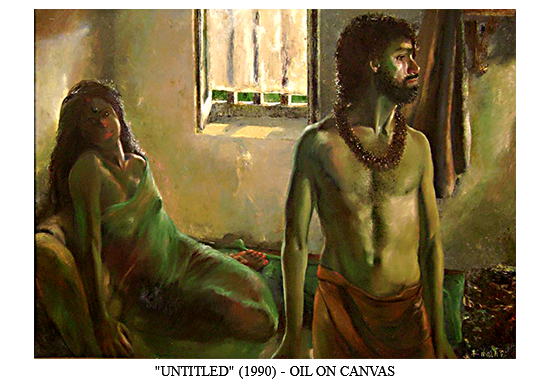
Realism and Psychological Tension
Bhattacharjee’s paintings frequently depict the everyday life of Kolkata, particularly its middle-class homes, narrow streets, ageing residents, domestic workers, children, and socially vulnerable individuals. Beneath the apparent familiarity of these subjects lies a darker psychological world shaped by anxiety, repression, desire, violence, and social hypocrisy.
His figures are often isolated within enclosed interiors or surrounded by objects that intensify their emotional condition. He used dramatic contrasts of light and darkness to create a cinematic atmosphere. The viewer is placed in the position of both observer and participant, drawn towards the surface realism while simultaneously disturbed by what remains unspoken.
Although his work is frequently described as realist, it also reveals a strong engagement with Surrealism. Bhattacharjee admired Salvador Dalí, and his paintings often move between observed reality, dream, fantasy, and subconscious fear. His realism therefore functions as a means of destabilising appearances rather than simply recording them.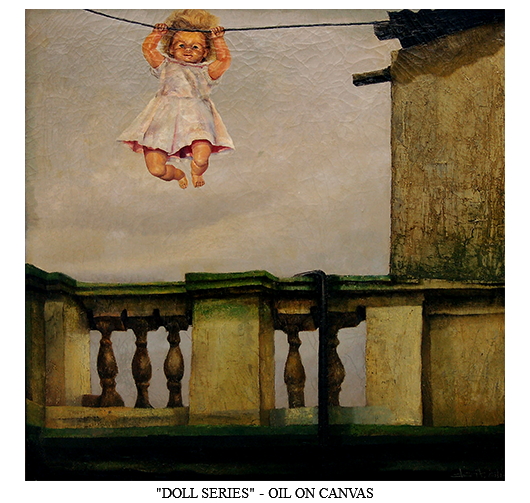
The Doll Series
Bhattacharjee became widely recognised through his celebrated Doll Series, developed during the politically turbulent decades of the 1960s and 1970s. Dolls appear in these paintings as abandoned, damaged, masked, or strangely animated presences. Their empty eyes and artificial bodies suggest childhood innocence, but they also evoke fear, violence, manipulation, and emotional isolation.
The dolls allowed the artist to approach disturbing social and political realities indirectly. Their apparently inanimate forms became witnesses to unrest, repression, and the collapse of security. A major work from this series, Doll of 1972–73, is held by the National Gallery of Modern Art, New Delhi.
Other significant bodies of work include the Durga Series, the Wounds Series, paintings inspired by the Naxalite movement, representations of sex workers, portraits, and works based on the life of sculptor Ramkinkar Baij. His portraits of cultural and political figures such as Rabindranath Tagore, Satyajit Ray, Samaresh Basu, and Indira Gandhi reveal his ability to combine likeness with psychological interpretation.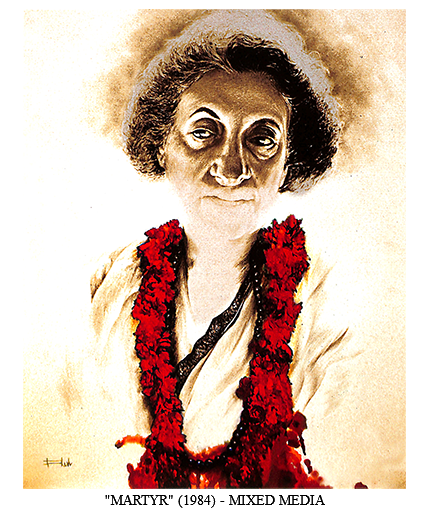
Exhibitions and Recognition
Bhattacharjee held his first solo exhibition in Kolkata in 1965. His work was subsequently shown in Paris, London, New York, and several countries of Eastern Europe, as well as in major exhibitions throughout India. The Wounds Series was presented at the National Gallery of Modern Art, New Delhi, while the Homage Series was exhibited at Victoria Memorial, Kolkata.
He received several important honours, including the Academy of Fine Arts Award in 1962, the National Award of the Lalit Kala Akademi in 1971, the Padma Shri in 1988, and the Lalit Kala Akademi Fellowship, the academy’s highest honour.
His works are represented in major collections, including the National Gallery of Modern Art, New Delhi, the Lalit Kala Akademi, Bharat Bhavan, Bhopal, and other institutional and private collections. The National Gallery of Modern Art holds important examples of his oil paintings, including works from the Doll Series.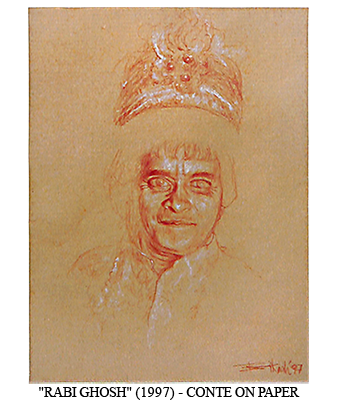
Association with Aakriti Art Gallery
Bikash Bhattacharjee holds an important place in the exhibition and research history of Aakriti Art Gallery. The gallery identifies him among the major modern Indian masters whose solo exhibitions and presentations have formed part of its institutional programme. His works have also appeared in Aakriti’s historically focused exhibitions, including presentations tracing the development of modern art in Bengal. Retrospective exhibition in collaboration with Emami Chisel Arts &Vadhera Art Gallery, Bikash Bhattacharjee A Retrospective and a solo exhibition Human Face & Urban Space Paintings and Drawings by Bikash Bhattacharjee.
Aakriti’s critical publication platform has examined his work in the essay Bikash Bhattacharjee: Subverting the Seen and in broader studies of post-1960s art in Bengal. These writings have discussed the Doll Series, his psychological realism, and his engagement with the social and political anxieties of his period.
Bhattacharjee suffered a paralytic stroke in 2000, which brought his active painting career largely to an end. He died in Kolkata on 18 December 2006. His legacy rests on his transformation of realism into a deeply modern and psychologically charged language. By combining extraordinary technical skill with social observation, fantasy, and unease, he created some of the most memorable and disturbing images in modern Indian art.
Most read art news
How to Tell Whether a Print Is an Original Artist-Signed Impression or a Reproduction
The Work That Begins a Collection
The Monumental World Within the Ordinary

Aakriti Art Gallery to Launch India’s First Integrated Art Platform Combining AI Advisory, Research, Archives, Publishing, and Art Acquisition
Aakriti Art Gallery Relaunches ‘GenNext’ as a Year-Round Platform for Emerging Artists