Buying What You Love or Buying as an Investment?
Finding the Right Balance Between Passion, Knowledge and Long-Term Value

Few questions are asked more frequently in galleries than this:
“Will this painting become more valuable in the future?”
It is a reasonable question. Art can appreciate in value, and history offers many examples of artists whose works have increased dramatically in price over time. Auction headlines frequently reinforce this perception, reporting record-breaking sales that attract widespread attention. It is therefore understandable that many first-time buyers approach art with the hope that their purchase will prove to be both aesthetically rewarding and financially beneficial.
Yet this question can also lead collectors in the wrong direction.
Art is unlike shares, gold or real estate. While it may appreciate in value, its significance extends beyond financial return. It is lived with, looked at, discussed, remembered and, in many cases, passed from one generation to the next. Its value lies not only in the marketplace but also in the intellectual and emotional relationship it creates with its owner.
Experienced collectors rarely begin by asking, “How much will this artwork be worth?” Instead, they ask, “Why does this work matter?”
Understanding this distinction is one of the most important steps in becoming a thoughtful collector.
Art Is Not a Conventional Investment
Unlike publicly traded financial assets, there is no daily market price for most works of art.
Every artwork is unique. Even when an artist produces multiple works, each differs in subject, size, condition, provenance and exhibition history. These factors make direct comparisons difficult and prevent art from behaving like conventional investment products.
Market values are influenced by numerous factors, including:
- The artist’s reputation
- Gallery representation
- Museum acquisitions
- Scholarly publications
- Exhibition history
- Critical reception
- Provenance
- Rarity
- Condition
- Collector demand
- Broader economic conditions
 No single factor guarantees appreciation.
For this reason, collectors should be cautious of anyone promising rapid financial returns through art purchases.
Buy What You Would Happily Live With
Perhaps the most enduring advice in the art world is also the simplest:
Buy what you genuinely enjoy living with.
An artwork occupies space in your home, office or collection for years—sometimes decades. It becomes part of your everyday environment.
Unlike financial investments, whose value may be measured only through numbers, art contributes to daily life through beauty, reflection and conversation.
Ask yourself:
- Does this artwork continue to hold my attention?
- Do I find something new each time I look at it?
- Would I still appreciate it if its market value remained unchanged?
If the answer is yes, you have already made a sound collecting decision.
Understanding Long-Term Value
Value in art should be understood in more than one way.
Aesthetic Value
The ability of an artwork to reward repeated viewing through composition, technique, originality and emotional depth.
Historical Value
Its place within the artist’s career, an artistic movement or a broader cultural context.
Documentary Value
Works that have appeared in important exhibitions, publications or museum collections often acquire additional significance over time.
Financial Value
The price collectors are willing to pay within the marketplace.
These forms of value frequently overlap, but they do not always move together. An artwork of great historical importance may remain relatively affordable, while another may achieve high prices because of temporary market enthusiasm.
Thoughtful collectors learn to recognise all four.
Avoid Chasing Headlines
 Auction records make excellent news stories, but they rarely provide a complete picture of the art market.
Exceptional prices usually reflect exceptional circumstances—rare works, distinguished provenance or intense competition among collectors.
Attempting to buy solely because another collector has paid a record price can lead to disappointment.
Markets change.
Fashion changes.
Taste changes.
Quality, however, remains remarkably consistent.
Collectors who pursue quality rather than headlines generally build stronger collections over time.
The Difference Between Collecting and Speculating
Collecting and speculation are not the same.
A collector studies artists, follows exhibitions, reads catalogues, visits museums and gradually develops an understanding of artistic practice.
A speculator focuses primarily on short-term price movements.
The two approaches may occasionally overlap, but their motivations are fundamentally different.
The satisfaction of collecting comes from knowledge, discovery and long-term engagement with art rather than rapid financial gain.
Think Like a Steward
One of the most valuable shifts a collector can make is to think less like a buyer and more like a custodian.
Every artwork carries the history of its creation.
By acquiring it, the collector assumes responsibility for its preservation, documentation and future care.
This perspective encourages better decisions.
Instead of asking,
“How quickly can I sell this?”
consider asking,
“How can I preserve this work for the future?”
Great collections are built by custodians rather than traders.
There Is Nothing Wrong with Considering Value
Some collectors hesitate to discuss financial value because they fear it diminishes artistic appreciation.
It should not.
Art has always possessed both cultural and economic value.
Understanding the market is an important part of responsible collecting.
The key is balance.
Allow financial considerations to inform your decisions—not dominate them.
Build Knowledge Before Expectations
Collectors often spend years learning about artists before purchasing major works.
Knowledge reduces risk far more effectively than optimism.
Visit exhibitions.
Read artist monographs.
Compare different periods of an artist’s career.
Speak with galleries.
Study museum collections.
Over time, confidence grows naturally.
The question is not whether art can be an investment.
It certainly can.
The more important question is whether investment should be the primary reason for buying art.
History suggests that the finest collections have rarely been assembled through speculation alone. They were built by individuals who collected thoughtfully, supported artists they admired and developed a genuine understanding of art over many years.
Ironically, collections formed through passion and knowledge often prove to be the most enduring—and, in many cases, the most valuable.
Buy with your eyes.
Support your decision with research.
Allow the market to become a consequence rather than the objective.
Collector’s Checklist
Before buying an artwork, ask yourself:
✓ Am I buying because I genuinely admire this work?
✓ Have I researched the artist’s practice?
✓ Do I understand why the work is priced as it is?
✓ Would I enjoy living with this artwork for many years?
✓ Am I relying solely on someone else’s opinion?
✓ Have I considered both artistic and financial value?
Did You Know?
Many renowned collectors—including museum founders and philanthropists—began by purchasing works that interested them personally rather than following market trends. Their collections became historically significant because they reflected knowledge, curiosity and conviction—not short-term speculation.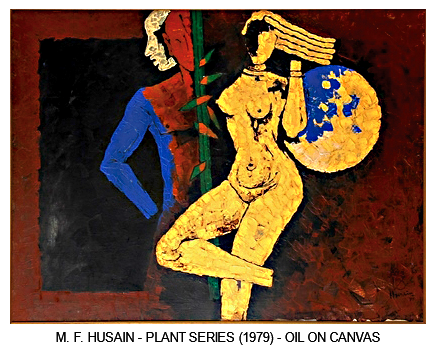
From the Gallery Desk
A young collector once walked into the gallery carrying a list of artists whose auction prices had recently made headlines. He was determined to buy “the next investment.” We spent nearly an hour looking at paintings together. Surprisingly, the work that held his attention the longest was by an artist whose name was not on his list.
Before leaving, he asked, “Do you think this artist’s prices will double?”
Our answer was simple: “We cannot predict the market. But if this is the painting you cannot stop looking at, it may already have given you something more valuable than a future price.”
He bought the painting.
Several years later, he returned—not to discuss its value, but to tell us it had become the artwork visitors spoke about most whenever they entered his home.
-- Research & Compiled by Aakriti Art Gallery team
Most read art news
How to Tell Whether a Print Is an Original Artist-Signed Impression or a Reproduction
The Work That Begins a Collection
Aakriti Art Gallery to Launch India’s First Integrated Art Platform Combining AI Advisory, Research, Archives, Publishing, and Art Acquisition
Aakriti Art Gallery Relaunches ‘GenNext’ as a Year-Round Platform for Emerging Artists

The Monumental World Within the Ordinary