City of Stories
Aakriti Art Gallery Presents An Exhibition of "City Of Stories" - Recent Sculptures By Asim Basu
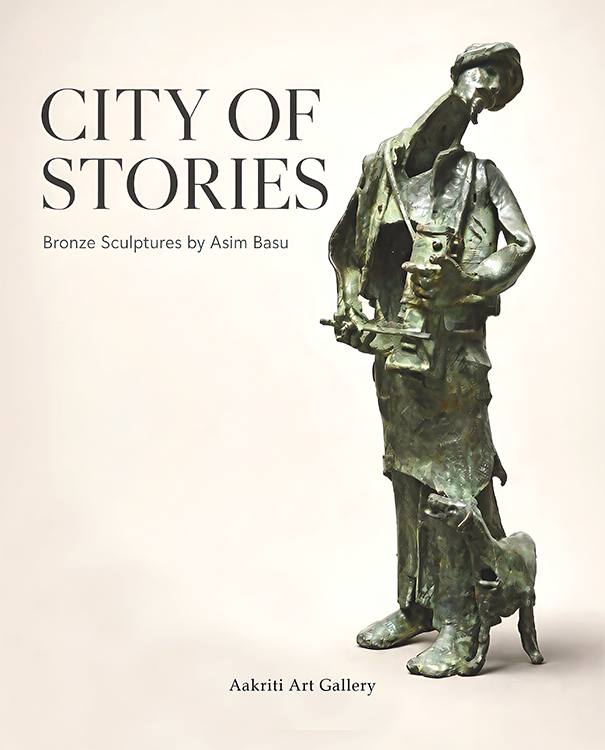
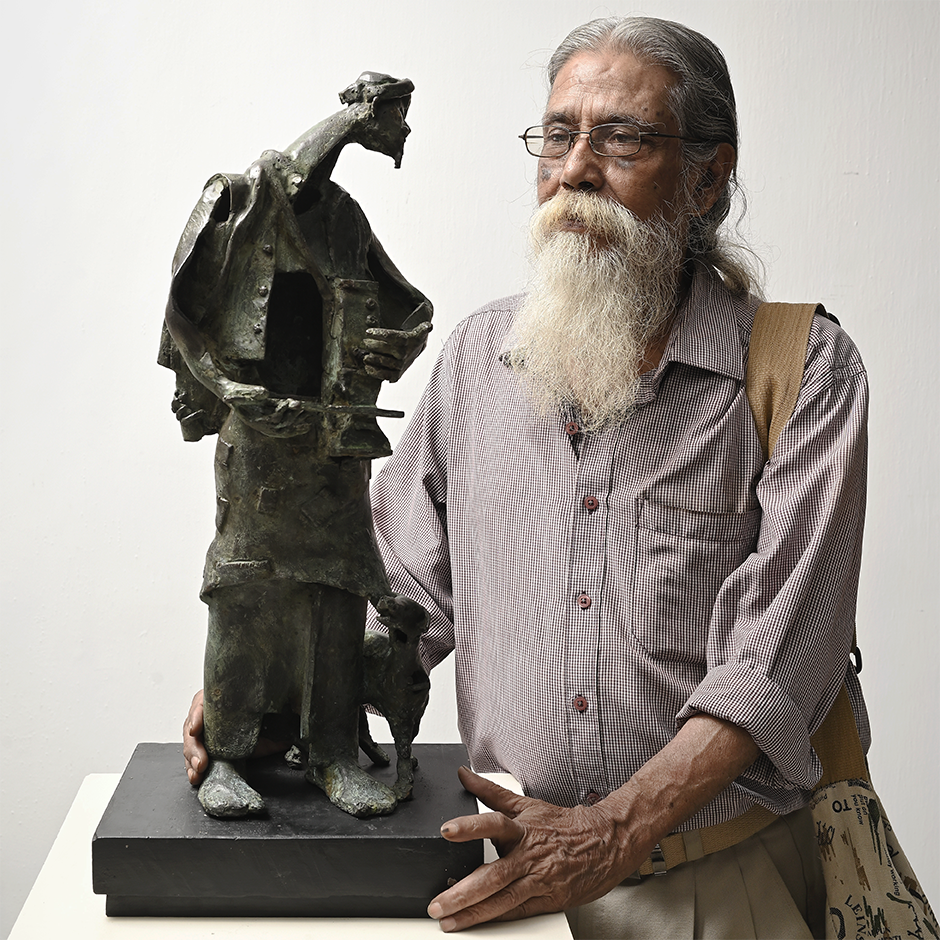
Cities are remembered not only through their monuments but through the lives of ordinary people who animate their streets, neighbourhoods, and public spaces. For more than four decades, Asim Basu (b. 1947) has devoted his artistic practice to capturing these quiet moments of everyday existence. His sculptures preserve a Kolkata that is at once familiar and timeless—a city of conversations, companionship, labour, music, romance, and resilience.
Basu belongs to that rare generation of sculptors who discovered monumentality not in heroic subjects but in ordinary people. The para adda, where neighbours gather around a newspaper debating politics over endless cups of tea; an elderly man sharing an affectionate moment with his grandson; lovers finding shelter beneath a single umbrella during the monsoon; a thirsty mother caring for her child; a violin player filling the evening air with music; a garbage collector pushing his cart through narrow lanes; even a family of pigs wandering unnoticed through the city’s streets—these are the protagonists of his sculptural world.
These seemingly modest subjects possess extraordinary emotional depth. Basu recognises that everyday life itself contains drama, humour, tenderness, hardship, and quiet heroism. His sculptures celebrate those unnoticed lives that collectively define the character of Kolkata.
The artist’s figures are never mere illustrations of daily activity. Their carefully balanced compositions, expressive gestures, and subtle modelling elevate ordinary experiences into universal reflections on humanity. Whether depicting intimacy, loneliness, labour, or companionship, Basu avoids sentimentality. Instead, he allows each sculpture to communicate through posture, rhythm, and form, inviting viewers to complete the narrative from their own memories and experiences.
Equally remarkable is Basu’s command over sculptural form. Working primarily in bronze, he combines structural clarity with remarkable sensitivity to texture and movement. His compositions possess a natural rhythm that encourages the eye to move across each figure, discovering relationships between individuals and the spaces they inhabit. The solidity of the medium is balanced by an unexpected sense of warmth and intimacy.
Many of Basu’s works also reflect his concern for society beyond the domestic sphere. Themes of freedom, human dignity, social justice, and collective aspiration appear throughout his career, demonstrating an artist deeply engaged with the changing realities of contemporary India. Yet even in these works, the focus remains profoundly human. His sculptures speak not through grand ideological statements but through individual lives and shared experiences.
Over the years, critics have repeatedly recognised Basu’s technical accomplishment and distinctive sculptural language. Reviews spanning nearly four decades acknowledge both his mastery of form and his unwavering commitment to portraying the emotional and social realities of everyday life.
This exhibition brings together sculptures from different phases of Basu’s career, revealing a remarkable consistency of vision. Together they form a visual chronicle of Kolkata—not its skyline or architecture, but its people. They preserve a world of neighbourhood conversations, street musicians, working men and women, children, lovers, animals, and countless fleeting moments that modern urban life increasingly threatens to erase.
At a time when cities are changing at an unprecedented pace, Asim Basu’s sculptures acquire an added significance. They become repositories of memory, documenting not only the physical life of Kolkata but also its social fabric and emotional landscape. His works remind us that art has the power to preserve what history often overlooks—the dignity of ordinary lives.
More than a retrospective of an accomplished sculptor, this exhibition is an invitation to rediscover Kolkata through the eyes of one of its most sensitive visual storytellers. In Asim Basu’s hands, the everyday becomes enduring, the familiar becomes unforgettable, and sculpture becomes a living archive of the city’s human spirit.
Exhibition: City Of Stories Recent Sculptures By Asim Basu
Venue: Aakriti Art Gallery, 12/3A Hungerford Street, Kolkata – 700017
Date : 27th November till 19th December,2026.
Gallery Hours: Monday to Saturday, 11:00 AM – 7:00 PM
Media Contact:
N.G.Rao
Aakriti Art Gallery
12/3A Hungerford Street, Kolkata – 700017
Phone: +91 98304 11115
Email: admin@aakritiartgallery.com
Website: www.aakritiartgallery.com
About Aakriti Art Gallery
Founded in 2005, Aakriti Art Gallery is one of Eastern India’s leading galleries dedicated to modern and contemporary Indian art. Through exhibitions, publications, research initiatives, and digital platforms such as Art Insights and Ask Aakriti, the gallery actively promotes scholarship, documentation, and informed collecting while presenting important works by established masters and emerging artists.
Most read art news
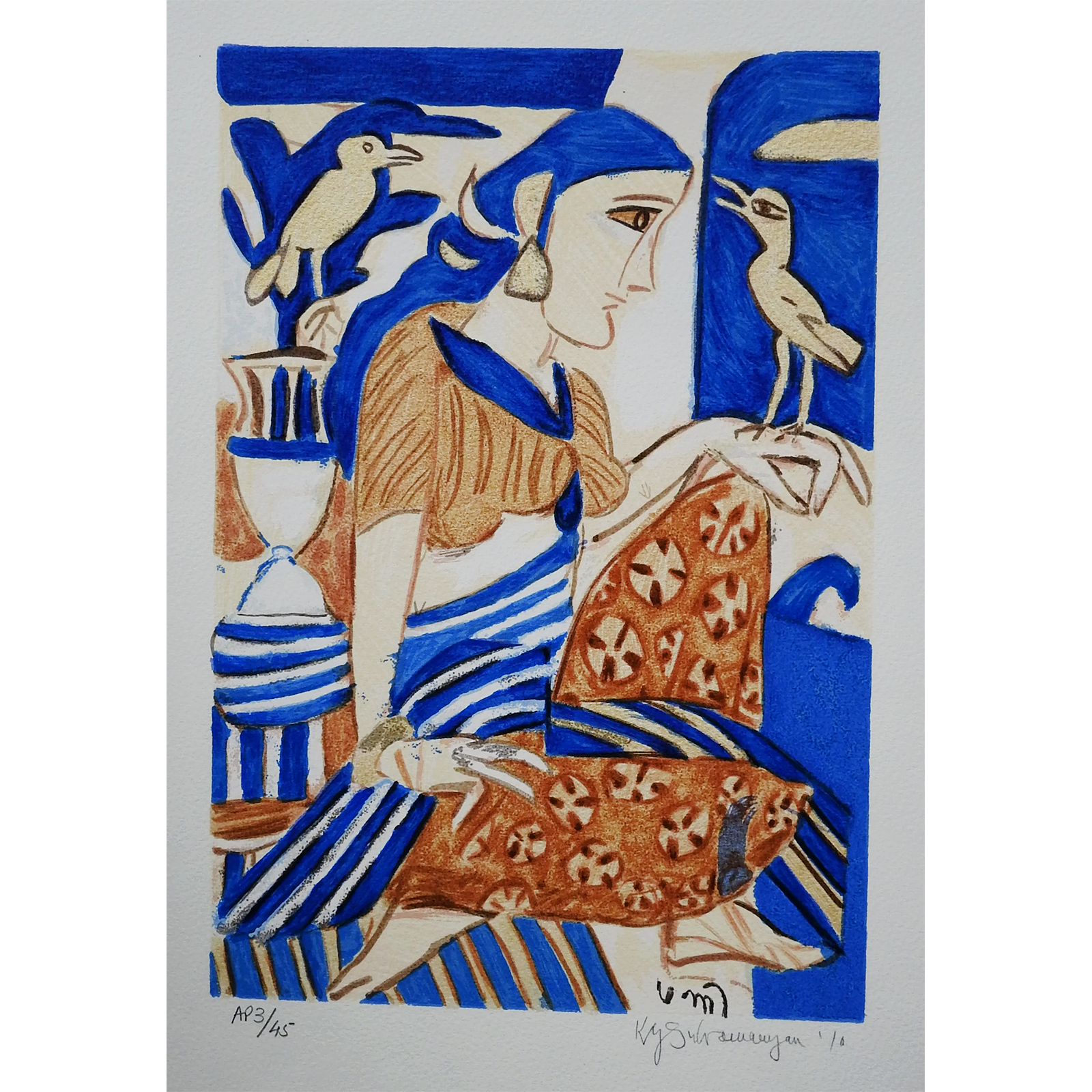
How to Tell Whether a Print Is an Original Artist-Signed Impression or a Reproduction
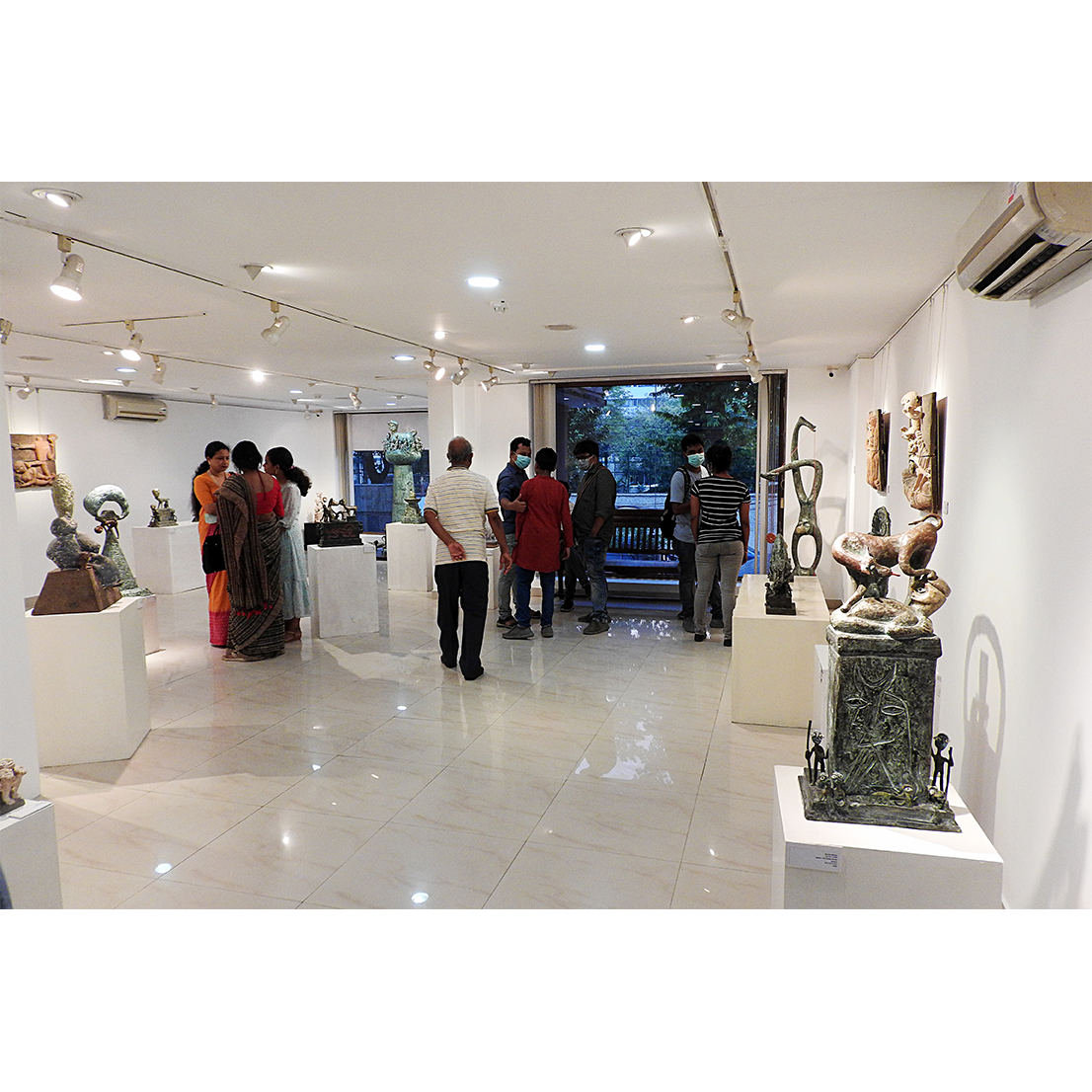
The Work That Begins a Collection
The Monumental World Within the Ordinary

Aakriti Art Gallery to Launch India’s First Integrated Art Platform Combining AI Advisory, Research, Archives, Publishing, and Art Acquisition
Aakriti Art Gallery Launches AI-Powered Ask Aakriti and Research Journal Art Insights