How Galleries Price Art
Understanding What Determines the Price of an Artwork and Why Similar Works Can Vary Significantly in Value
One of the first questions every collector asks after seeing an artwork is:
“Why is this painting priced at ₹50,000 while another, almost the same size, is ₹5 lakh?”
At first glance, the difference can seem difficult to understand. Both works may use the same medium, appear similar in size and even depict comparable subjects. Yet their prices may differ dramatically.
Unlike most consumer goods, art is not priced according to the cost of materials alone. The canvas, paint or bronze represent only a small part of an artwork’s value. What collectors are ultimately acquiring is the artist’s creativity, years of practice, reputation, originality and place within the broader history of art.
Art pricing is therefore a careful balance of artistic achievement, market evidence and professional judgement.
Understanding this process enables collectors to buy with greater confidence and appreciate that price is rarely arbitrary.
There Is No Universal Price Formula
Many first-time buyers assume that galleries follow a fixed formula.
They do not.
Unlike commodities, every artwork is unique. Even two paintings by the same artist may differ significantly in value because of their subject, quality, importance, date of execution or provenance.
Professional galleries consider numerous factors simultaneously before arriving at a price.
The Artist’s Career Stage
Perhaps the most important factor is where the artist stands in his or her professional journey.
Emerging Artists
Artists at the beginning of their careers are generally priced more modestly. Their work may already demonstrate considerable promise, but the market is still developing.
Mid-Career Artists
Artists who have exhibited consistently, attracted collectors and developed a recognisable body of work usually command higher prices because their artistic direction has become more established.
Established Artists
Artists with museum exhibitions, significant publications, institutional collections and an active secondary market generally occupy the highest pricing tier.
Collectors are not simply purchasing an individual artwork—they are also buying into an artist’s professional history and reputation.
Quality Within an Artist’s Own Work
An important principle often overlooked by new collectors is that not every work by the same artist carries the same value.
Even within a single exhibition, certain works stand out because they represent important themes, exceptional execution or particularly successful compositions.
Collectors should therefore avoid assuming that every painting by an artist deserves identical pricing.
Quality remains one of the most important considerations.
Size Influences Price—But Only to a Point
Larger artworks generally require more materials, more studio time and greater logistical effort.
However, size alone never determines value.
A small masterpiece may be considerably more significant than a much larger decorative work.
Collectors should therefore resist judging artworks by dimensions alone.
Medium Matters
Different artistic media involve different levels of technical complexity.
Oil paintings, watercolours, drawings, sculptures, ceramics and original prints each have their own traditions, production methods and collector markets.
Similarly, bronze sculptures often involve mould making, foundry work and patination, while original prints require specialist printmaking techniques.
These differences naturally influence pricing.
Provenance Adds Confidence
An artwork with a well-documented history often commands greater confidence among collectors.
This history—known as provenance—may include:
- Previous ownership
- Gallery records
- Exhibition history
- Publications
- Collection labels
- Certificates
- Estate documentation
Strong provenance reduces uncertainty and contributes to long-term value.
Exhibition History and Publications
Collectors sometimes overlook the importance of exhibition history.
An artwork that has appeared in an important exhibition or has been illustrated in scholarly publications often possesses additional documentary significance.
Similarly, artists whose work has been extensively written about generally attract greater institutional interest.
Documentation strengthens confidence.
Confidence strengthens markets.
Rarity
Not all artists produce work at the same pace.
Some create only a handful of major works each year.
Others work prolifically.
Scarcity naturally influences demand.
Likewise, certain subjects, periods or series within an artist’s career may be considerably rarer than others.
Collectors often pay a premium for exceptional examples from particularly important phases.
Demand and the Market
The art market responds to collector interest.
When museums organise retrospective exhibitions, important books are published or collectors begin focusing on particular artists, demand may increase.
This does not necessarily mean prices should rise immediately.
Responsible galleries generally review prices gradually rather than reacting to temporary market enthusiasm.
Stable, measured pricing benefits both collectors and artists.
The Role of Galleries
A reputable gallery does much more than display paintings.
It invests in artists by organising exhibitions, producing catalogues, documenting works, introducing artists to collectors, participating in art fairs and preserving archives.
These activities require considerable time, expertise and financial commitment.
Pricing therefore reflects not only the artwork itself but also the professional ecosystem that supports the artist’s career.
Beware of Artificial Pricing
Not every high price indicates high value.
Occasionally, artworks are offered at unrealistic prices unsupported by exhibition history, critical recognition or market evidence.
Similarly, unusually low prices should also encourage careful questions.
Collectors should ask:
- How has the price been determined?
- Is it consistent with comparable works?
- Has the artist exhibited regularly?
- Is documentation available?
Transparent pricing is a hallmark of a professional gallery.
Price Is Not the Same as Value
Perhaps the most important lesson for any collector is that price and value are not identical.
Price is what someone pays today.
Value develops over time through artistic merit, historical significance, scholarship, provenance and sustained appreciation.
Some modestly priced works eventually become historically important.
Conversely, expensive works do not automatically become masterpieces.
Collectors should therefore train themselves to recognise quality before looking at the price label.
Questions Every Collector Should Ask
Rather than asking only,
“Why is this artwork so expensive?”
consider asking:
- What makes this work important within the artist’s career?
- Has it been exhibited?
- Has it been published?
- What distinguishes it from the artist’s other works?
- How has the price been determined?
- What documentation accompanies it?
These questions often reveal far more than the price itself.
Art pricing is neither mysterious nor arbitrary.
It reflects a combination of artistic achievement, professional development, documentation, rarity, collector confidence and market experience.
Understanding these factors allows collectors to move beyond simple price comparisons and begin appreciating artworks within their broader artistic context.
The most rewarding collections are rarely assembled by buying the cheapest or the most expensive works.
They are built by recognising quality, asking informed questions and understanding why one artwork matters more than another.
Price is important.
Understanding value is essential.
Collector’s Checklist
Before purchasing an artwork:
✓ Do I understand why this work is priced as it is?
✓ Have I compared it with similar works by the same artist?
✓ Has the artist exhibited professionally?
✓ Is the work documented?
✓ Does the price appear consistent with the artist’s career?
✓ Am I buying because of the artwork—not simply because of the price?
Did You Know?
Many celebrated artists sold their early works at modest prices. As their careers developed through exhibitions, publications and museum recognition, the value of those early works often increased significantly. In the art world, reputation is built gradually—not overnight.
From the Gallery Desk
A collector once pointed to two paintings by the same artist. Both were the same size, painted in the same medium and completed in the same year.
One was priced nearly twice as much as the other.
He immediately assumed the gallery had made an error.
When we placed the two works side by side and discussed them carefully, the differences became apparent. One belonged to an important series that had been exhibited internationally and reproduced in a major publication. It represented a turning point in the artist’s career and demonstrated exceptional technical confidence. The other, although beautifully painted, was a more routine studio work.
By the end of the conversation, the collector no longer asked why one painting was more expensive.
Instead, he asked a far better question:
“Which of these two works best represents the artist?”
That is the moment a buyer begins to think like a collector.
————-
Most read art news
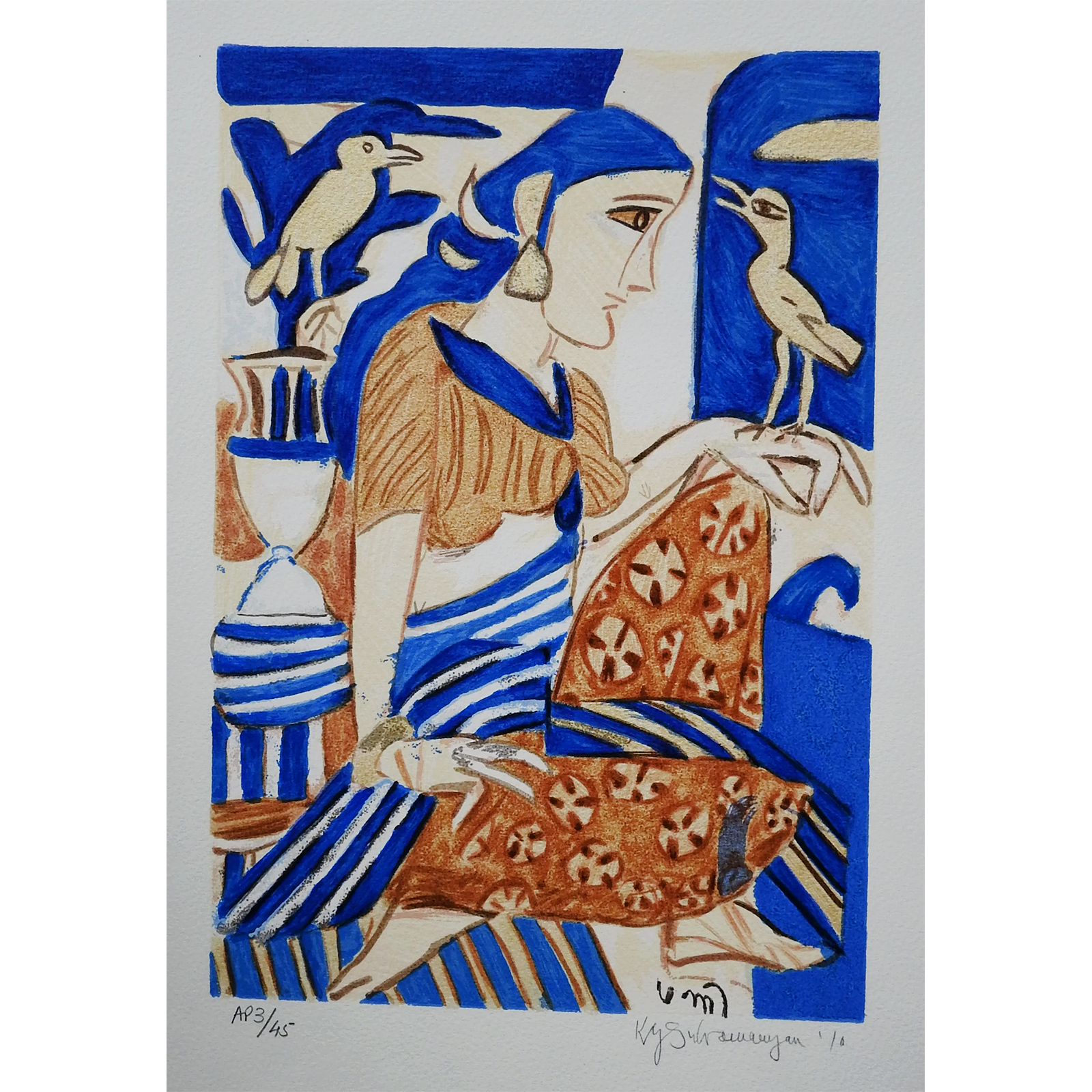
How to Tell Whether a Print Is an Original Artist-Signed Impression or a Reproduction

The Work That Begins a Collection
The Monumental World Within the Ordinary
Aakriti Art Gallery to Launch India’s First Integrated Art Platform Combining AI Advisory, Research, Archives, Publishing, and Art Acquisition
Aakriti Art Gallery Relaunches ‘GenNext’ as a Year-Round Platform for Emerging Artists