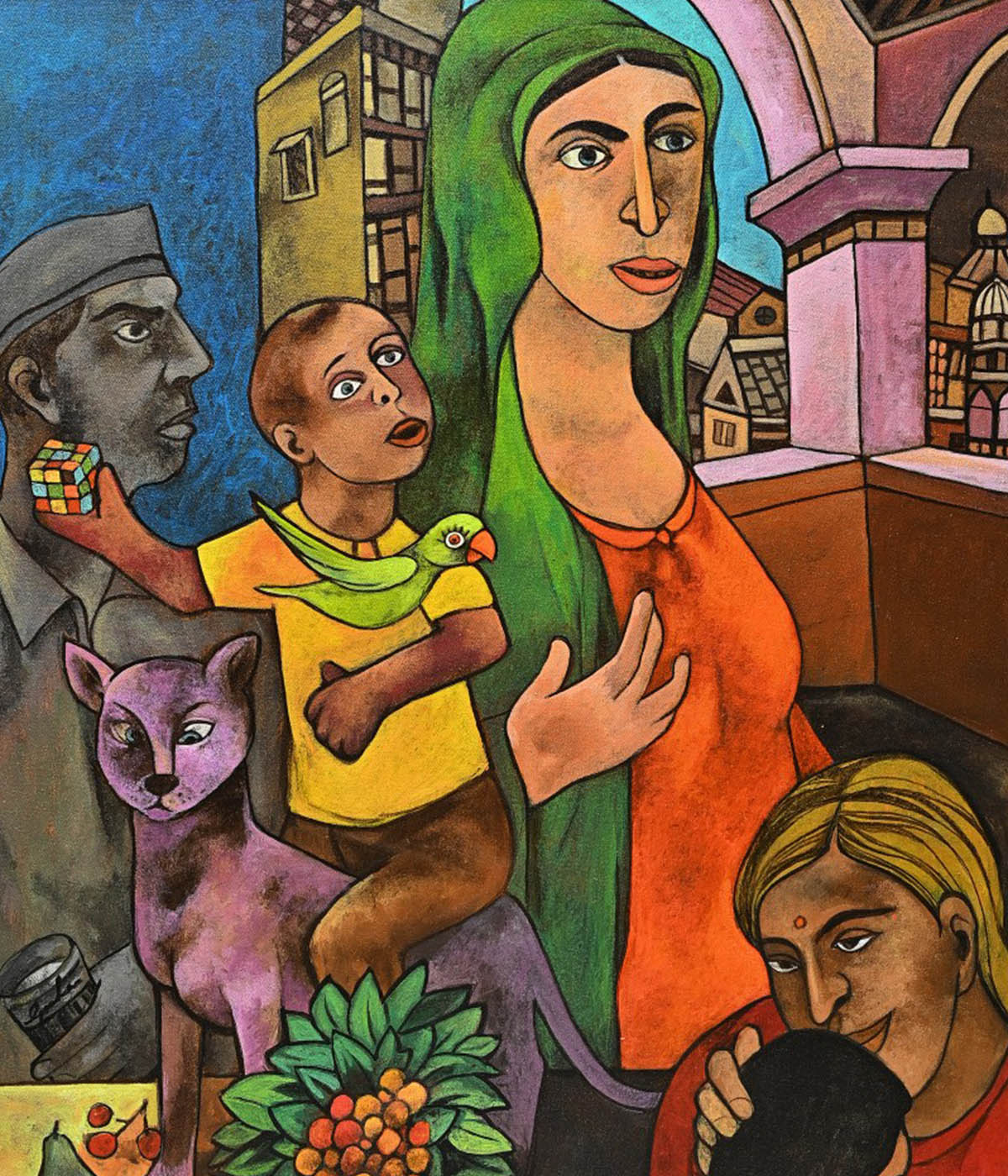
The Surreal Worlds of Kartick Chandra Pyne
Kartick Chandra Pyne, Neglect, and the Rediscovery of a Personal Surrealism
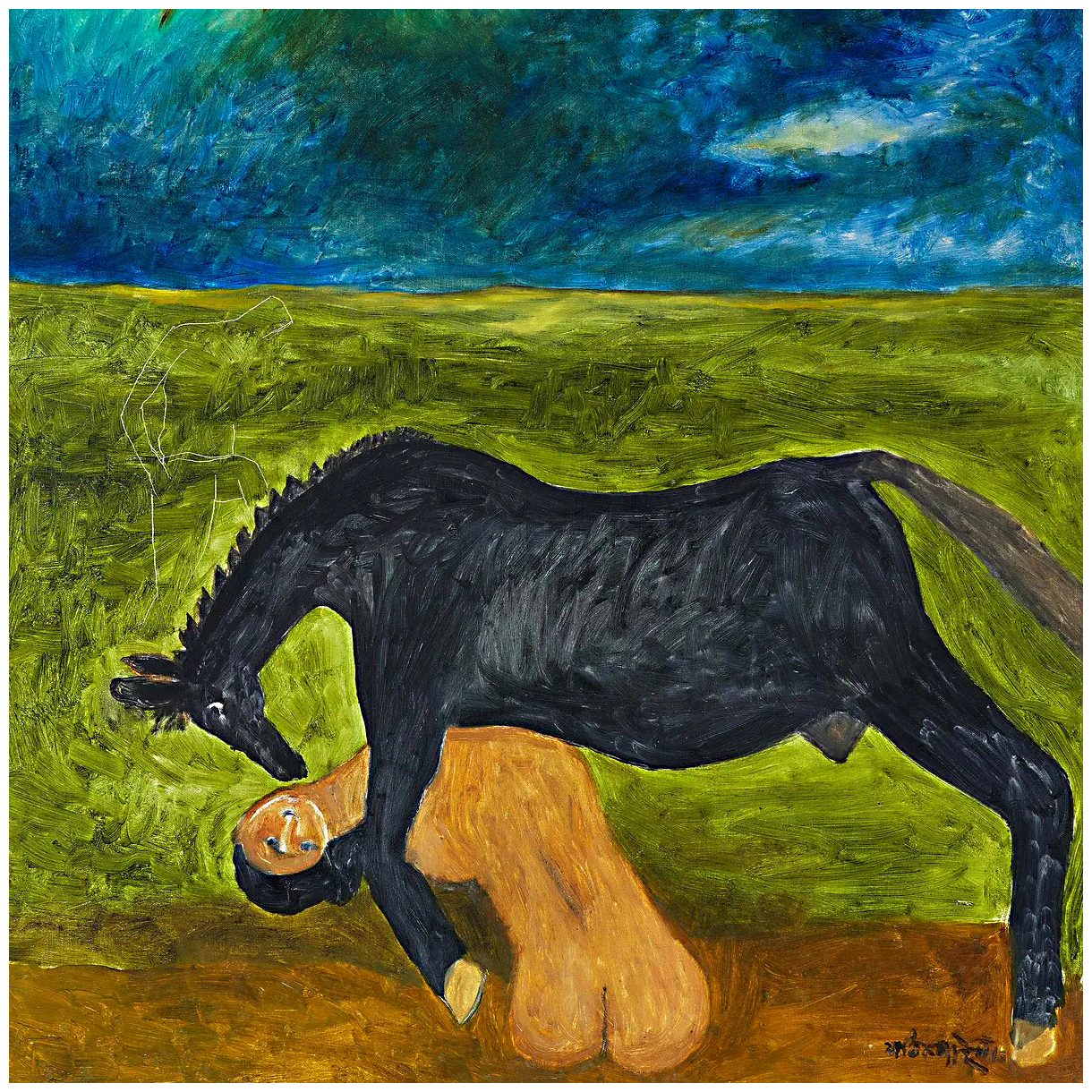
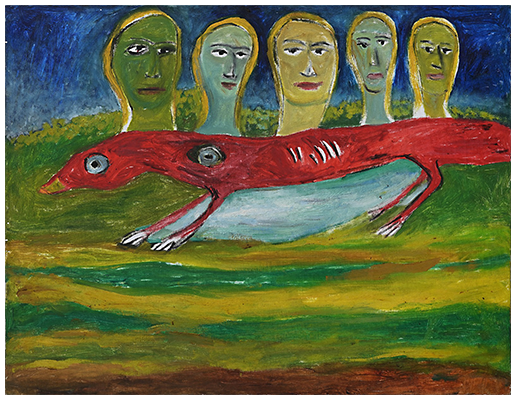
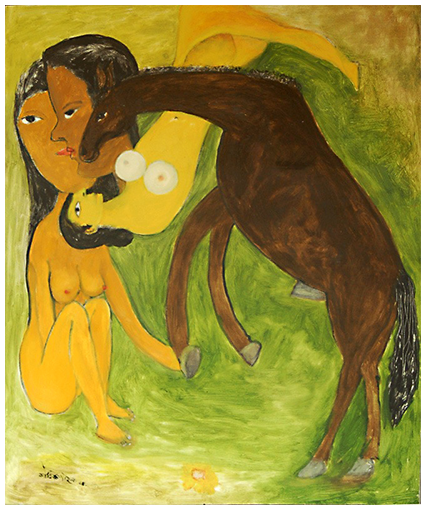
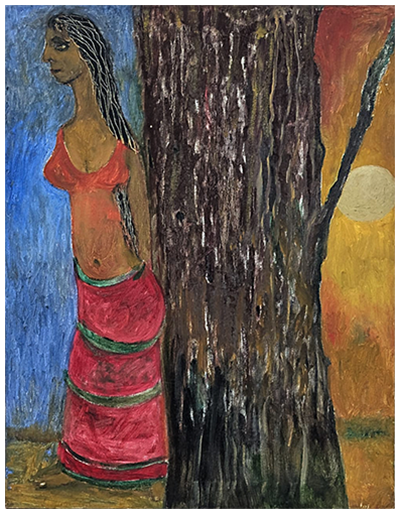
Kartick Chandra Pyne was an important yet for many years under-recognised figure in post-Independence Indian modernism. Working primarily through a highly personal form of surreal and fantasy-oriented figuration, he created paintings populated by enigmatic human beings, animals, hybrid forms, dreamlike landscapes and symbolic objects. His imagery occupies an uncertain territory between reality and imagination, the conscious and subconscious, humour and anxiety.
Born on 15 November 1931 in Kolkata into a culturally inclined family of gold merchants, Pyne studied painting at the Government College of Art & Craft, Calcutta, from 1950 to 1955. He was the elder cousin of the celebrated painter Ganesh Pyne, although their artistic languages developed in markedly different directions.
Kartick Pyne pursued his own independent path at a time when several competing approaches to modernism were developing in India. Rather than aligning himself closely with a particular movement, he constructed an imaginative world that combined memories, mythology, fantasy, everyday experience and psychological states.
An Independent Surrealist Language
Pyne’s importance lies particularly in the unusual visual language he began developing during the 1950s and 1960s.
At a time when realism, expressionism, cubism and various forms of abstraction were being explored by Indian modernists, Pyne increasingly introduced irrational and fantastical elements into his paintings. Aakriti Art Gallery’s archival account describes his departure from conventional realism towards what critics termed “free form images,” emphasising the complicated metaphors and deeply personal symbolism that came to characterise his work.
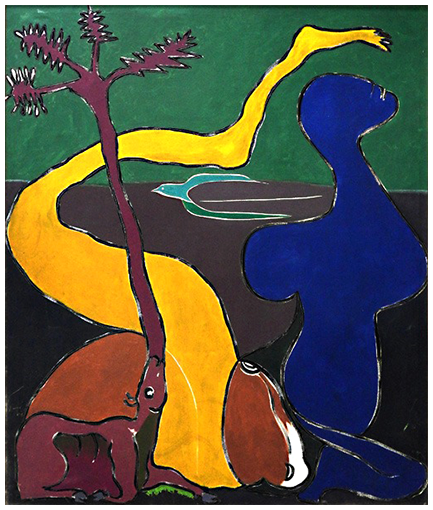
European modernists including Joan Miró, Fernand Léger and Paul Klee have been cited in relation to his work, but Pyne’s paintings cannot be explained simply through European influence.
His surrealism developed from his own imaginative response to the world.
Figures may appear suspended in improbable spaces. Human bodies merge with animals or objects. Scale shifts unexpectedly. A seemingly innocent scene may contain an undercurrent of unease, while another composition may possess the spontaneous quality of a child’s fantasy.
The irrational is not introduced merely for visual surprise. It becomes a means of approaching realities that cannot easily be expressed through conventional representation.
Dream, Metaphor and the Subconscious
Pyne’s paintings frequently operate like dreams.
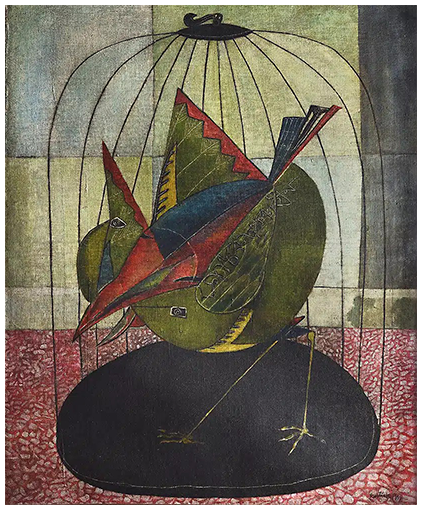
Individual elements are recognisable, yet their relationships resist ordinary logic. Humans, birds, cages, plants, animals, architectural fragments and invented creatures coexist without requiring a conventional narrative.
The viewer therefore encounters the painting much as one encounters a remembered dream: individual images seem familiar, while their collective meaning remains elusive.
This ambiguity is central to Pyne’s achievement.
Rather than illustrating a predetermined story, he allowed images to develop through association. His paintings can move between humour, tenderness, eroticism, anxiety, spirituality and absurdity within a single composition.
His colour was similarly subjective. Instead of selecting colours primarily for naturalistic description, Pyne used them according to their emotional and symbolic function within the painting. Aakriti’s archival profile emphasises this aspect of his practice, noting that colour for Pyne was connected to personal meaning rather than merely visual attractiveness.
Between Tradition and Modernity
Despite the apparent strangeness of his imagery, Pyne’s paintings remain connected to Indian visual traditions.
Mythology, folk imagery, decorative pattern and narrative traditions occasionally enter his work, but they are transformed through a distinctly modern imagination. Traditional motifs coexist with unexpected contemporary forms and private symbols.
This ability to combine the familiar with the inexplicable enabled Pyne to develop what Aakriti’s critical writing has described as an indigenous form of modernity. In a 2010 assessment of his work, the gallery noted that his fantasy-oriented figuration addressed the enigmatic and existential dimensions of human life and nature and identified him as an important artist in the development of a distinctive modernist language in Bengal during the 1960s.
An Early International Presence
Pyne received important recognition relatively early in his career.
His 1962 painting Moon Bath was selected for the historic exhibition of modern Indian art at the Fukuoka Art Museum, Japan, in 1979. The exhibition brought together one hundred works representing modern Indian art and placed Pyne within a significant international presentation of Indian modernism.
His works were subsequently included in an Indian Council for Cultural Relations exhibition in Bangladesh in 1991–92.
He held solo exhibitions at institutions and galleries including Jehangir Art Gallery, Mumbai; Academy of Fine Arts, Kolkata; Bajaj Art Gallery, Mumbai; Chitrakoot Art Gallery, Kolkata; and Lalit Kala Akademi, New Delhi, among others.
Yet these achievements did not translate into sustained public or market recognition.
Years of Neglect
For a considerable period during the 1980s and 1990s, Kartick Chandra Pyne remained outside the mainstream attention of India’s expanding modern-art market.
This is one of the paradoxes of his career. He had exhibited internationally, received institutional recognition and developed an unmistakably individual language, yet remained relatively unknown beyond a limited circle of artists, critics and collectors.
Financial circumstances were often difficult.
His introverted personality and limited engagement with the commercial art system contributed to this neglect. Even as the Indian art market expanded and several of his contemporaries achieved considerable recognition, Pyne’s paintings remained comparatively undervalued.
A paralytic stroke in 1994 affected the left side of his body, but did not end his practice. He continued to work, adapting to his physical limitations and producing smaller paintings and works on paper. His later output included a notable group of nudes as well as the fantasy imagery that had characterised his earlier career.
Aakriti Art Gallery and the Rediscovery of Kartick Pyne
The relationship between Kartick Chandra Pyne and Aakriti Art Gallery became particularly important during the later phase of his career.
Aakriti Art Gallery represented Pyne and actively worked to bring renewed attention to an artist whose contribution had remained insufficiently recognised.
Gallery founder-director Vikram Bachhawat had encountered Pyne’s paintings at an exhibition at Chitrakoot Art Gallery and subsequently traced the artist during 2003–04. He found that despite decades of painting and significant historical achievements, Pyne was living under difficult circumstances and remained largely disconnected from the rapidly developing Indian art market. The Indian Express later documented this encounter and the gallery’s role in bringing his work back to public attention.
The relationship culminated in an important retrospective exhibition organised by Aakriti Art Gallery in Kolkata in 2006.
The exhibition assembled paintings covering approximately half a century of Pyne’s practice—from works dating from the 1950s through to 2005. It therefore enabled viewers to encounter, in one exhibition, the evolution of an artistic language that had developed largely outside mainstream attention.
The retrospective proved both critically important and commercially successful. It introduced Pyne’s work to a much wider circle of collectors, critics and art lovers and helped establish a new appreciation of the historical importance and originality of his practice.
For an artist who had spent decades working with comparatively little recognition, the exhibition represented a profound change in circumstances.
The 2006 Aakriti retrospective became a turning point in Kartick Chandra Pyne’s later career, contributing substantially to the wider exposure, renewed collector interest and market recognition that followed. Later institutional accounts of his career—including Emami Art’s extensive reassessment of Pyne—specifically record the Aakriti retrospective within his exhibition history.
Aakriti Art Gallery consequently occupies an important position in the history of Pyne’s rediscovery. Its involvement was not limited to presenting individual works; it helped bring together and publicly contextualise a substantial historical body of paintings at a moment when his contribution was only beginning to receive renewed attention.
The 2005 Sotheby’s Sale and Changing Market Recognition
The wider reassessment of Pyne also coincided with an important development in the international market.
In September 2005, his painting Bird in a Cage appeared at Sotheby’s New York, where it sold for US$10,200, approximately ₹4.7 lakh at the time. The result attracted significant attention because it was dramatically higher than the prices historically associated with his work. The Sotheby’s result and the subsequent 2006 Aakriti retrospective should therefore be understood together as important moments in the transformation of Pyne’s later career.
The auction demonstrated that an international market could exist for his work. The retrospective, meanwhile, provided something an auction result could not: a substantial historical context, allowing collectors and critics to examine the development of his practice from the 1950s onwards.
Together, these developments helped move Pyne from relative obscurity towards wider recognition.
Awards and Collections
Pyne received the Academy of Fine Arts Award on four occasions—in 1966, 1969, 1973 and 1976—and prizes from the Mahakoshal Kala Parishad in 1973 and 1974.
He later received two important honours from the Government of West Bengal: the Shilpi Maha Samman and the Abanindra Puraskar.
His works entered collections including the National Gallery of Modern Art, New Delhi; Birla Academy of Art & Culture; Air India; and the Government of West Bengal, as well as private and institutional collections in India and internationally.
His artistic life was also documented on film. The Rajya Charukala Parshad, Government of West Bengal, produced the documentary Line, Story, Design, released in 2017.
Later Recognition and Legacy
Kartick Chandra Pyne died in Kolkata on 17 September 2017.
By then, however, the process of reassessing his contribution had begun.
In 2021, Emami Art presented the major retrospective-scale exhibition The (In) Visible and The (Un)Revealed: Inside the Secret Worlds of Kartick Chandra Pyne, bringing renewed scholarly attention to the extraordinary range of his practice. The exhibition further demonstrated that Pyne’s art could no longer be treated merely as an eccentric footnote to the better-known histories of Bengal modernism.
His significance lies precisely in the independence of his imagination.
He did not construct a school around himself. He did not adapt his paintings readily to changing market fashions. Nor did he develop an easily explained iconography.
Instead, he created a private universe.
Humans become animals; animals acquire human personalities; dreams intersect with mythology; humour conceals anxiety; ordinary objects acquire symbolic significance; and the rational world continually gives way to another reality operating beneath it.
Today, Kartick Chandra Pyne deserves recognition as an important and highly individual voice within post-Independence Indian surreal and fantasy-oriented figuration.
The history of his career is also a reminder that artistic importance and contemporary recognition do not always develop simultaneously. For decades his paintings existed largely outside the centre of the Indian art market. The renewed attention surrounding the 2005 Sotheby’s sale and, crucially, Aakriti Art Gallery’s comprehensive 2006 retrospective of works from the 1950s to 2005, changed the trajectory of his later career and introduced his work to a significantly wider audience.
Aakriti’s representation and advocacy thus form an important part of Kartick Chandra Pyne’s later history: the rediscovery of an artist whose strange, poetic and deeply personal world had been waiting for a broader audience.
-- Research & Compiled by Aakriti Art Gallery team
Most read art news
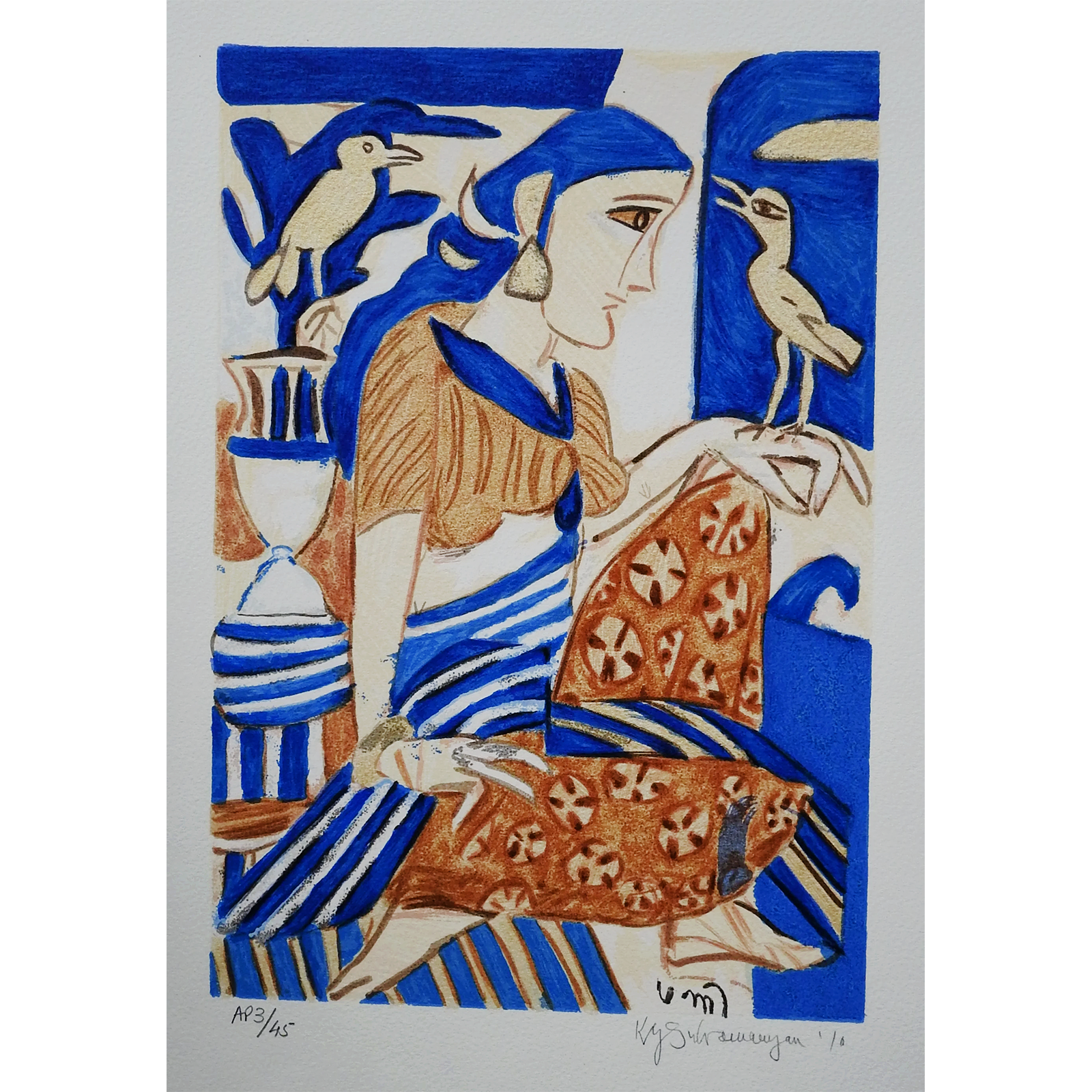
How to Tell Whether a Print Is an Original Artist-Signed Impression or a Reproduction
The Work That Begins a Collection
Aakriti Art Gallery to Launch India’s First Integrated Art Platform Combining AI Advisory, Research, Archives, Publishing, and Art Acquisition
Aakriti Art Gallery Relaunches ‘GenNext’ as a Year-Round Platform for Emerging Artists
The Monumental World Within the Ordinary